
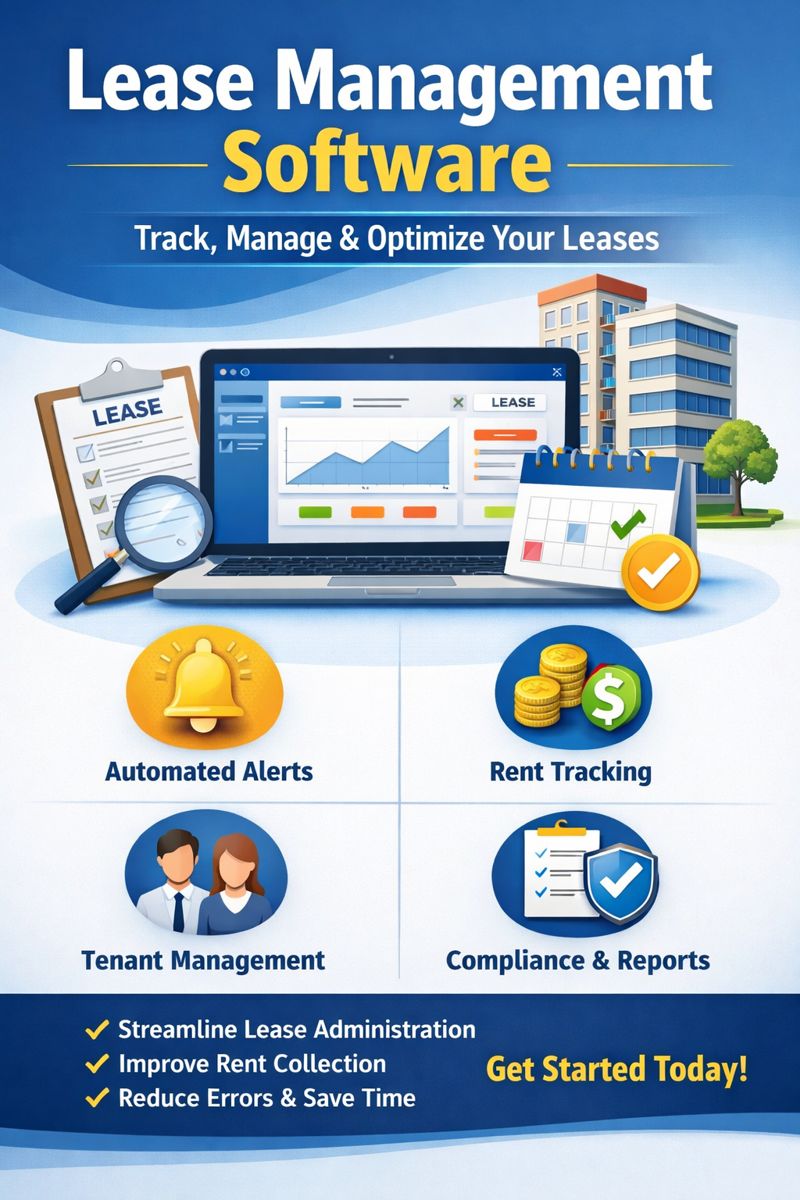
Introduction to Lease Management Software
Lease management software is a digital solution designed to help landlords, property managers, and real estate companies efficiently manage lease agreements, tenants, payments, and compliance requirements. Instead of relying on spreadsheets or paper files, lease management software centralizes all lease-related data in one secure platform, saving time and reducing costly errors.
As rental portfolios grow, manual lease tracking becomes complex and risky. Missed renewals, incorrect rent calculations, and lost documents can directly impact profitability. This is why modern property owners are increasingly adopting lease management software to streamline operations and improve accuracy.
What Is Lease Management Software?
Lease management software is a property technology (PropTech) tool that automates the entire lease lifecycle—from lease creation and tenant onboarding to rent collection, renewals, and termination.
A robust lease management system typically includes:
-
Lease document storage
-
Rent and payment tracking
-
Lease expiry and renewal alerts
-
Tenant information management
-
Compliance and reporting tools
By digitizing lease administration, property managers gain real-time visibility into their rental operations.
Key Features of Lease Management Software
1. Centralized Lease Database
Lease management software stores all lease agreements in a single, cloud-based system. This allows quick access to lease terms, start and end dates, rent amounts, and escalation clauses.
2. Automated Lease Renewals and Alerts
Never miss a lease expiry again. Automated reminders notify landlords and property managers of upcoming renewals, rent reviews, and contract deadlines.
3. Rent Tracking and Payment Management
Advanced lease management software integrates rent schedules, tracks payments, flags arrears, and generates financial summaries—helping improve cash flow and accountability.
4. Tenant Management
Store tenant profiles, communication history, and lease obligations in one place. This improves tenant relationships and supports faster issue resolution.
5. Digital Lease Creation and E-Signing
Many platforms support customizable lease templates and electronic signatures, reducing paperwork and speeding up lease execution.
6. Compliance and Audit Readiness
Lease management software helps maintain compliance with accounting standards and local regulations by keeping accurate, time-stamped records.
Benefits of Using Lease Management Software
Improved Efficiency
Automating lease administration reduces repetitive manual tasks, freeing up time for strategic property management.
Reduced Errors and Risk
Automated calculations and alerts minimize human error, reducing disputes and financial losses.
Better Financial Visibility
Real-time dashboards provide insights into rental income, occupancy rates, and lease performance.
Enhanced Tenant Experience
Faster communication, accurate billing, and transparent records improve tenant satisfaction and retention.
Scalable Property Management
Whether managing 10 units or 10,000, lease management software grows with your portfolio.
Who Needs Lease Management Software?
Lease management software is ideal for:
-
Residential landlords
-
Commercial property owners
-
Property management companies
-
Real estate developers
-
Housing cooperatives
-
Estate managers
Anyone managing multiple leases can benefit from automation and centralized control.
Lease Management Software vs Manual Lease Tracking
| Feature | Manual Tracking | Lease Management Software |
|---|---|---|
| Lease storage | Paper files / spreadsheets | Cloud-based secure storage |
| Renewal reminders | Manual follow-ups | Automated alerts |
| Rent tracking | Error-prone | Accurate and real-time |
| Reporting | Time-consuming | Instant reports |
| Scalability | Limited | Highly scalable |
How to Choose the Best Lease Management Software
When selecting lease management software, consider the following factors:
Ease of Use
Choose software with a clean interface and simple navigation for faster adoption.
Customization
Ensure the system supports different lease types, rent structures, and local regulations.
Integration
Look for integration with accounting, payment gateways, and property management tools.
Security
Your lease data should be protected with encryption, backups, and access controls.
Local Support
For regional markets, choose software that understands local leasing practices and laws.
Cloud-Based Lease Management Software
Cloud-based lease management software offers added flexibility by allowing access anytime, anywhere. Property managers can review leases, approve renewals, and track payments from any device.
Benefits include:
-
Automatic updates
-
Secure data backups
-
Multi-user access
-
Remote property management
Lease Management Software for Growing Real Estate Businesses
As real estate portfolios expand, managing leases manually becomes unsustainable. Lease management software provides the structure and automation needed to scale efficiently while maintaining control and transparency.
It also supports data-driven decision-making by providing accurate reports on lease performance, occupancy, and revenue trends.
Future of Lease Management Software
The future of lease management software lies in:
-
AI-powered lease analysis
-
Smart rent predictions
-
Mobile-first property management
-
Deeper financial integrations
These innovations will further simplify lease administration and improve profitability.
Frequently Asked Questions (FAQs)
What is lease management software used for?
Lease management software is used to manage lease agreements, tenants, rent payments, renewals, and compliance in one digital platform.
Is lease management software suitable for small landlords?
Yes. Small landlords benefit from reduced paperwork, automated reminders, and better financial tracking.
Can lease management software handle multiple properties?
Absolutely. Most systems are designed to manage multiple properties and tenants efficiently.
Is lease management software secure?
Reputable platforms use encryption, role-based access, and regular backups to protect lease data.
Conclusion
Lease management software is no longer optional—it is a necessity for efficient, scalable, and profitable property management. By automating lease tracking, rent management, and tenant administration, landlords and property managers gain better control, reduce risk, and improve overall performance.
If you want to simplify lease administration, improve accuracy, and future-proof your real estate operations, investing in lease management software is
Lease Management Software for Residential and Commercial Properties
Lease management software supports both residential and commercial property leasing, each with unique requirements.
Residential Lease Management
For residential landlords and estate managers, lease management software simplifies:
-
Monthly rent tracking
-
Tenant onboarding and documentation
-
Lease renewals and notices
-
Late payment monitoring
This ensures smooth tenant turnover and steady rental income.
Commercial Lease Management
Commercial leases are often more complex. Lease management software helps manage:
-
Long-term lease agreements
-
Rent escalations and clauses
-
Service charges and CAM fees
-
Multi-tenant commercial buildings
With automation, property managers avoid costly miscalculations and compliance risks.
Lease Management Software and Rent Collection Automation
Modern lease management software often integrates directly with online rent collection systems, allowing tenants to pay rent digitally. This improves efficiency and reduces delays caused by cash or manual transfers.
Benefits of Integrated Rent Collection
-
Faster payments
-
Reduced rent arrears
-
Automated receipts
-
Accurate financial records
When rent collection and lease management software work together, property managers gain complete control over cash flow.
Lease Management Software Reporting and Analytics
One of the most powerful advantages of lease management software is real-time reporting.
Common Reports Available
-
Active and expired leases
-
Rent arrears reports
-
Occupancy and vacancy rates
-
Lease renewal forecasts
-
Revenue performance by property
These insights help landlords make informed decisions and plan for future growth.
Compliance and Legal Protection with Lease Management Software
Lease disputes often arise due to missing documents, unclear lease terms, or missed notices. Lease management software reduces these risks by:
-
Keeping time-stamped lease records
-
Tracking amendments and renewals
-
Ensuring consistent lease terms
-
Maintaining audit-ready documentation
This is especially important in regulated rental markets where compliance is critical.
Lease Management Software for Property Managers and Estate Agencies
Property management firms handling multiple landlords benefit significantly from lease management software. It allows them to:
-
Manage multiple portfolios from one dashboard
-
Separate landlord accounts and reports
-
Track commissions and management fees
-
Improve service delivery
This increases professionalism and client trust.
Mobile-Friendly Lease Management Software
Today’s property managers are always on the move. Mobile-friendly lease management software allows users to:
-
View lease details on smartphones
-
Approve renewals remotely
-
Send notices instantly
-
Monitor payments in real time
Mobile access ensures uninterrupted property management operations.
Lease Management Software Integration with Accounting Systems
To ensure financial accuracy, lease management software often integrates with accounting platforms. This enables:
-
Automated rent posting
-
Expense allocation
-
Financial statements generation
-
Tax-ready reports
Such integration eliminates double entry and improves financial transparency.
Cost Savings with Lease Management Software
Although lease management software requires an initial investment, it significantly reduces operational costs over time by:
-
Eliminating paperwork
-
Reducing administrative staff workload
-
Preventing revenue loss from missed renewals
-
Improving rent collection efficiency
The return on investment is quickly realized, especially for growing portfolios.
Lease Management Software Implementation Best Practices
To maximize the benefits of lease management software, consider these best practices:
-
Digitize all existing leases before onboarding
-
Standardize lease templates
-
Train staff and users properly
-
Use automated alerts consistently
-
Review reports regularly
Proper implementation ensures long-term success.
Why Lease Management Software Is Essential for Modern Property Management
In today’s competitive real estate market, speed, accuracy, and transparency are critical. Lease management software empowers property managers to stay organized, compliant, and profitable.
Without a reliable lease management system, managing leases manually can lead to inefficiencies, errors, and lost income.