
Lease Management: The Complete Guide to Efficient Property Leasing
Lease Management Explained
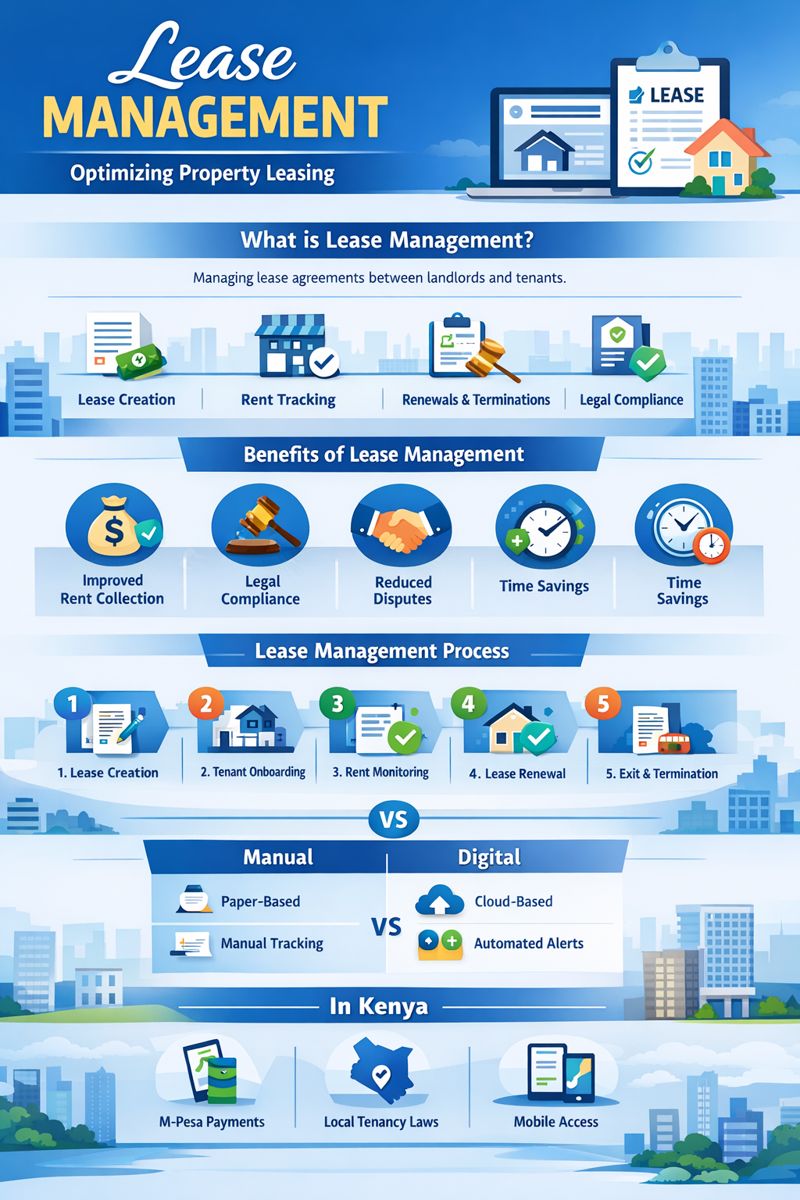
Lease management is the process of creating, tracking, managing, and enforcing lease agreements between property owners and tenants. It includes handling lease terms, rent schedules, renewals, compliance, tenant records, and documentation throughout the entire lease lifecycle.
Effective lease management helps landlords, property managers, and real estate firms reduce risks, improve cash flow, maintain compliance, and build stronger tenant relationships.
With modern digital tools, lease management has evolved from manual paperwork to automated, cloud-based systems that save time and increase accuracy.
Why Lease Management Is Important
Proper lease management is critical for both residential and commercial properties. Without a structured system, landlords risk missed renewals, rent disputes, legal penalties, and lost revenue.
Key Benefits of Lease Management
-
Prevents expired or forgotten leases
-
Ensures timely rent payments
-
Improves legal compliance and documentation
-
Enhances tenant satisfaction
-
Simplifies renewals and terminations
-
Provides accurate financial records
For growing property portfolios, efficient lease management is no longer optional—it is essential.
Core Components of Lease Management
1. Lease Creation and Documentation
Lease management begins with drafting clear and legally compliant lease agreements. A good system ensures that all terms such as rent amount, duration, deposits, penalties, and responsibilities are properly recorded and securely stored.
2. Lease Tracking and Monitoring
Tracking lease start dates, end dates, rent escalation clauses, and review periods helps landlords avoid unexpected expiries or disputes.
Automated lease management systems send alerts for:
-
Lease expirations
-
Rent reviews
-
Renewal deadlines
-
Contract amendments
3. Rent and Payment Management
Lease management integrates rent schedules with payment tracking. This allows landlords to:
-
Monitor rent due dates
-
Identify late payments
-
Generate rent invoices
-
Maintain payment histories
4. Lease Renewals and Terminations
Managing renewals efficiently helps retain good tenants and reduce vacancy rates. Lease management systems streamline renewal negotiations, updates, and termination documentation.
5. Compliance and Legal Management
Lease management ensures adherence to property laws, tax regulations, and tenancy requirements. Secure document storage supports audits and legal disputes.
Manual vs Digital Lease Management
Manual Lease Management Challenges
-
Paper-based records are easily lost
-
Time-consuming tracking
-
High risk of errors
-
Difficult reporting and analysis
Digital Lease Management Advantages
-
Centralized lease database
-
Automated reminders and alerts
-
Real-time access to lease data
-
Improved security and backups
-
Scalable for multiple properties
Digital lease management software is especially valuable for landlords managing multiple tenants or units.
Lease Management Software: A Smarter Solution
Modern lease management software automates the entire leasing process. These platforms are designed to help property managers handle leases efficiently from one dashboard.
Key Features of Lease Management Software
-
Lease agreement templates
-
Automated renewal notifications
-
Rent and payment integration
-
Tenant profile management
-
Document storage and retrieval
-
Financial and lease reporting
Such tools reduce administrative workload and improve overall property performance.
Lease Management for Residential and Commercial Properties
Residential Lease Management
Focuses on:
-
Short-term lease cycles
-
Frequent renewals
-
Tenant communication
-
Rent adjustments
Commercial Lease Management
Involves:
-
Long-term contracts
-
Complex rent escalation clauses
-
Compliance requirements
-
Multiple stakeholders
A robust lease management system can support both residential and commercial needs.
Lease Management Best Practices
-
Use standardized lease templates
-
Digitize all lease documents
-
Set automated alerts for key dates
-
Maintain accurate tenant records
-
Review lease terms regularly
-
Use reporting tools for insights
Following these best practices ensures smoother operations and fewer disputes.
Lease Management and Financial Performance
Strong lease management directly impacts revenue by:
-
Reducing vacancies
-
Ensuring timely rent collection
-
Minimizing legal costs
-
Improving forecasting accuracy
With proper lease oversight, property owners gain full visibility into income streams and contractual obligations.
The Future of Lease Management
Lease management is moving toward:
-
Cloud-based platforms
-
Mobile access for landlords and tenants
-
Integrated payment systems
-
AI-driven analytics
-
Paperless lease signing
These advancements make lease management faster, more secure, and more efficient.
Conclusion: Why Lease Management Matters
Lease management is the backbone of successful property management. Whether managing a single unit or a large real estate portfolio, an efficient lease management process improves control, transparency, and profitability.
By adopting digital lease management solutions and best practices, landlords and property managers can reduce risks, save time, and grow their property investments with confidence.
Advanced Lease Management Strategies for Property Owners
To maximize returns and minimize risks, landlords and property managers must go beyond basic lease tracking and adopt advanced lease management strategies.
Centralized Lease Data Management
Centralizing all lease-related information in one secure system allows property owners to:
-
Access lease documents instantly
-
Track lease status across multiple properties
-
Maintain consistent records
-
Eliminate duplicate or outdated information
A centralized lease management platform reduces administrative errors and improves operational transparency.
Lease Management and Legal Compliance
Legal compliance is one of the most critical aspects of lease management. Poorly managed leases can result in disputes, penalties, or revenue loss.
Key Compliance Areas in Lease Management
-
Proper lease documentation and signatures
-
Clear rent payment terms
-
Notice periods for renewals or termination
-
Deposit handling and refunds
-
Compliance with local tenancy laws
A reliable lease management system ensures all leases follow standardized legal templates, reducing compliance risks.
Lease Management Automation Benefits
Automation transforms lease management by reducing manual work and human error.
How Automation Improves Lease Management
-
Automated rent reminders reduce late payments
-
Expiry alerts prevent missed renewals
-
Digital records eliminate paperwork
-
Automated reports improve decision-making
With automation, landlords can manage more properties efficiently without increasing overhead costs.
Lease Management Reporting and Analytics
Modern lease management systems provide data-driven insights that support better decision-making.
Essential Lease Management Reports
-
Active and expired lease reports
-
Rent collection summaries
-
Tenant occupancy reports
-
Lease renewal forecasts
-
Revenue performance analytics
These reports help property managers identify trends, improve cash flow, and plan future investments.
Tenant Experience and Lease Management
A smooth leasing process improves tenant satisfaction and retention.
How Lease Management Enhances Tenant Experience
-
Clear and transparent lease terms
-
Timely communication and notifications
-
Digital access to lease documents
-
Easy lease renewal processes
Happy tenants are more likely to renew leases, reducing vacancy rates and marketing costs.
Lease Management for Multi-Property Portfolios
Managing leases across multiple buildings or locations can be complex without the right tools.
Benefits for Large Property Portfolios
-
Unified dashboard for all leases
-
Standardized lease templates
-
Portfolio-level performance tracking
-
Scalable operations
Lease management software enables landlords to grow their portfolios while maintaining control and consistency.
Common Lease Management Mistakes to Avoid
Avoiding common mistakes can significantly improve leasing outcomes.
Frequent Errors in Lease Management
-
Using outdated lease templates
-
Failing to track lease expiration dates
-
Poor record keeping
-
Inconsistent rent escalation terms
-
Lack of tenant communication
A structured lease management approach eliminates these errors and ensures professional property operations.
Lease Management and Rent Escalation Tracking
Rent escalation clauses must be tracked carefully to avoid revenue loss.
Why Rent Escalation Tracking Matters
-
Ensures rent increases are applied correctly
-
Prevents disputes with tenants
-
Improves long-term revenue forecasting
Digital lease management tools automatically calculate and apply rent escalations based on lease terms.
Security is a key concern when handling lease agreements and tenant data.
Best Practices for Secure Lease Management
-
Cloud-based encrypted storage
-
Role-based access control
-
Regular data backups
-
Secure digital signatures
Secure lease management systems protect sensitive information while ensuring authorized access.
Lease Management Integration with Property Management Systems
Lease management works best when integrated with other property management tools.
Common Integrations
-
Rent collection platforms
-
Accounting and finance systems
-
Tenant management software
-
Maintenance request systems
Integrated lease management creates a seamless property management ecosystem.
Lease Management Trends in Modern Real Estate
The real estate industry is rapidly adopting digital lease management solutions.
Emerging
Lease Management
Trends
-
Mobile-first lease platforms
-
AI-powered lease analytics
-
Paperless lease agreements
-
Cloud-based collaboration tools
These trends are shaping the future of property management worldwide.
Lease Management Best Practices
To achieve optimal results, follow these best practices:
-
Use standardized lease templates
-
Digitize all lease documents
-
Schedule automatic lease reviews
-
Communicate clearly with tenants
-
Regularly audit lease data
Consistent best practices lead to better compliance and improved profitability.
Lease Management for Small Landlords
Even landlords with a few rental units benefit from structured lease management.
Advantages for Small Property Owners
-
Professional lease handling
-
Reduced legal risks
-
Easier rent tracking
-
Better tenant relationships
Digital lease management levels the playing field for small landlords.
Lease Management and Business Growth
Efficient lease management supports long-term growth by:
-
Improving operational efficiency
-
Increasing tenant retention
-
Enhancing revenue predictability
-
Supporting data-driven decisions
As property businesses grow, lease management becomes a strategic advantage rather than an administrative task.
Conclusion: Why Lease Management Matters More Than Ever
In today’s competitive real estate environment, lease management is a foundational element of successful property operations. From legal compliance and rent tracking to tenant satisfaction and portfolio growth, effective lease management impacts every aspect of property ownership.
Adopting a modern lease management system empowers landlords and property managers to streamline workflows, reduce risks, and maximize returns—making lease management an essential investment for the future.