
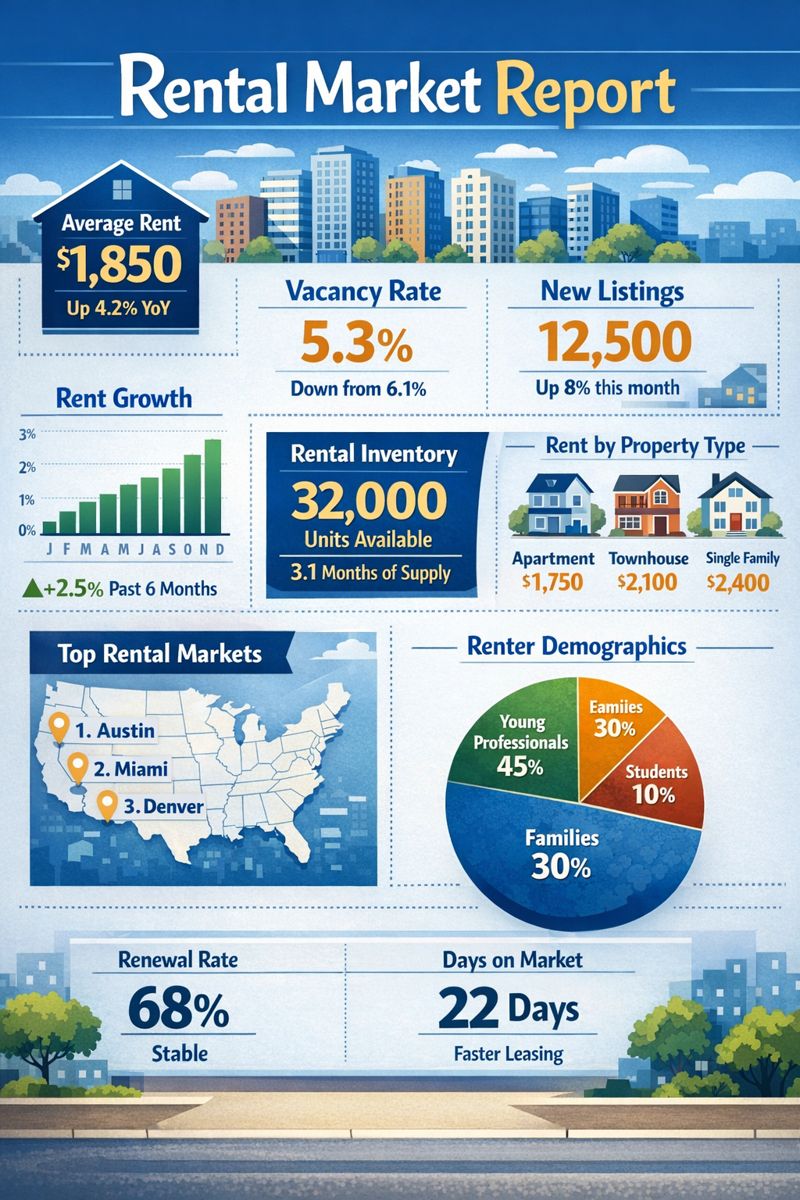
What Are Rental Reports?
Rental reports are organized summaries of rental property data collected over a defined period. They present essential information such as:
-
Rent charged and collected
-
Tenant payment history
-
Outstanding balances and arrears
-
Operating expenses
-
Lease status
-
Property occupancy
-
Net income and cash flow
Rental reports can be generated weekly, monthly, quarterly, or annually, depending on the landlord’s needs. They are commonly produced using rental management software, spreadsheets, or accounting systems.
Well-structured rental reports provide a clear snapshot of property performance and financial health.
Why Rental Reports Are Essential
1. Financial Visibility
Rental reports give landlords a complete overview of rental income and expenses. This visibility helps prevent revenue leakage and improves financial planning.
2. Better Decision-Making
With accurate rental reports, landlords can assess which properties are profitable, which tenants are reliable, and where costs can be reduced.
3. Accountability and Transparency
Rental reports create accountability for property managers and transparency for property owners, partners, or investors.
4. Legal and Tax Compliance
Rental reports provide organized documentation required for audits, tax filing, and financial reviews.
5. Risk Reduction
Early identification of rent arrears, declining occupancy, or rising expenses helps landlords take corrective action before problems escalate.
Key Types of Rental Reports
Rental Income Report
A rental income report summarizes all rent billed and collected within a specific period. It typically includes:
-
Property and unit details
-
Tenant names
-
Rent amounts
-
Payment dates
-
Payment methods
-
Total income
This is one of the most frequently used rental reports and is essential for tracking revenue performance.
Rent Arrears Report
The rent arrears report identifies tenants with unpaid or overdue rent. It shows:
-
Outstanding balances
-
Number of days overdue
-
Payment history
-
Tenant contact information
This rental report helps landlords follow up on defaulters, enforce lease terms, and improve rent collection efficiency.
Tenant Rental Report
Tenant rental reports focus on individual tenant records, including:
-
Tenant profiles
-
Lease start and end dates
-
Rent payment behavior
-
Deposit information
These reports are useful for tenant evaluation, renewals, and dispute resolution.
Expense Rental Report
Expense rental reports track all property-related expenses such as:
-
Maintenance and repairs
-
Utilities
-
Management fees
-
Security and cleaning
-
Insurance and taxes
Expense reports help landlords control costs and evaluate operational efficiency.
Cash Flow Rental Report
A cash flow rental report compares rental income against expenses to show net income or loss. This report is crucial for:
-
Investment analysis
-
Budget planning
-
Loan assessments
Positive cash flow indicates a healthy rental property.
Lease Expiry Report
Lease expiry rental reports identify leases nearing expiration. They help landlords:
-
Plan lease renewals
-
Adjust rental rates
-
Prepare for vacancies
This report supports proactive tenant management.
Occupancy Rental Report
Occupancy rental reports show occupied and vacant units across properties. They help landlords optimize occupancy rates and reduce vacancy losses.
Rental Reports for Landlords
For landlords, rental reports are more than just financial records. They are management tools that:
-
Track rental performance per property
-
Monitor tenant behavior
-
Identify underperforming units
-
Support long-term investment planning
Landlords who consistently review rental reports are better positioned to grow their rental portfolios sustainably.
Rental Reports for Property Managers
Property managers rely heavily on rental reports to manage multiple properties efficiently. These reports allow property managers to:
-
Provide professional reports to property owners
-
Track rent collection performance
-
Monitor maintenance expenses
-
Justify management fees
Clear and accurate rental reports strengthen trust between property managers and clients.
How Rental Reports Improve Tenant Management
Rental reports play a critical role in tenant management by:
-
Tracking payment consistency
-
Identifying habitual defaulters
-
Supporting fair treatment of tenants
-
Providing evidence during disputes
Tenant rental reports also help landlords improve screening processes by analyzing historical payment behavior.
Manual vs Automated Rental Reports
Manual Rental Reports
Manual rental reports are created using notebooks or spreadsheets. While affordable, they are prone to:
-
Human error
-
Data loss
-
Time consumption
-
Inconsistent formatting
Automated Rental Reports
Automated rental reports are generated using rental management software. They offer:
-
Real-time data updates
-
High accuracy
-
Faster reporting
-
Secure data storage
For growing rental businesses, automated rental reports are the preferred solution.
Features of a Good Rental Reporting System
An effective rental reporting system should include:
-
Automated report generation
-
Customizable rental reports
-
Online rent collection integration
-
Secure cloud storage
-
Easy data export (PDF, Excel)
-
Clear dashboards and summaries
These features ensure rental reports are practical and actionable.
Using Rental Reports for Financial Planning
Rental reports are vital for financial forecasting and budgeting. By analyzing historical data, landlords can:
-
Predict rental income
-
Estimate future expenses
-
Plan renovations and upgrades
-
Assess return on investment (ROI)
Consistent analysis of rental reports leads to smarter financial decisions.
Rental Reports and Tax Preparation
During tax season, rental reports simplify the preparation of tax returns by providing:
-
Accurate income records
-
Deductible expense summaries
-
Clear financial documentation
Well-maintained rental reports reduce audit risks and save time during tax filing.
Common Challenges in Rental Reporting
Despite their importance, landlords often face challenges such as:
-
Incomplete data
-
Late updates
-
Poor organization
-
Lack of standardization
These challenges can be solved by adopting digital rental reporting tools and maintaining consistent reporting practices.
Best Practices for Managing Rental Reports
To maximize the value of rental reports:
-
Review reports regularly
-
Keep records updated
-
Separate personal and rental finances
-
Use standardized reporting formats
-
Backup data securely
These best practices ensure reliable and accurate rental reports.
Future Trends in Rental Reporting
Rental reports are evolving with technology. Future trends include:
-
Real-time reporting dashboards
-
Mobile access to rental reports
-
Data visualization and analytics
-
AI-driven insights
These innovations help landlords predict trends and improve property performance.
Conclusion
Rental reports are the backbone of successful rental property management. They provide financial clarity, improve tenant oversight, support compliance, and guide strategic decision-making.
From tracking rental income and expenses to managing tenants and planning investments, rental reports empower landlords and property managers to operate efficiently and profitably.
Adopting modern rental reporting systems ensures accuracy, saves time, and positions your rental business for long-term growth.