
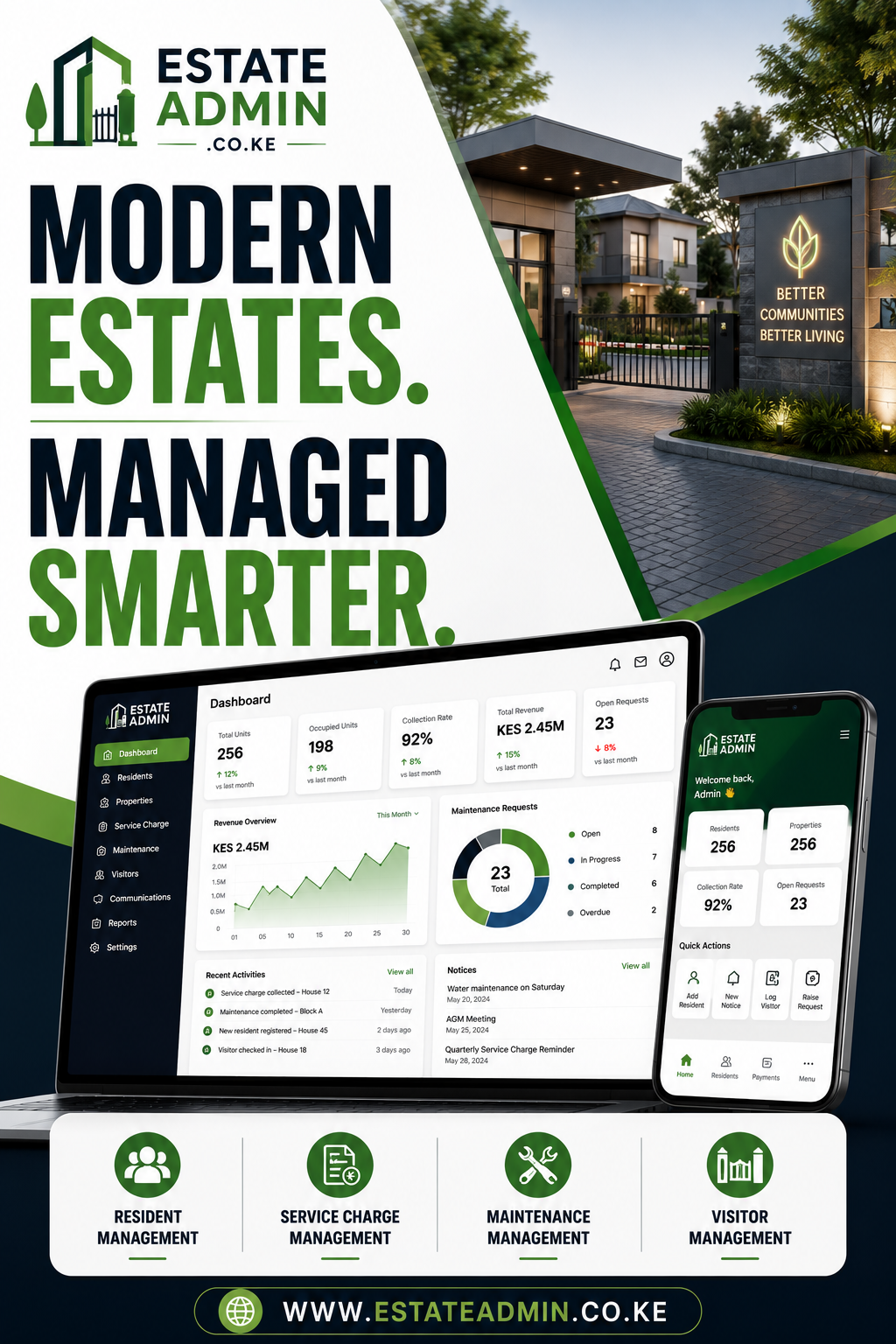
Real Estate Management Company services play a vital role in helping property owners, landlords, real estate investors, developers, and housing organizations manage residential, commercial, and mixed-use properties efficiently. A Real Estate Management Company oversees every aspect of property operations, including tenant management, lease administration, rent collection, maintenance coordination, financial reporting, property inspections, compliance, and customer service. Instead of handling these responsibilities manually, property owners can rely on experienced professionals and modern technology to protect their investments while improving tenant satisfaction and maximizing returns. As Kenya’s real estate market continues to grow with new apartments, office buildings, shopping centres, gated communities, and mixed-use developments, partnering with a Real Estate Management Company has become one of the most effective ways to ensure properties remain profitable, well-maintained, and professionally managed.
Table of Contents
- Introduction
- Understanding Professional Property Management
- Why Property Owners Hire Management Companies
- Core Services Offered
- Tenant and Lease Administration
- Maintenance and Property Care
- Financial Management and Reporting
- Technology in Modern Property Management
- Choosing the Right Management Partner
Introduction
Managing property successfully requires experience, organization, legal knowledge, financial discipline, and excellent customer service. Whether the property is a residential apartment, commercial office, shopping mall, warehouse, or mixed-use development, owners must coordinate multiple activities every day. These include marketing vacant units, screening tenants, preparing lease agreements, collecting rent, responding to maintenance requests, supervising contractors, monitoring finances, and ensuring compliance with regulations. A Real Estate Management Company brings these responsibilities together under one professional service, allowing property owners to focus on growing their investments while experts handle daily operations. Across Kenya, more investors are choosing professional management companies because they reduce operational challenges, improve occupancy, and increase long-term property value.
Understanding Professional Property Management
Property management involves planning, organizing, supervising, and optimizing every aspect of a property’s daily operations.
A Real Estate Management Company typically manages:
- Residential apartments.
- Commercial office buildings.
- Shopping centres.
- Retail spaces.
- Mixed-use developments.
- Industrial warehouses.
- Gated communities.
- Serviced apartments.
- Holiday homes.
- Investment properties.
Professional management ensures each property operates efficiently while meeting the expectations of tenants and property owners.
Why Property Owners Hire Management Companies
Managing real estate independently becomes increasingly difficult as the number of properties and tenants grows.
A Real Estate Management Company helps owners by:
- Reducing administrative workload.
- Improving rent collection.
- Maintaining high occupancy.
- Coordinating maintenance.
- Managing tenant relationships.
- Ensuring legal compliance.
- Preparing financial reports.
- Protecting property value.
Instead of spending time solving operational problems, owners receive professional management supported by experienced staff and modern systems.
Core Services Offered
Every property has unique operational requirements, but most management companies provide a comprehensive range of services.
Property Marketing
Vacant units generate no income, making effective marketing essential.
Professional property managers help by:
- Advertising available units.
- Scheduling property viewings.
- Responding to inquiries.
- Managing applications.
- Promoting vacancies online.
- Coordinating tenant onboarding.
Effective marketing reduces vacancy periods while attracting qualified tenants.
Tenant Screening
Selecting reliable tenants protects property owners from unnecessary risks.
Tenant screening may include:
- Identity verification.
- Employment confirmation.
- Income assessment.
- Previous rental history.
- Reference checks.
- Credit evaluation where applicable.
Careful screening contributes to better tenant relationships and consistent rental income.
Lease Administration
Lease agreements form the foundation of every rental relationship.
A Real Estate Management Company manages:
- Lease preparation.
- Lease renewals.
- Rent reviews.
- Lease amendments.
- Security deposits.
- Lease documentation.
- Expiry monitoring.
- Legal compliance.
Efficient lease administration minimizes disputes while protecting both landlords and tenants.
Rent Collection
Reliable rent collection is essential for maintaining healthy cash flow.
Professional management companies implement structured rent collection processes including:
- Invoice generation.
- Payment tracking.
- Payment reminders.
- Outstanding balance monitoring.
- Receipt issuance.
- Financial reconciliation.
Automated rent management improves collection rates while reducing manual administration.
Tenant and Lease Administration
Maintaining positive tenant relationships contributes directly to long-term occupancy and property profitability.
A Real Estate Management Company supports tenants through:
- Prompt communication.
- Fast issue resolution.
- Transparent billing.
- Maintenance coordination.
- Lease management.
- Customer support.
- Move-in assistance.
- Move-out coordination.
Satisfied tenants are more likely to renew leases and recommend the property to others.
Maintenance and Property Care
Property maintenance protects asset value while ensuring safe and comfortable environments for tenants.
Professional management companies coordinate:
- Routine inspections.
- Preventive maintenance.
- Emergency repairs.
- Contractor supervision.
- Building cleaning.
- Landscaping.
- Utility management.
- Asset maintenance.
Preventive maintenance reduces long-term repair costs while improving tenant satisfaction.
Financial Management and Reporting
Property owners require accurate financial information to evaluate investment performance.
A Real Estate Management Company typically provides reports covering:
- Rental income.
- Occupancy rates.
- Operating expenses.
- Maintenance costs.
- Service charge collection.
- Cash flow.
- Profitability.
- Budget performance.
These reports support informed investment decisions while improving financial transparency.
Technology in Modern Property Management
Technology has transformed the way properties are managed.
Modern management companies use digital platforms to:
- Track tenant information.
- Monitor maintenance requests.
- Manage lease agreements.
- Collect rent online.
- Generate reports.
- Store property documents.
- Monitor occupancy.
- Improve communication.
Digital property management enables organizations to deliver faster, more reliable services while reducing operational costs.
Choosing the Right Management Partner
Selecting the right management company requires careful evaluation.
Property owners should consider:
- Industry experience.
- Property portfolio.
- Customer service.
- Financial reporting.
- Technology capabilities.
- Maintenance processes.
- Legal knowledge.
- Reputation.
Choosing an experienced Real Estate Management Company creates a strong foundation for long-term investment success.
The Growing Importance of Professional Property Management in Kenya
Kenya’s real estate industry continues to expand with increasing demand for residential housing, commercial offices, retail centres, industrial developments, and mixed-use projects.
As competition grows, property owners need professional management that combines industry expertise with modern technology. A Real Estate Management Company helps investors improve operational efficiency, strengthen tenant relationships, increase occupancy, and protect long-term asset value.
From Nairobi and Mombasa to Kisumu, Nakuru, Eldoret, Thika, and other growing towns, professional property management continues to play an increasingly important role in supporting successful real estate investments.
Benefits of a Real Estate Management Company for Different Stakeholders
A successful property investment depends on more than acquiring real estate. Long-term success requires professional management that keeps tenants satisfied, buildings well-maintained, finances organized, and operations running efficiently. A Real Estate Management Company serves as the link between property owners, tenants, contractors, maintenance teams, finance departments, and regulatory authorities. By coordinating these stakeholders through structured processes and modern technology, management companies help maximize property performance while reducing operational challenges.
Benefits for Property Owners
Property owners want stable rental income, high occupancy rates, and well-maintained assets without becoming involved in every daily operation.
Working with a Real Estate Management Company enables owners to:
- Monitor property performance.
- Increase rental income.
- Improve tenant retention.
- Reduce vacancy periods.
- Receive professional financial reports.
- Protect property value.
- Reduce management stress.
- Focus on expanding their investments.
Instead of responding to maintenance requests or collecting rent personally, owners can concentrate on long-term investment planning while professionals manage day-to-day operations.
Benefits for Property Managers
Professional property managers coordinate numerous activities every day.
A Real Estate Management Company supported by modern management systems allows managers to:
- Supervise multiple properties.
- Track tenant information.
- Manage lease agreements.
- Coordinate maintenance teams.
- Schedule inspections.
- Monitor occupancy.
- Generate operational reports.
- Improve communication across departments.
Automation enables managers to oversee larger property portfolios without compromising service quality.
Benefits for Tenants
Tenants expect responsive communication, timely maintenance, and transparent management.
A professionally managed Real Estate Management Company improves the tenant experience by providing:
- Faster maintenance responses.
- Professional customer support.
- Accurate rent statements.
- Clear lease information.
- Better communication.
- Secure payment processes.
- Well-maintained properties.
- Reliable property services.
Satisfied tenants are more likely to renew leases, reducing turnover and vacancy costs.
Benefits for Maintenance Teams
Building maintenance directly affects tenant satisfaction and property value.
A Real Estate Management Company helps maintenance teams by:
- Assigning work orders quickly.
- Scheduling preventive maintenance.
- Monitoring repair progress.
- Recording completed maintenance.
- Prioritizing emergency repairs.
- Managing contractor schedules.
- Tracking maintenance history.
- Improving team coordination.
Preventive maintenance extends the lifespan of building assets while minimizing costly emergency repairs.
Benefits for Finance Departments
Managing property finances requires accuracy, organization, and timely reporting.
Finance teams working within a Real Estate Management Company benefit from:
- Automated rent invoicing.
- Payment tracking.
- Service charge management.
- Expense monitoring.
- Budget reporting.
- Financial forecasting.
- Audit-ready records.
- Portfolio performance analysis.
Reliable financial reporting enables property owners to make informed investment decisions while ensuring accountability.
Benefits for Contractors and Service Providers
Many property management companies work closely with electricians, plumbers, security companies, landscapers, cleaning firms, and other service providers.
Digital property management improves contractor coordination through:
- Work order assignments.
- Maintenance scheduling.
- Progress tracking.
- Service verification.
- Payment processing.
- Performance monitoring.
Efficient collaboration results in faster repairs and higher-quality property maintenance.
Improving Efficiency Through Automation
Modern technology has significantly transformed property management.
Instead of relying on manual paperwork and spreadsheets, a Real Estate Management Company can automate many routine activities, including:
- Rent invoicing.
- Payment reminders.
- Lease renewal notifications.
- Maintenance requests.
- Inspection scheduling.
- Tenant communication.
- Service charge calculations.
- Financial reporting.
- Occupancy tracking.
- Performance analytics.
Automation minimizes manual errors while improving consistency across multiple properties.
For property management companies overseeing residential apartments, commercial buildings, gated communities, and mixed-use developments in Kenya, automation improves productivity while reducing operating costs.
Compliance, Security and Risk Management
Professional property management requires secure handling of tenant records, financial information, lease agreements, and legal documentation.
A modern Real Estate Management Company relies on secure systems that help protect sensitive information while supporting regulatory compliance.
User Role Management
Different employees require different access permissions.
Property management systems allow administrators to assign secure access to:
- Property managers.
- Finance staff.
- Maintenance teams.
- Customer service representatives.
- Property owners.
- Administrative personnel.
Role-based access reduces security risks while improving accountability.
Secure Document Management
Property management involves numerous important documents, including:
- Lease agreements.
- Tenant records.
- Inspection reports.
- Maintenance histories.
- Financial statements.
- Contractor agreements.
- Insurance documents.
- Compliance certificates.
Digital document management keeps these records secure, organized, and accessible when required.
Audit Trails
Every major activity within the management system is automatically recorded.
Managers can review:
- Lease updates.
- Payment modifications.
- User activities.
- Maintenance requests.
- Inspection records.
- Financial adjustments.
Audit trails improve transparency while simplifying operational reviews and investigations.
Data Backup
Automatic cloud backups protect valuable property information from accidental loss, hardware failures, or unexpected system interruptions.
Reliable backups ensure uninterrupted property management operations.
Regulatory Compliance
Property management companies operating in Kenya must maintain accurate financial records, tax information, lease documentation, and service charge records.
A Real Estate Management Company supported by modern software simplifies compliance by maintaining organized records and generating detailed reports whenever required.
Integrating a Real Estate Management Company with Modern Technology
Today’s property management businesses increasingly depend on integrated technology platforms.
A modern Real Estate Management Company can integrate with:
- Accounting software.
- Online payment gateways.
- Customer relationship management systems.
- Maintenance management applications.
- Visitor management systems.
- Security access systems.
- SMS and email communication platforms.
- Business intelligence dashboards.
- Mobile applications.
- Document management systems.
Integration improves efficiency by eliminating duplicate data entry while ensuring consistent information across departments.
Why PMS Is the Ideal Property Management Solution
Professional property management requires more than rent collection. Property managers need one platform capable of managing tenants, leases, maintenance, finances, inspections, communication, and reporting.
PMS provides a comprehensive property management solution designed for real estate management companies, landlords, developers, estate managers, and property investment firms.
Key capabilities include:
- Property portfolio management.
- Tenant management.
- Lease administration.
- Rent collection.
- Service charge management.
- Maintenance management.
- Inspection scheduling.
- Financial reporting.
- Occupancy monitoring.
- Business performance dashboards.
Rather than functioning as a simple rent collection tool, PMS helps property management companies automate operations, improve efficiency, strengthen tenant relationships, and maximize property performance.
Real Estate Management Company Services in Kenya
Kenya’s property market continues to experience steady growth driven by urbanization, commercial expansion, and increased investment in residential developments.
Organizations that commonly work with a Real Estate Management Company include:
- Residential apartment owners.
- Commercial property investors.
- Shopping mall operators.
- Office building owners.
- Industrial park managers.
- Estate developers.
- Housing cooperatives.
- Mixed-use development owners.
- Real estate investment firms.
- Corporate landlords.
Cities including Nairobi, Mombasa, Kisumu, Nakuru, Eldoret, Thika, Naivasha, and Nanyuki continue to create new opportunities for professional property management services.
As portfolios grow larger and more complex, digital management systems become increasingly valuable for maintaining operational excellence.
Future Trends in Property Management
Technology continues to redefine the property management industry.
Future Real Estate Management Company operations are expected to incorporate:
Artificial Intelligence
AI will help predict maintenance requirements, forecast occupancy trends, recommend rental pricing, and automate customer support.
Smart Buildings
IoT technology will connect lighting, security systems, HVAC equipment, elevators, and utility monitoring into centralized management platforms.
Cloud-Based Property Management
Cloud technology will continue improving collaboration, accessibility, and business continuity for property management companies.
Advanced Analytics
Real-time dashboards will provide deeper insights into occupancy, financial performance, maintenance costs, tenant satisfaction, and portfolio growth.
Mobile Property Management
Property managers, maintenance teams, and property owners will increasingly manage operations using secure mobile applications from any location.
Sustainable Property Operations
Future management systems will include tools for monitoring energy usage, water consumption, environmental performance, and sustainability reporting.
Getting Started with a Real Estate Management Company
Choosing the right Real Estate Management Company begins with evaluating your property’s needs and long-term investment objectives.
Property owners should:
- Assess current property management processes.
- Identify operational challenges.
- Define investment goals.
- Organize property and tenant records.
- Select an experienced management company.
- Implement a professional property management system.
- Train relevant staff.
- Monitor operational performance.
- Review financial reports regularly.
- Continuously improve management processes.
Property owners who combine experienced management professionals with modern technology typically achieve stronger occupancy rates, improved tenant satisfaction, and higher long-term returns.
Conclusion
Real Estate Management Company services have become essential for property owners seeking professional management, improved operational efficiency, and sustainable investment growth. By overseeing tenant management, lease administration, maintenance coordination, financial reporting, compliance, and customer service, professional property management companies help property owners protect and grow their investments.
As Kenya’s real estate sector continues to expand, adopting digital property management solutions is becoming increasingly important. With a comprehensive platform like PMS, real estate management companies can streamline daily operations, improve tenant experiences, enhance financial transparency, and confidently manage growing property portfolios while delivering exceptional service.
Benefits of a Real Estate Management Company for Different Stakeholders
A successful property investment depends on more than acquiring real estate. Long-term success requires professional management that keeps tenants satisfied, buildings well-maintained, finances organized, and operations running efficiently. A Real Estate Management Company serves as the link between property owners, tenants, contractors, maintenance teams, finance departments, and regulatory authorities. By coordinating these stakeholders through structured processes and modern technology, management companies help maximize property performance while reducing operational challenges.
Benefits for Property Owners
Property owners want stable rental income, high occupancy rates, and well-maintained assets without becoming involved in every daily operation.
Working with a Real Estate Management Company enables owners to:
- Monitor property performance.
- Increase rental income.
- Improve tenant retention.
- Reduce vacancy periods.
- Receive professional financial reports.
- Protect property value.
- Reduce management stress.
- Focus on expanding their investments.
Instead of responding to maintenance requests or collecting rent personally, owners can concentrate on long-term investment planning while professionals manage day-to-day operations.
Benefits for Property Managers
Professional property managers coordinate numerous activities every day.
A Real Estate Management Company supported by modern management systems allows managers to:
- Supervise multiple properties.
- Track tenant information.
- Manage lease agreements.
- Coordinate maintenance teams.
- Schedule inspections.
- Monitor occupancy.
- Generate operational reports.
- Improve communication across departments.
Automation enables managers to oversee larger property portfolios without compromising service quality.
Benefits for Tenants
Tenants expect responsive communication, timely maintenance, and transparent management.
A professionally managed Real Estate Management Company improves the tenant experience by providing:
- Faster maintenance responses.
- Professional customer support.
- Accurate rent statements.
- Clear lease information.
- Better communication.
- Secure payment processes.
- Well-maintained properties.
- Reliable property services.
Satisfied tenants are more likely to renew leases, reducing turnover and vacancy costs.
Benefits for Maintenance Teams
Building maintenance directly affects tenant satisfaction and property value.
A Real Estate Management Company helps maintenance teams by:
- Assigning work orders quickly.
- Scheduling preventive maintenance.
- Monitoring repair progress.
- Recording completed maintenance.
- Prioritizing emergency repairs.
- Managing contractor schedules.
- Tracking maintenance history.
- Improving team coordination.
Preventive maintenance extends the lifespan of building assets while minimizing costly emergency repairs.
Benefits for Finance Departments
Managing property finances requires accuracy, organization, and timely reporting.
Finance teams working within a Real Estate Management Company benefit from:
- Automated rent invoicing.
- Payment tracking.
- Service charge management.
- Expense monitoring.
- Budget reporting.
- Financial forecasting.
- Audit-ready records.
- Portfolio performance analysis.
Reliable financial reporting enables property owners to make informed investment decisions while ensuring accountability.
Benefits for Contractors and Service Providers
Many property management companies work closely with electricians, plumbers, security companies, landscapers, cleaning firms, and other service providers.
Digital property management improves contractor coordination through:
- Work order assignments.
- Maintenance scheduling.
- Progress tracking.
- Service verification.
- Payment processing.
- Performance monitoring.
Efficient collaboration results in faster repairs and higher-quality property maintenance.
Improving Efficiency Through Automation
Modern technology has significantly transformed property management.
Instead of relying on manual paperwork and spreadsheets, a Real Estate Management Company can automate many routine activities, including:
- Rent invoicing.
- Payment reminders.
- Lease renewal notifications.
- Maintenance requests.
- Inspection scheduling.
- Tenant communication.
- Service charge calculations.
- Financial reporting.
- Occupancy tracking.
- Performance analytics.
Automation minimizes manual errors while improving consistency across multiple properties.
For property management companies overseeing residential apartments, commercial buildings, gated communities, and mixed-use developments in Kenya, automation improves productivity while reducing operating costs.
Compliance, Security and Risk Management
Professional property management requires secure handling of tenant records, financial information, lease agreements, and legal documentation.
A modern Real Estate Management Company relies on secure systems that help protect sensitive information while supporting regulatory compliance.
User Role Management
Different employees require different access permissions.
Property management systems allow administrators to assign secure access to:
- Property managers.
- Finance staff.
- Maintenance teams.
- Customer service representatives.
- Property owners.
- Administrative personnel.
Role-based access reduces security risks while improving accountability.
Secure Document Management
Property management involves numerous important documents, including:
- Lease agreements.
- Tenant records.
- Inspection reports.
- Maintenance histories.
- Financial statements.
- Contractor agreements.
- Insurance documents.
- Compliance certificates.
Digital document management keeps these records secure, organized, and accessible when required.
Audit Trails
Every major activity within the management system is automatically recorded.
Managers can review:
- Lease updates.
- Payment modifications.
- User activities.
- Maintenance requests.
- Inspection records.
- Financial adjustments.
Audit trails improve transparency while simplifying operational reviews and investigations.
Data Backup
Automatic cloud backups protect valuable property information from accidental loss, hardware failures, or unexpected system interruptions.
Reliable backups ensure uninterrupted property management operations.
Regulatory Compliance
Property management companies operating in Kenya must maintain accurate financial records, tax information, lease documentation, and service charge records.
A Real Estate Management Company supported by modern software simplifies compliance by maintaining organized records and generating detailed reports whenever required.
Integrating a Real Estate Management Company with Modern Technology
Today’s property management businesses increasingly depend on integrated technology platforms.
A modern Real Estate Management Company can integrate with:
- Accounting software.
- Online payment gateways.
- Customer relationship management systems.
- Maintenance management applications.
- Visitor management systems.
- Security access systems.
- SMS and email communication platforms.
- Business intelligence dashboards.
- Mobile applications.
- Document management systems.
Integration improves efficiency by eliminating duplicate data entry while ensuring consistent information across departments.
Why PMS Is the Ideal Property Management Solution
Professional property management requires more than rent collection. Property managers need one platform capable of managing tenants, leases, maintenance, finances, inspections, communication, and reporting.
PMS provides a comprehensive property management solution designed for real estate management companies, landlords, developers, estate managers, and property investment firms.
Key capabilities include:
- Property portfolio management.
- Tenant management.
- Lease administration.
- Rent collection.
- Service charge management.
- Maintenance management.
- Inspection scheduling.
- Financial reporting.
- Occupancy monitoring.
- Business performance dashboards.
Rather than functioning as a simple rent collection tool, PMS helps property management companies automate operations, improve efficiency, strengthen tenant relationships, and maximize property performance.
Real Estate Management Company Services in Kenya
Kenya’s property market continues to experience steady growth driven by urbanization, commercial expansion, and increased investment in residential developments.
Organizations that commonly work with a Real Estate Management Company include:
- Residential apartment owners.
- Commercial property investors.
- Shopping mall operators.
- Office building owners.
- Industrial park managers.
- Estate developers.
- Housing cooperatives.
- Mixed-use development owners.
- Real estate investment firms.
- Corporate landlords.
Cities including Nairobi, Mombasa, Kisumu, Nakuru, Eldoret, Thika, Naivasha, and Nanyuki continue to create new opportunities for professional property management services.
As portfolios grow larger and more complex, digital management systems become increasingly valuable for maintaining operational excellence.
Future Trends in Property Management
Technology continues to redefine the property management industry.
Future Real Estate Management Company operations are expected to incorporate:
Artificial Intelligence
AI will help predict maintenance requirements, forecast occupancy trends, recommend rental pricing, and automate customer support.
Smart Buildings
IoT technology will connect lighting, security systems, HVAC equipment, elevators, and utility monitoring into centralized management platforms.
Cloud-Based Property Management
Cloud technology will continue improving collaboration, accessibility, and business continuity for property management companies.
Advanced Analytics
Real-time dashboards will provide deeper insights into occupancy, financial performance, maintenance costs, tenant satisfaction, and portfolio growth.
Mobile Property Management
Property managers, maintenance teams, and property owners will increasingly manage operations using secure mobile applications from any location.
Sustainable Property Operations
Future management systems will include tools for monitoring energy usage, water consumption, environmental performance, and sustainability reporting.
Getting Started with a Real Estate Management Company
Choosing the right Real Estate Management Company begins with evaluating your property’s needs and long-term investment objectives.
Property owners should:
- Assess current property management processes.
- Identify operational challenges.
- Define investment goals.
- Organize property and tenant records.
- Select an experienced management company.
- Implement a professional property management system.
- Train relevant staff.
- Monitor operational performance.
- Review financial reports regularly.
- Continuously improve management processes.
Property owners who combine experienced management professionals with modern technology typically achieve stronger occupancy rates, improved tenant satisfaction, and higher long-term returns.
Conclusion
Real Estate Management Company services have become essential for property owners seeking professional management, improved operational efficiency, and sustainable investment growth. By overseeing tenant management, lease administration, maintenance coordination, financial reporting, compliance, and customer service, professional property management companies help property owners protect and grow their investments.
As Kenya’s real estate sector continues to expand, adopting digital property management solutions is becoming increasingly important. With a comprehensive platform like PMS, real estate management companies can streamline daily operations, improve tenant experiences, enhance financial transparency, and confidently manage growing property portfolios while delivering exceptional service.