
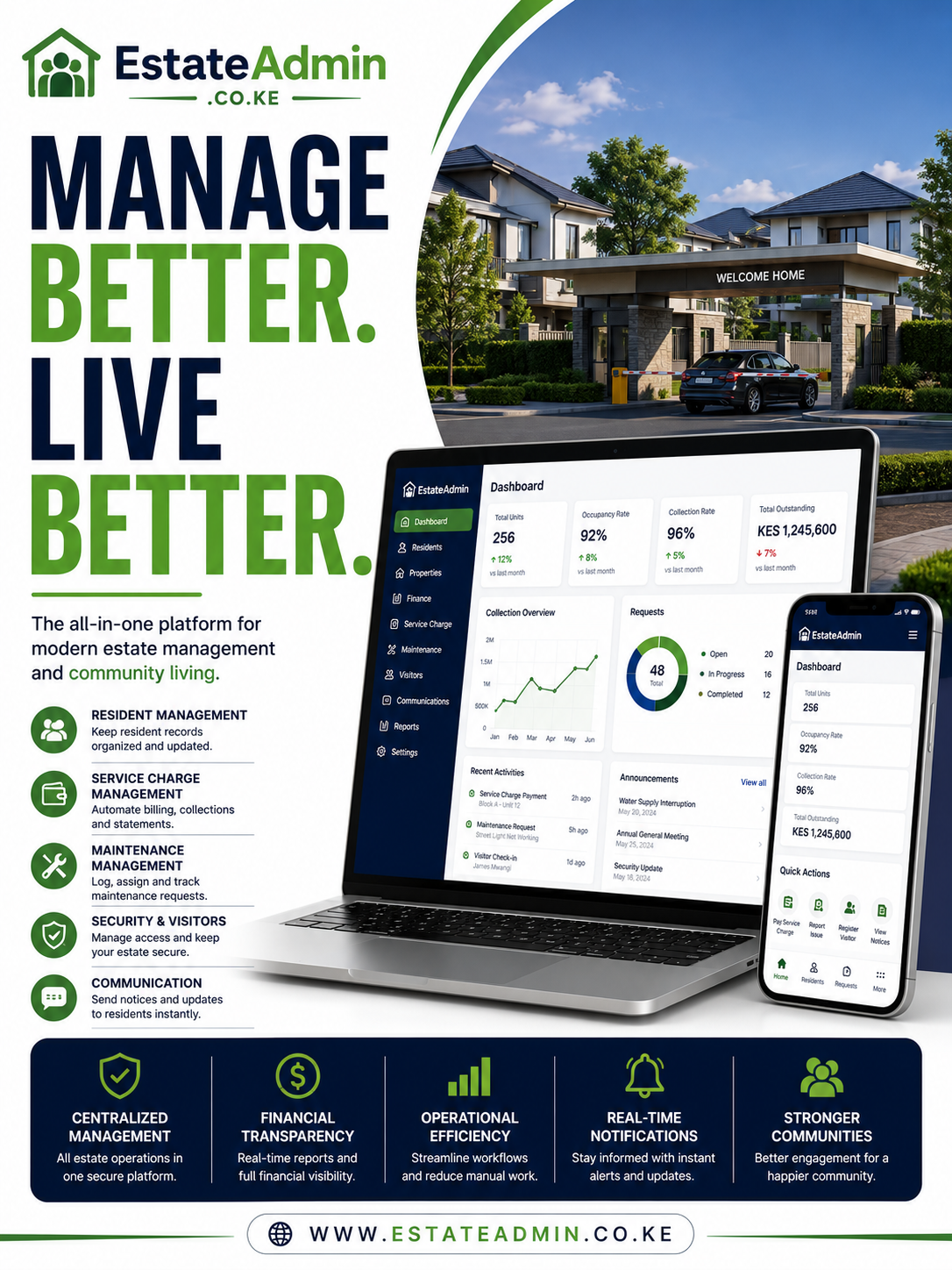
free Residential Estate Billing Software 2026 can help residential estates, property managers, homeowners’ associations, and estate administrators organize recurring charges, resident accounts, payments, invoices, arrears, receipts, and financial records. Instead of depending on spreadsheets, paper files, manual calculations, and separate payment records, estate managers can use billing software to centralize financial information and make recurring billing easier to manage.
Managing billing for a residential estate becomes increasingly complicated as the number of homes and residents grows. An estate may need to collect service charges, water bills, security fees, garbage collection charges, maintenance contributions, parking fees, and other recurring or one-time charges. A suitable system can bring these activities together and give administrators a clearer view of what each resident owes and what the estate has collected.
What Is Residential Estate Billing Software?
free Residential Estate Billing Software 2026 refers to software designed to help residential communities manage charges and payments associated with homes, apartments, units, and residents.
A billing platform can help administrators manage:
- Resident accounts
- Property records
- Unit information
- Service charges
- Utility charges
- Recurring bills
- One-time charges
- Payment records
- Outstanding balances
- Arrears
- Invoices
- Receipts
- Financial reports
The word “free” can refer to completely free software or a free plan with limited functionality, so estate managers should always check what features are actually available.
Why Residential Estates Need Billing Software
Residential estates often collect money for services that benefit the entire community.
These can include:
- Security
- Cleaning
- Waste collection
- Landscaping
- Water
- Common-area electricity
- Road maintenance
- Repairs
- Estate administration
When these charges are calculated manually, mistakes can occur and collecting payments can become difficult.
free Residential Estate Billing Software 2026 can make it easier to organize these charges and associate them with the correct residents or properties.
Centralized Resident Billing
A centralized billing system stores financial information in one place.
Instead of maintaining separate spreadsheets for different buildings or blocks, administrators can manage:
Property → Unit → Resident → Charges → Payments → Balance
This structure makes it easier to understand the financial position of individual residents.
Resident Account Management
Each resident can have an account showing their financial activity.
A resident account may contain:
- Resident name
- House or unit number
- Contact details
- Recurring charges
- Previous invoices
- Payments
- Adjustments
- Outstanding balance
This gives administrators a clear history of the resident’s billing activity.
Property and Unit Management
A residential estate may have hundreds of houses or apartments.
Software can organize units by:
- Estate
- Block
- Floor
- House number
- Unit type
- Owner
- Tenant
- Occupancy status
free Residential Estate Billing Software 2026 can then associate charges with the appropriate property or unit.
Service Charge Billing
Service charges are among the most common fees in managed residential estates.
They may cover:
- Security
- Cleaning
- Landscaping
- Waste management
- Shared facilities
- Road maintenance
- Estate administration
The billing system can create recurring charges based on the estate’s defined billing structure.
Automated Recurring Billing
Recurring billing can save administrators considerable time.
For example:
Monthly Service Charge: KSh 8,000
Due Date: 5th
Number of Units: 100
Rather than creating 100 separate charges every month manually, software can generate recurring charges according to configured rules.
This is one of the most useful capabilities to look for in free Residential Estate Billing Software 2026.
Different Billing Rates
Not every property necessarily pays the same amount.
An estate may have:
- Standard houses
- Larger houses
- Apartments
- Commercial units
- Premium units
The system should be able to accommodate different billing structures where required.
Utility Billing
Some estates charge residents separately for utilities.
These may include:
- Water
- Electricity
- Garbage
- Internet
- Security
- Other shared services
A billing system can help administrators record these charges against individual resident accounts.
Water Billing
Water billing can become complicated when residents have individual meters.
A system may record:
Previous Reading: 1,200
Current Reading: 1,250
Consumption: 50 Units
Rate: KSh 100
Water Charge: KSh 5,000
This can provide a more structured way to calculate consumption-based charges.
Meter Reading Management
If an estate uses individual meters, administrators can record readings periodically.
The software can maintain:
- Meter number
- Resident
- Property
- Previous reading
- Current reading
- Consumption
- Billing period
This information can then support accurate billing.
Electricity and Utility Charges
Where utilities are allocated to residents, billing software can record the appropriate charges.
The estate may use:
- Meter readings
- Fixed charges
- Shared utility costs
- Consumption-based rates
The billing method depends on the estate’s management structure.
Estate Invoices
Invoices provide residents with a clear breakdown of what they owe.
An invoice can show:
- Resident
- Property
- Billing period
- Service charge
- Water
- Garbage
- Security
- Other charges
- Previous balance
- Payments
- Total amount due
free Residential Estate Billing Software 2026 can make invoice generation more organized.
Digital Receipts
After a resident makes a payment, the system can generate a digital receipt.
A receipt can contain:
- Resident name
- Property
- Amount paid
- Payment date
- Payment method
- Transaction reference
- Remaining balance
Digital receipts reduce dependence on handwritten documentation.
Payment Recording
Payments should be associated with the correct resident account.
The system can record:
- Payment date
- Amount
- Payment method
- Reference
- Resident
- Property
- Billing account
This helps maintain an accurate payment history.
Rent and Estate Charges
Residential estates may have different financial models.
Some collect:
- Rent
- Service charges
- Utility fees
- Maintenance contributions
- Parking fees
Others may only manage community charges while rent is handled separately.
free Residential Estate Billing Software 2026 can be useful when multiple charge types need to be tracked in one system.
Payment Methods
Residents may pay through different channels.
These can include:
- Mobile money
- Bank transfer
- Cash
- Cheque
- Card
- Online payment
The software should support the payment workflows that are relevant to the estate.
Mobile Money Payments in Kenya
Mobile money is an important payment channel for many residential communities in Kenya.
A suitable platform may allow administrators to record mobile money payments or integrate with supported payment services.
Payment integration can reduce manual reconciliation when configured correctly.
Payment Reconciliation
Payment reconciliation involves matching received payments against resident accounts.
For example:
Total Bills: KSh 1,000,000
Payments Received: KSh 850,000
Outstanding: KSh 150,000
free Residential Estate Billing Software 2026 can make it easier to identify outstanding balances and compare expected collections with actual payments.
Arrears Management
Outstanding balances are a major concern for estate administrators.
A billing dashboard can show:
- Current arrears
- Overdue accounts
- Partially paid accounts
- Total outstanding
- Aging of balances
This makes it easier to prioritize payment follow-ups.
Arrears Aging
Aging reports can categorize outstanding balances according to how long they have remained unpaid.
For example:
0–30 Days
31–60 Days
61–90 Days
90+ Days
This can help management committees understand the severity of unpaid charges.
Automated Payment Reminders
Payment reminders can help residents remember upcoming deadlines.
Depending on the platform, notifications can be sent through:
- SMS
- Mobile applications
- Other supported channels
Automated reminders can reduce the amount of manual follow-up required from administrators.
Late Payment Charges
Some estates apply penalties or interest when payments remain overdue according to their rules and agreements.
The billing system can support configured late-payment charges where this functionality is available.
Administrators should ensure any penalties comply with applicable agreements and laws.
Resident Statements
A resident statement provides a detailed account history.
It may show:
Opening Balance
Charges
Payments
Adjustments
Credits
Outstanding Balance
This can be useful when residents request clarification about their accounts.
Financial Reports
Estate managers need reports to understand financial performance.
Reports may include:
- Billing reports
- Collection reports
- Arrears reports
- Payment reports
- Income reports
- Expense reports
- Resident statements
- Property reports
A free Residential Estate Billing Software 2026 platform should be evaluated based on the reporting capabilities available in its free offering.
Estate Income Tracking
An estate management committee may want to know how much money has been collected during a particular period.
For example:
Service Charges: KSh 800,000
Water Charges: KSh 250,000
Parking Charges: KSh 100,000
Other Charges: KSh 50,000
Total: KSh 1,200,000
This information can support financial planning.
Estate Expense Management
Billing is only one side of estate financial management.
Administrators may also need to track:
- Security costs
- Cleaning
- Landscaping
- Repairs
- Utilities
- Staff wages
- Contractor payments
- Administrative expenses
Combining billing and expense records can provide a clearer view of the estate’s financial health.
Budget Management
Residential communities often operate according to annual or monthly budgets.
A budget may allocate funds to:
Security
Maintenance
Cleaning
Utilities
Landscaping
Administration
Software can help compare actual expenditure against planned budgets where budgeting functionality is supported.
Maintenance Charges
Some estates collect special contributions for maintenance projects.
Examples include:
- Road repairs
- Gate repairs
- Painting
- Drainage
- Security upgrades
- Common-area improvements
A billing system can create additional charges for approved projects.
One-Time Charges
Not every bill is recurring.
The estate may need to charge residents for:
- Replacement access cards
- Special repairs
- Event fees
- Parking permits
- Damage
- Other approved services
free Residential Estate Billing Software 2026 can help keep one-time charges separate from recurring billing.
Parking Fee Management
Some estates charge residents for additional parking spaces.
The system can associate parking charges with:
- Resident
- Property
- Parking space
- Billing period
- Payment status
This keeps parking-related income separate and organized.
Multi-Property Billing
Property management companies may manage several residential estates.
A centralized billing platform can allow administrators to manage:
Estate A
Estate B
Estate C
Each estate can have its own residents, units, charges, and financial records.
This is particularly valuable for professional property management companies.
Multi-User Access
Billing software may be used by several employees.
For example:
Estate Manager
Accountant
Administrator
Property Manager
Management Committee
Role-based permissions can help control what each person can view or modify.
Role-Based Access
Financial information should not necessarily be accessible to every employee.
A free Residential Estate Billing Software 2026 solution with role-based permissions can allow administrators to assign appropriate access levels.
For example:
Accountant → Financial records
Estate Manager → Billing and resident management
Maintenance Officer → Maintenance information
Security Officer → Access-related information
Resident Self-Service
Some platforms provide resident portals.
Residents may be able to:
- View bills
- Check balances
- Download invoices
- Download receipts
- View payment history
- Make payments
- Submit requests
Self-service functionality can reduce repetitive questions sent to estate administrators.
Resident Notifications
Notifications can be used to communicate:
- New bills
- Payment confirmations
- Upcoming due dates
- Arrears
- Estate announcements
- Service interruptions
This creates a more structured communication process.
Cloud-Based Billing Software
Cloud-based systems can allow authorized users to access estate information remotely.
This can be useful for:
- Estate managers
- Property management companies
- Accountants
- Committee members
Access is typically available through supported devices and internet connections.
Mobile Billing Management
Property managers are often required to move between offices and residential properties.
Mobile-friendly software can help them check:
- Resident accounts
- Payments
- Arrears
- Bills
- Reports
This can make estate administration more flexible.
Data Security
Billing systems contain sensitive financial and resident information.
A reliable system should have appropriate controls such as:
- Secure authentication
- User permissions
- Data backups
- Activity logs
- Secure data transmission
- Controlled access
Estate administrators should also establish internal procedures for protecting resident data.
Free vs Paid Estate Billing Software
Searching for free Residential Estate Billing Software 2026 can be a sensible option for communities that have limited budgets.
However, free versions may impose restrictions such as:
- Limited residents
- Limited properties
- Limited users
- Limited invoices
- Limited reports
- Limited storage
- No payment integrations
- Limited technical support
Therefore, administrators should compare the free offering with the estate’s actual requirements.
Is Free Billing Software Enough?
The answer depends on the size of the residential community.
A small estate may only require:
- Resident accounts
- Basic billing
- Payment recording
- Receipts
- Simple reports
A larger estate may require:
- Automated billing
- Utility metering
- Payment integrations
- Resident portals
- Advanced accounting
- Detailed reports
- Multiple users
- Automated notifications
A free platform may work well initially but become insufficient as the estate expands.
How to Choose Residential Estate Billing Software
Before selecting free Residential Estate Billing Software 2026, administrators should identify their most important billing requirements.
Consider:
- Number of units
- Number of residents
- Number of properties
- Monthly billing volume
- Types of charges
- Utility billing
- Payment channels
- Arrears management
- Reporting
- Resident communication
- User permissions
- Security
- Scalability
This ensures that the chosen platform solves real problems rather than simply being free.
Questions to Ask Before Choosing a System
Before adopting free Residential Estate Billing Software 2026, ask:
Can it manage multiple estates?
Can it manage multiple units?
Can it create resident accounts?
Can it generate recurring charges?
Can it handle different billing rates?
Can it manage water bills?
Can it track meter readings?
Can it record payments?
Can it generate invoices?
Can it issue digital receipts?
Can it track arrears?
Can it send payment reminders?
Can residents view their accounts?
Can it generate financial reports?
Can different users have different permissions?
Can it integrate with payment services?
Can it support mobile access?
How is resident data protected?
What happens if the estate exceeds the free plan’s limits?
These questions can help administrators determine whether a platform is appropriate.
Benefits of Free Residential Estate Billing Software
free Residential Estate Billing Software 2026 can offer several advantages when its functionality matches the needs of the community.
Reduced Administrative Costs
Free software can allow smaller communities to begin digitizing billing without a large software budget.
Better Financial Organization
Resident charges, payments, receipts, and balances can be centralized.
Reduced Manual Calculations
Recurring billing and automated calculations can reduce repetitive work.
Faster Payment Tracking
Administrators can quickly identify paid and outstanding accounts.
Better Resident Service
Digital invoices, receipts, and statements make it easier to answer resident questions.
Improved Transparency
Clear records can help management committees explain how charges and payments are handled.
Easier Reporting
Financial reports can provide better visibility into the estate’s billing performance.
Potential Limitations
Although free Residential Estate Billing Software 2026 can be attractive, free solutions should be evaluated carefully.
A free system may not provide:
- Advanced accounting
- Automated payment reconciliation
- Payment gateway integrations
- Large-scale resident management
- Custom reports
- Dedicated support
- Advanced security
- API integrations
- Automated utility billing
These limitations can become important as an estate grows.
When to Upgrade
An estate may need a paid solution when it experiences:
- More residents
- More units
- Higher transaction volumes
- Complex utility billing
- Multiple properties
- More employees
- Increased reporting requirements
- Need for integrations
- Advanced accounting requirements
The objective should be to select software that can support the community’s current needs while allowing future expansion.
Residential Estate Billing in Kenya
Residential communities in Kenya increasingly need organized ways to manage service charges, utilities, maintenance contributions, and other recurring payments.
A free Residential Estate Billing Software 2026 platform can provide a starting point for communities that want to move away from manual billing processes. Support for mobile money payment workflows can be particularly useful for estates where residents commonly use mobile payment services.
However, administrators should also evaluate how the software handles reconciliation, resident accounts, reporting, data security, and future growth.
Final Conclusion
free Residential Estate Billing Software 2026 can help residential estates modernize how they manage billing, resident accounts, service charges, utility fees, payments, invoices, receipts, arrears, and financial reporting. Instead of depending entirely on spreadsheets, paper records, and manual calculations, estate administrators can use centralized software to create a more structured billing process.
The most important advantage is not simply eliminating paperwork. A good billing platform can help administrators understand what each resident owes, what has been paid, which accounts are overdue, how much the estate has collected, and how financial performance changes over time.
For smaller residential communities, free Residential Estate Billing Software 2026 may provide enough functionality to manage basic recurring charges and payment records without introducing a significant software expense. Larger communities may eventually need advanced functionality such as automated billing, utility management, payment integrations, resident portals, detailed accounting, and more sophisticated reporting.
Free software should therefore be evaluated according to the actual needs of the estate. Administrators should examine resident numbers, billing frequency, service charge structures, utility requirements, payment methods, reporting needs, and security before selecting a platform.
When the right system is chosen, free Residential Estate Billing Software 2026 can provide a practical foundation for more organized residential estate financial management. It can reduce repetitive administrative work, improve payment visibility, simplify resident communication, and give estate managers better information for making financial decisions.
free Residential Estate Billing Software 2026
free Residential Estate Billing Software 2026
free Residential Estate Billing Software 2026
free Residential Estate Billing Software 2026
free Residential Estate Billing Software 2026
free Residential Estate Billing Software 2026
free Residential Estate Billing Software 2026
free Residential Estate Billing Software 2026
free Residential Estate Billing Software 2026
free Residential Estate Billing Software 2026
free Residential Estate Billing Software 2026
free Residential Estate Billing Software 2026
free Residential Estate Billing Software 2026
free Residential Estate Billing Software 2026
free Residential Estate Billing Software 2026