
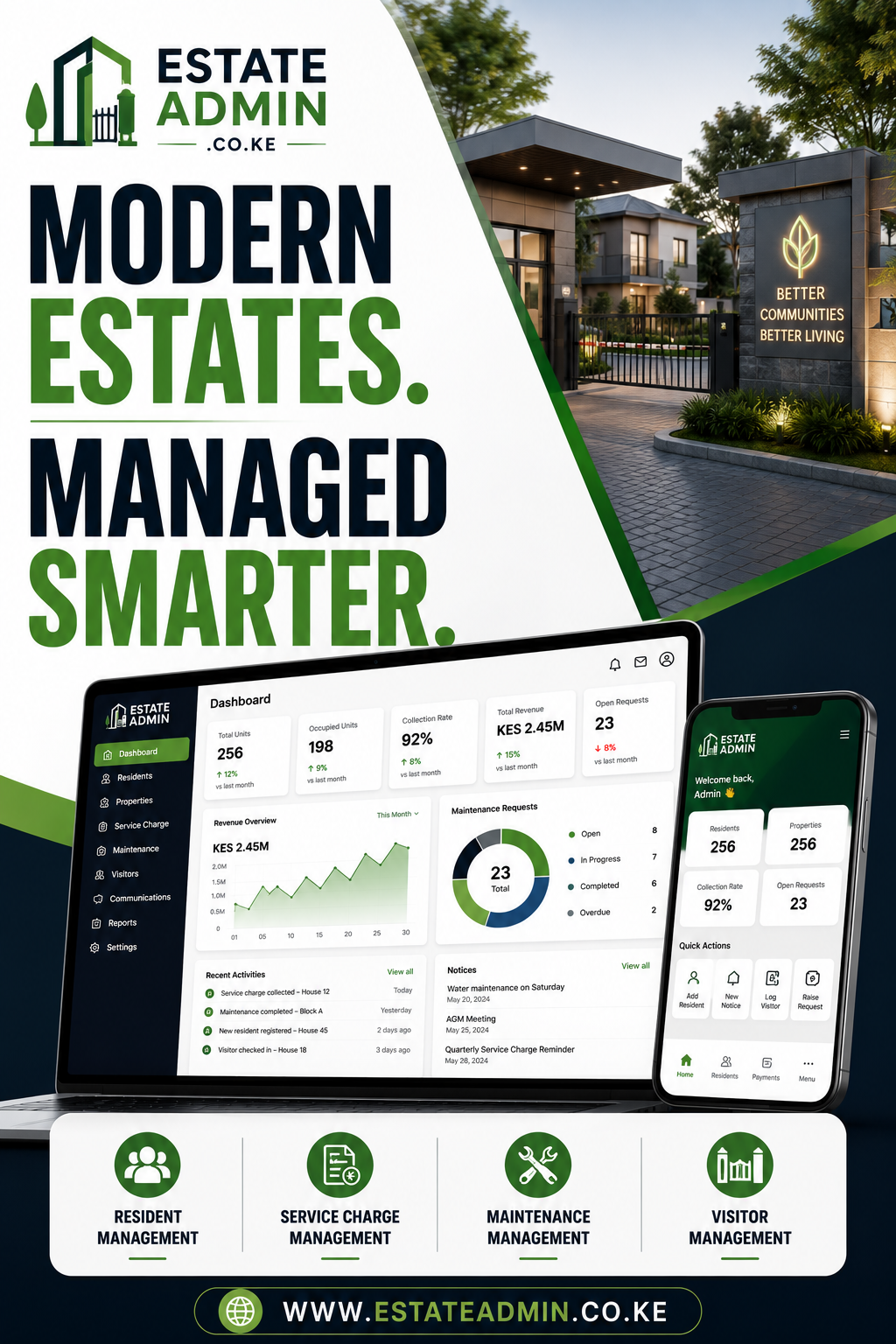
Features of Real Estate Management System are essential for property managers, landlords, real estate companies, developers, and estate administrators looking to simplify daily operations and improve efficiency. The Features of Real Estate Management System include tools for tenant management, rent collection, lease administration, maintenance tracking, financial reporting, occupancy monitoring, document management, and communication. Instead of relying on spreadsheets and manual paperwork, a modern real estate management system centralizes every property management process into a secure cloud-based platform. As Kenya’s real estate industry continues to grow, businesses require software that can automate repetitive tasks, provide real-time insights, and support informed decision-making. Understanding the Features of Real Estate Management System helps organizations choose software that meets their current operational needs while preparing them for future growth.
Table of Contents
- Introduction
- What Is a Real Estate Management System?
- Why Features Matter When Choosing Software
- Core Features Every Real Estate Management System Should Include
- Advanced Features That Improve Productivity
- Benefits of Using a Modern Property Management Platform
- Choosing the Right System for Your Business
- Real Estate Management Systems in Kenya
- Why PMS Is a Reliable Solution
- Future Trends in Property Management Software
Introduction
Features of Real Estate Management System continue evolving as technology transforms how residential, commercial, and mixed-use properties are managed. Today’s property management software does much more than record rent payments. It helps organizations automate financial processes, manage tenants, coordinate maintenance, monitor occupancy, generate reports, and securely store important documents. By bringing these functions together in one platform, businesses can improve operational efficiency, reduce administrative work, and deliver better services to property owners and tenants.
For real estate businesses operating in Kenya, adopting software with comprehensive features helps streamline operations while supporting business expansion in an increasingly competitive market.
What Is a Real Estate Management System?
A real estate management system is software designed to manage every aspect of property administration from a centralized platform.
The Features of Real Estate Management System support activities such as:
- Tenant registration.
- Property management.
- Rent collection.
- Lease administration.
- Maintenance coordination.
- Financial reporting.
- Occupancy monitoring.
- User management.
- Communication.
- Document storage.
Instead of managing different processes separately, organizations can access all information through one secure dashboard.
Why Features Matter When Choosing Software
Selecting property management software involves more than comparing prices.
The Features of Real Estate Management System determine how effectively the platform supports daily operations.
Comprehensive features help businesses:
- Improve efficiency.
- Reduce manual work.
- Increase productivity.
- Improve tenant satisfaction.
- Strengthen financial control.
- Enhance communication.
- Support business growth.
- Simplify reporting.
Choosing software with the right capabilities provides long-term operational value.
Core Features Every Real Estate Management System Should Include
Tenant Management
Tenant management forms the foundation of every property management platform.
The system should allow users to:
- Register tenants.
- Store contact information.
- Track occupancy.
- Maintain tenant histories.
- Record payment details.
- Monitor lease status.
Accurate tenant information improves communication and service delivery.
Rent Collection
One of the most valuable Features of Real Estate Management System is automated rent collection.
Modern systems support:
- Online payments.
- Payment reminders.
- Digital receipts.
- Outstanding balance tracking.
- Payment history.
- Rent reconciliation.
Automation reduces late payments while simplifying financial management.
Lease Administration
Lease management ensures tenancy agreements remain organized throughout their lifecycle.
The software should help users:
- Create lease agreements.
- Monitor lease expiry dates.
- Manage renewals.
- Track notices.
- Store lease documents.
- Record occupancy changes.
Automated reminders help prevent missed lease renewals.
Property Management
The platform should maintain complete property records.
Information may include:
- Property details.
- Unit information.
- Occupancy status.
- Rental rates.
- Property ownership.
- Inspection records.
Centralized records improve operational visibility.
Maintenance Management
Efficient maintenance protects property value and improves tenant satisfaction.
Maintenance features should support:
- Work order creation.
- Technician assignment.
- Progress tracking.
- Maintenance history.
- Cost recording.
- Tenant notifications.
Organized maintenance processes reduce delays and improve service quality.
Financial Reporting
Financial reporting is among the most important Features of Real Estate Management System.
Managers should be able to generate:
- Income reports.
- Expense reports.
- Rent collection summaries.
- Outstanding balances.
- Occupancy reports.
- Profitability analysis.
Real-time financial information supports better business decisions.
Document Management
Digital document storage simplifies record keeping.
The software should securely store:
- Lease agreements.
- Tenant records.
- Payment receipts.
- Property documents.
- Inspection reports.
- Maintenance records.
Centralized document management reduces paperwork while improving accessibility.
Occupancy Monitoring
Monitoring property occupancy helps managers maximize rental income.
The system should display:
- Occupied units.
- Vacant units.
- Reserved units.
- Lease expiry dates.
- Occupancy percentages.
- Vacancy trends.
Accurate occupancy information supports strategic planning.
Advanced Features That Improve Productivity
Modern property management software includes advanced capabilities that further improve efficiency.
Examples include:
- Cloud accessibility.
- Mobile applications.
- Automated notifications.
- Business intelligence dashboards.
- Role-based user access.
- SMS integration.
- Email notifications.
- Online tenant portals.
- Multi-property management.
- Real-time analytics.
These advanced tools help organizations manage larger property portfolios with greater efficiency.
Benefits of Using a Modern Property Management Platform
Organizations implementing software with comprehensive Features of Real Estate Management System experience numerous operational improvements.
Benefits include:
- Faster rent collection.
- Better financial visibility.
- Improved maintenance coordination.
- Reduced paperwork.
- Enhanced tenant communication.
- Increased operational efficiency.
- Better record management.
- Stronger business growth.
Automation allows property managers to dedicate more time to strategic planning and customer service.
Choosing the Right System for Your Business
When evaluating property management software, organizations should consider:
- Ease of use.
- Available features.
- Scalability.
- Security.
- Cloud accessibility.
- Reporting capabilities.
- Customer support.
- Integration options.
- Mobile compatibility.
- Future development.
Selecting software that aligns with long-term business objectives ensures maximum return on investment.
Real Estate Management Systems in Kenya
Kenya’s growing real estate industry requires modern technology to manage expanding property portfolios efficiently.
Businesses managing apartments, office buildings, shopping centres, mixed-use developments, gated communities, and commercial properties increasingly rely on software with comprehensive Features of Real Estate Management System to improve operational efficiency and deliver better services.
Whether operating in Nairobi, Mombasa, Kisumu, Nakuru, Eldoret, Thika, Meru, Nyeri, or other regions, digital property management solutions help organizations remain competitive.
Why PMS Is a Reliable Solution
For organizations looking for complete Features of Real Estate Management System, PMS provides an integrated cloud-based property management platform.
PMS includes:
- Tenant management.
- Rent collection.
- Lease administration.
- Maintenance management.
- Financial reporting.
- Occupancy tracking.
- Property dashboards.
- Multi-property management.
- User permissions.
- Cloud accessibility.
- Automated notifications.
- Real-time reporting.
Designed for landlords, property managers, developers, and real estate companies, PMS helps simplify property management while supporting sustainable business growth.
Future Trends in Property Management Software
The Features of Real Estate Management System continue expanding as technology evolves.
Emerging innovations include:
- Artificial intelligence.
- Predictive maintenance.
- Smart building integration.
- Mobile-first management.
- Digital lease signing.
- Advanced analytics.
- Cloud-native platforms.
- Automated workflows.
These technologies will continue transforming property management by improving efficiency, accuracy, and customer experience.
Benefits of the Features of Real Estate Management System for Different Stakeholders
The Features of Real Estate Management System benefit everyone involved in managing and operating rental properties. From property owners and managers to accountants, maintenance teams, tenants, and investors, modern software simplifies everyday tasks while improving communication and operational efficiency.
Instead of relying on paper files, spreadsheets, or disconnected applications, all stakeholders can access accurate information from one centralized platform. This improves collaboration, reduces errors, and enables faster decision-making across the organization.
Benefits for Property Owners
Property owners need clear visibility into the performance of their investments.
The Features of Real Estate Management System help property owners:
- Monitor rental income in real time.
- View occupancy rates.
- Analyze financial performance.
- Track maintenance expenses.
- Monitor outstanding balances.
- Access property reports.
- Review tenant information.
- Make informed investment decisions.
Real-time reporting allows owners to understand how each property is performing without waiting for manual updates.
Benefits for Property Managers
Managing multiple properties involves coordinating tenants, finances, maintenance, and lease agreements.
Using the Features of Real Estate Management System, property managers can:
- Automate rent collection.
- Track lease agreements.
- Monitor maintenance requests.
- Manage vacant units.
- Generate financial reports.
- Store property documents.
- Communicate with tenants.
- Manage multiple properties efficiently.
Automation reduces administrative work while allowing managers to focus on improving tenant satisfaction.
Benefits for Landlords
Independent landlords can also benefit from adopting modern property management software.
The Features of Real Estate Management System enable landlords to:
- Receive online rent payments.
- Monitor payment history.
- Track lease expiry dates.
- Store tenant information.
- Schedule maintenance.
- Receive automated reminders.
- Reduce paperwork.
- Improve cash flow management.
Digital property management helps landlords save time while maintaining professional operations.
Benefits for Finance Teams
Financial management is one of the most important aspects of property administration.
The Features of Real Estate Management System support finance teams by helping them:
- Record rental income.
- Track operating expenses.
- Generate financial statements.
- Monitor outstanding balances.
- Prepare management reports.
- Export accounting data.
- Improve reconciliation.
- Strengthen financial transparency.
Accurate financial reporting simplifies budgeting, auditing, and long-term planning.
Benefits for Maintenance Teams
Efficient maintenance protects property value while improving tenant satisfaction.
The Features of Real Estate Management System help maintenance teams:
- Receive maintenance requests instantly.
- Prioritize urgent repairs.
- Assign technicians.
- Track repair progress.
- Record maintenance costs.
- Update work orders.
- Maintain maintenance history.
- Improve response times.
Well-organized maintenance management reduces delays and improves service quality.
Benefits for Tenants
Tenants increasingly expect convenient digital property management services.
The Features of Real Estate Management System provide tenants with:
- Online rent payments.
- Digital payment receipts.
- Maintenance request submission.
- Lease information access.
- Automatic payment reminders.
- Faster communication.
- Better service tracking.
- Improved overall rental experience.
These features increase tenant satisfaction while encouraging longer tenancy periods.
Improving Efficiency Through Automation
Automation is one of the most valuable Features of Real Estate Management System because it eliminates repetitive manual work and improves consistency.
Modern systems automate:
- Rent collection.
- Payment reminders.
- Lease renewal notifications.
- Maintenance scheduling.
- Financial reporting.
- Occupancy monitoring.
- Tenant communication.
- Document management.
- User administration.
- Performance reporting.
Property managers can oversee larger property portfolios without significantly increasing administrative staff.
Across Kenya, more real estate businesses are embracing automation to improve service delivery and reduce operating costs.
Compliance, Security and Risk Management
Property management involves handling confidential financial records, lease agreements, and tenant information.
The Features of Real Estate Management System should include enterprise-grade security to protect business and customer data.
Role-Based User Access
Different users require different levels of access.
Typical user roles include:
- Property owners.
- Property managers.
- Accountants.
- Leasing officers.
- Maintenance staff.
- System administrators.
Role-based permissions improve accountability while reducing unauthorized access.
Secure Document Storage
Modern software securely stores:
- Lease agreements.
- Tenant records.
- Payment receipts.
- Property documents.
- Financial reports.
- Maintenance records.
- Inspection reports.
- Supporting documents.
Digital storage reduces paperwork while improving accessibility.
Audit Trails
Every important activity performed within the system is recorded automatically.
Managers can review:
- Rent payments.
- Lease updates.
- User activities.
- Maintenance requests.
- Financial transactions.
- Administrative changes.
Audit logs improve transparency and simplify compliance reviews.
Cloud Backup and Disaster Recovery
Automatic cloud backups protect business information from:
- Hardware failures.
- Accidental deletion.
- Software problems.
- Unexpected disasters.
Reliable backups ensure business continuity while minimizing operational disruptions.
Data Security
Modern property management software protects sensitive information using encrypted communication, secure authentication methods, regular software updates, and advanced access controls.
These security measures help organizations maintain trust while protecting valuable business information.
Integrating a Real Estate Management System with Other Business Solutions
Today’s property businesses rely on several digital platforms.
The Features of Real Estate Management System should integrate with:
- Accounting software.
- Online payment gateways.
- Customer Relationship Management (CRM) systems.
- SMS notification platforms.
- Email services.
- Banking systems.
- Business intelligence dashboards.
- Maintenance management software.
- Document management solutions.
- Reporting platforms.
Integration improves productivity by eliminating duplicate data entry and ensuring information flows smoothly across different systems.
Why PMS Is the Ideal Property Management Solution
Choosing software with comprehensive functionality ensures long-term business success.
PMS provides all the essential Features of Real Estate Management System required by landlords, property managers, developers, and real estate companies.
PMS offers:
- Tenant management.
- Online rent collection.
- Lease administration.
- Maintenance management.
- Financial reporting.
- Occupancy tracking.
- Property dashboards.
- Multi-property management.
- Role-based user permissions.
- Cloud accessibility.
- Automated notifications.
- Real-time analytics.
The platform is designed to simplify daily operations while helping organizations improve efficiency, strengthen financial control, and provide excellent tenant service.
Features of Real Estate Management System for the Kenyan Market
Kenya’s real estate industry continues expanding, increasing the demand for digital property management solutions.
Businesses benefiting from the Features of Real Estate Management System include:
- Property management companies.
- Apartment owners.
- Commercial property managers.
- Estate management firms.
- Real estate developers.
- Housing cooperatives.
- Student accommodation providers.
- Mixed-use developments.
- Rental agencies.
- Institutional property owners.
Whether managing properties in Nairobi, Mombasa, Kisumu, Nakuru, Eldoret, Thika, Meru, Nyeri, or other towns, modern property management software helps improve operational efficiency and deliver better tenant experiences.
Future Trends in Real Estate Management Systems
Technology continues transforming property management.
The Features of Real Estate Management System are expected to evolve with innovations such as:
Artificial Intelligence
AI will automate tenant communication, analyze rental trends, forecast occupancy, and provide recommendations for improving operational performance.
Predictive Maintenance
Systems will use historical maintenance data to predict equipment failures before they occur, helping reduce repair costs and minimize disruptions.
Mobile Property Management
Property managers and landlords will increasingly manage operations using mobile applications that provide access to all essential system functions.
Advanced Business Analytics
Powerful dashboards will deliver deeper insights into occupancy rates, rental income, maintenance costs, tenant retention, and portfolio performance.
Smart Building Integration
Future systems will integrate with smart locks, CCTV, access control systems, utility monitoring devices, and Internet of Things (IoT) technologies to improve automation and security.
Cloud-Based Collaboration
Cloud platforms will continue enhancing collaboration by allowing authorized users to securely access real-time property information from anywhere while benefiting from automatic backups and software updates.
Getting Started with a Real Estate Management System
Implementing software with comprehensive Features of Real Estate Management System requires careful planning.
Organizations should:
- Assess current property management processes.
- Identify operational challenges.
- Organize tenant and property records.
- Import existing data into the new platform.
- Configure user roles and permissions.
- Train staff on system usage.
- Test workflows before deployment.
- Launch the system across all properties.
- Monitor performance through reports and dashboards.
- Continuously optimize processes as business requirements evolve.
A structured implementation process ensures a smooth transition while maximizing the return on technology investment.
Conclusion
The Features of Real Estate Management System provide the foundation for efficient, secure, and scalable property management. By combining tenant management, rent collection, lease administration, maintenance tracking, financial reporting, document management, and automation into one centralized platform, modern software helps organizations reduce manual work, improve decision-making, and deliver exceptional service.
As the Kenyan real estate market continues to grow, investing in a comprehensive property management solution has become essential for landlords, property managers, developers, and estate management companies. With PMS, businesses gain access to a reliable cloud-based platform that simplifies operations, enhances productivity, and supports long-term growth across residential, commercial, and mixed-use property portfolios.
Benefits of the Features of Real Estate Management System for Different Stakeholders
The Features of Real Estate Management System benefit everyone involved in managing and operating rental properties. From property owners and managers to accountants, maintenance teams, tenants, and investors, modern software simplifies everyday tasks while improving communication and operational efficiency.
Instead of relying on paper files, spreadsheets, or disconnected applications, all stakeholders can access accurate information from one centralized platform. This improves collaboration, reduces errors, and enables faster decision-making across the organization.
Benefits for Property Owners
Property owners need clear visibility into the performance of their investments.
The Features of Real Estate Management System help property owners:
- Monitor rental income in real time.
- View occupancy rates.
- Analyze financial performance.
- Track maintenance expenses.
- Monitor outstanding balances.
- Access property reports.
- Review tenant information.
- Make informed investment decisions.
Real-time reporting allows owners to understand how each property is performing without waiting for manual updates.
Benefits for Property Managers
Managing multiple properties involves coordinating tenants, finances, maintenance, and lease agreements.
Using the Features of Real Estate Management System, property managers can:
- Automate rent collection.
- Track lease agreements.
- Monitor maintenance requests.
- Manage vacant units.
- Generate financial reports.
- Store property documents.
- Communicate with tenants.
- Manage multiple properties efficiently.
Automation reduces administrative work while allowing managers to focus on improving tenant satisfaction.
Benefits for Landlords
Independent landlords can also benefit from adopting modern property management software.
The Features of Real Estate Management System enable landlords to:
- Receive online rent payments.
- Monitor payment history.
- Track lease expiry dates.
- Store tenant information.
- Schedule maintenance.
- Receive automated reminders.
- Reduce paperwork.
- Improve cash flow management.
Digital property management helps landlords save time while maintaining professional operations.
Benefits for Finance Teams
Financial management is one of the most important aspects of property administration.
The Features of Real Estate Management System support finance teams by helping them:
- Record rental income.
- Track operating expenses.
- Generate financial statements.
- Monitor outstanding balances.
- Prepare management reports.
- Export accounting data.
- Improve reconciliation.
- Strengthen financial transparency.
Accurate financial reporting simplifies budgeting, auditing, and long-term planning.
Benefits for Maintenance Teams
Efficient maintenance protects property value while improving tenant satisfaction.
The Features of Real Estate Management System help maintenance teams:
- Receive maintenance requests instantly.
- Prioritize urgent repairs.
- Assign technicians.
- Track repair progress.
- Record maintenance costs.
- Update work orders.
- Maintain maintenance history.
- Improve response times.
Well-organized maintenance management reduces delays and improves service quality.
Benefits for Tenants
Tenants increasingly expect convenient digital property management services.
The Features of Real Estate Management System provide tenants with:
- Online rent payments.
- Digital payment receipts.
- Maintenance request submission.
- Lease information access.
- Automatic payment reminders.
- Faster communication.
- Better service tracking.
- Improved overall rental experience.
These features increase tenant satisfaction while encouraging longer tenancy periods.
Improving Efficiency Through Automation
Automation is one of the most valuable Features of Real Estate Management System because it eliminates repetitive manual work and improves consistency.
Modern systems automate:
- Rent collection.
- Payment reminders.
- Lease renewal notifications.
- Maintenance scheduling.
- Financial reporting.
- Occupancy monitoring.
- Tenant communication.
- Document management.
- User administration.
- Performance reporting.
Property managers can oversee larger property portfolios without significantly increasing administrative staff.
Across Kenya, more real estate businesses are embracing automation to improve service delivery and reduce operating costs.
Compliance, Security and Risk Management
Property management involves handling confidential financial records, lease agreements, and tenant information.
The Features of Real Estate Management System should include enterprise-grade security to protect business and customer data.
Role-Based User Access
Different users require different levels of access.
Typical user roles include:
- Property owners.
- Property managers.
- Accountants.
- Leasing officers.
- Maintenance staff.
- System administrators.
Role-based permissions improve accountability while reducing unauthorized access.
Secure Document Storage
Modern software securely stores:
- Lease agreements.
- Tenant records.
- Payment receipts.
- Property documents.
- Financial reports.
- Maintenance records.
- Inspection reports.
- Supporting documents.
Digital storage reduces paperwork while improving accessibility.
Audit Trails
Every important activity performed within the system is recorded automatically.
Managers can review:
- Rent payments.
- Lease updates.
- User activities.
- Maintenance requests.
- Financial transactions.
- Administrative changes.
Audit logs improve transparency and simplify compliance reviews.
Cloud Backup and Disaster Recovery
Automatic cloud backups protect business information from:
- Hardware failures.
- Accidental deletion.
- Software problems.
- Unexpected disasters.
Reliable backups ensure business continuity while minimizing operational disruptions.
Data Security
Modern property management software protects sensitive information using encrypted communication, secure authentication methods, regular software updates, and advanced access controls.
These security measures help organizations maintain trust while protecting valuable business information.
Integrating a Real Estate Management System with Other Business Solutions
Today’s property businesses rely on several digital platforms.
The Features of Real Estate Management System should integrate with:
- Accounting software.
- Online payment gateways.
- Customer Relationship Management (CRM) systems.
- SMS notification platforms.
- Email services.
- Banking systems.
- Business intelligence dashboards.
- Maintenance management software.
- Document management solutions.
- Reporting platforms.
Integration improves productivity by eliminating duplicate data entry and ensuring information flows smoothly across different systems.
Why PMS Is the Ideal Property Management Solution
Choosing software with comprehensive functionality ensures long-term business success.
PMS provides all the essential Features of Real Estate Management System required by landlords, property managers, developers, and real estate companies.
PMS offers:
- Tenant management.
- Online rent collection.
- Lease administration.
- Maintenance management.
- Financial reporting.
- Occupancy tracking.
- Property dashboards.
- Multi-property management.
- Role-based user permissions.
- Cloud accessibility.
- Automated notifications.
- Real-time analytics.
The platform is designed to simplify daily operations while helping organizations improve efficiency, strengthen financial control, and provide excellent tenant service.
Features of Real Estate Management System for the Kenyan Market
Kenya’s real estate industry continues expanding, increasing the demand for digital property management solutions.
Businesses benefiting from the Features of Real Estate Management System include:
- Property management companies.
- Apartment owners.
- Commercial property managers.
- Estate management firms.
- Real estate developers.
- Housing cooperatives.
- Student accommodation providers.
- Mixed-use developments.
- Rental agencies.
- Institutional property owners.
Whether managing properties in Nairobi, Mombasa, Kisumu, Nakuru, Eldoret, Thika, Meru, Nyeri, or other towns, modern property management software helps improve operational efficiency and deliver better tenant experiences.
Future Trends in Real Estate Management Systems
Technology continues transforming property management.
The Features of Real Estate Management System are expected to evolve with innovations such as:
Artificial Intelligence
AI will automate tenant communication, analyze rental trends, forecast occupancy, and provide recommendations for improving operational performance.
Predictive Maintenance
Systems will use historical maintenance data to predict equipment failures before they occur, helping reduce repair costs and minimize disruptions.
Mobile Property Management
Property managers and landlords will increasingly manage operations using mobile applications that provide access to all essential system functions.
Advanced Business Analytics
Powerful dashboards will deliver deeper insights into occupancy rates, rental income, maintenance costs, tenant retention, and portfolio performance.
Smart Building Integration
Future systems will integrate with smart locks, CCTV, access control systems, utility monitoring devices, and Internet of Things (IoT) technologies to improve automation and security.
Cloud-Based Collaboration
Cloud platforms will continue enhancing collaboration by allowing authorized users to securely access real-time property information from anywhere while benefiting from automatic backups and software updates.
Getting Started with a Real Estate Management System
Implementing software with comprehensive Features of Real Estate Management System requires careful planning.
Organizations should:
- Assess current property management processes.
- Identify operational challenges.
- Organize tenant and property records.
- Import existing data into the new platform.
- Configure user roles and permissions.
- Train staff on system usage.
- Test workflows before deployment.
- Launch the system across all properties.
- Monitor performance through reports and dashboards.
- Continuously optimize processes as business requirements evolve.
A structured implementation process ensures a smooth transition while maximizing the return on technology investment.
Conclusion
The Features of Real Estate Management System provide the foundation for efficient, secure, and scalable property management. By combining tenant management, rent collection, lease administration, maintenance tracking, financial reporting, document management, and automation into one centralized platform, modern software helps organizations reduce manual work, improve decision-making, and deliver exceptional service.
As the Kenyan real estate market continues to grow, investing in a comprehensive property management solution has become essential for landlords, property managers, developers, and estate management companies. With PMS, businesses gain access to a reliable cloud-based platform that simplifies operations, enhances productivity, and supports long-term growth across residential, commercial, and mixed-use property portfolios.