
Rental Tracking Kenya: Smart Solutions for Landlords & Property Managers
Rental tracking in Kenya has become an essential tool for landlords, property managers, and real estate companies seeking to streamline rent collection, monitor tenant payments, and manage properties efficiently. With the rapid growth of rental properties in cities like Nairobi, Mombasa, Kisumu, Nakuru, and Eldoret, manual rent tracking is no longer sustainable.
Modern rental tracking software in Kenya helps property owners save time, reduce rent arrears, and gain real-time visibility into their rental income.
What Is Rental Tracking?
Rental tracking is the process of monitoring:
-
Rent payments and arrears
-
Tenant balances
-
Due dates and payment history
-
Property income and expenses
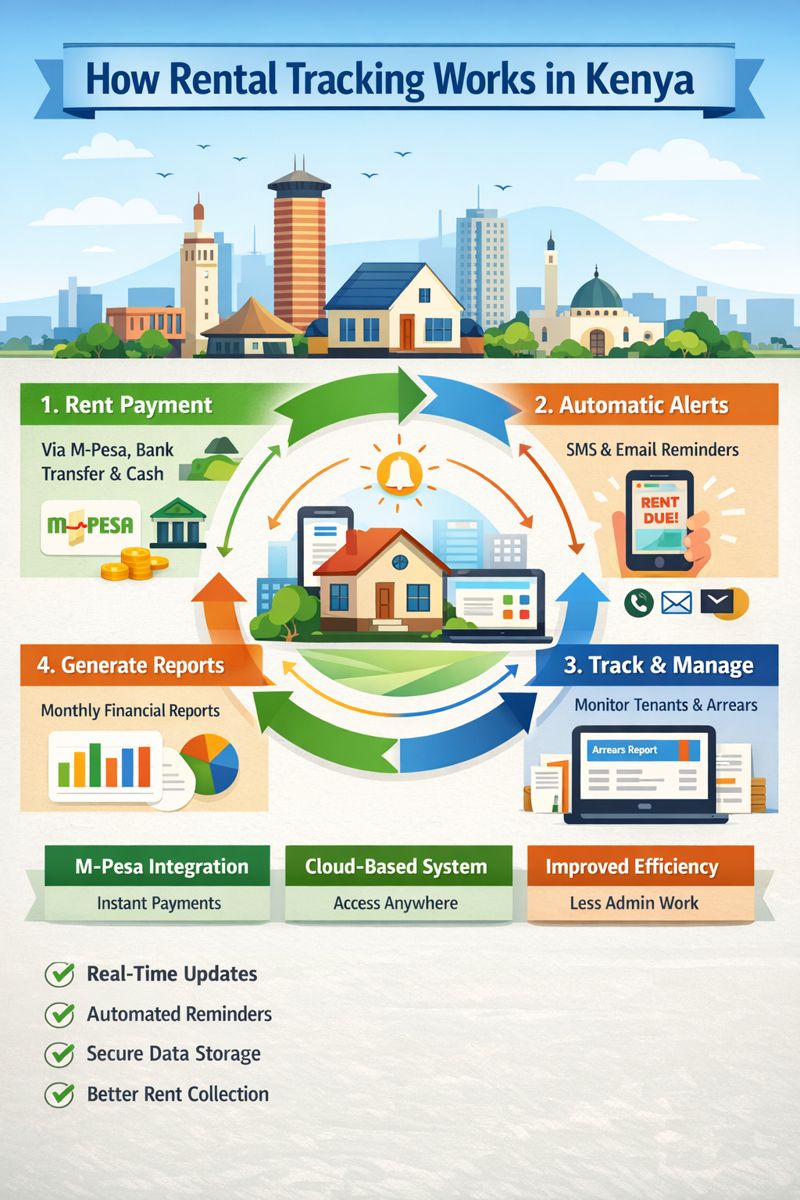
In Kenya, rental tracking is increasingly digitized, allowing landlords to track payments via M-Pesa, bank transfers, and cash from one centralized system.
Why Rental Tracking Is Important in Kenya
1. Reduce Rent Arrears
Late and missed payments are a major challenge in the Kenyan rental market. Rental tracking systems automatically flag overdue rent, helping landlords follow up before arrears accumulate.
2. Support M-Pesa & Local Payments
The best rental tracking solutions in Kenya integrate seamlessly with M-Pesa, enabling real-time payment updates and automatic reconciliation.
3. Save Time & Eliminate Manual Records
Paper-based rent books and spreadsheets are prone to errors. Digital rental tracking ensures accurate records, instant reports, and secure data storage.
4. Improve Tenant Accountability
Tenants receive automated rent reminders via SMS or email, reducing disputes and improving payment consistency.
Key Features of Rental Tracking Software in Kenya
A good rental tracking system should include:
-
Automated Rent Invoicing
-
Real-Time Rent Payment Tracking
-
M-Pesa Integration
-
Tenant & Unit Management
-
Arrears & Penalty Tracking
-
Monthly & Annual Rental Reports
-
Cloud-Based Access (Anywhere, Anytime)
These features are especially valuable for landlords managing multiple units or properties across different locations in Kenya.
Who Needs Rental Tracking in Kenya?
Rental tracking tools are ideal for:
-
Individual landlords
-
Property management companies
-
Real estate agencies
-
Apartment owners
-
Commercial property managers
Whether you manage bedsitters, apartments, offices, shops, or mixed-use developments, rental tracking software simplifies operations.
Benefits of Digital Rental Tracking in Kenya
-
📊 Accurate financial reporting
-
📱 Mobile-friendly access
-
💰 Better cash flow management
-
🔐 Secure tenant records
-
⏱ Less time spent on rent follow-ups
By adopting rental tracking technology, Kenyan landlords can focus on property growth instead of chasing rent.
Rental Tracking Kenya: Cloud-Based & Scalable
Modern rental tracking systems in Kenya are cloud-based, meaning:
-
No installation required
-
Access from phone, tablet, or computer
-
Automatic updates and backups
-
Scalable for small and large portfolios
This makes them suitable for both small landlords and large property firms.
How to Choose the Best Rental Tracking Solution in Kenya
When selecting a rental tracking system, consider:
-
Local payment integrations (M-Pesa, banks)
-
Ease of use
-
Customer support within Kenya
-
Affordable pricing in KES
-
Data security and backups
A locally tailored solution ensures compliance with Kenyan rental practices and tenant expectations.
Future of Rental Tracking in Kenya
As Kenya’s real estate sector grows, rental tracking is evolving with:
-
AI-powered payment predictions
-
Automated penalties & discounts
-
Smart tenant analytics
-
Integration with accounting and maintenance systems
Digital rental tracking is no longer optional—it’s a competitive advantage.
Conclusion
Rental tracking in Kenya is transforming how landlords and property managers handle rent collection and tenant management. By switching to a reliable rental tracking system, you gain better control, improved cash flow, and peace of mind.
If you manage rental properties in Kenya, now is the time to embrace smart rental tracking and future-proof your real estate business.
Common Challenges in Rental Tracking in Kenya
Landlords and property managers in Kenya often face several challenges when tracking rental income manually:
1. Late and Missed Payments
Many tenants struggle with consistent rent payments due to varying income schedules. Manual tracking leads to errors and missed reminders, increasing the risk of rent arrears.
2. Disorganized Records
Using physical ledgers or spreadsheets makes it difficult to track multiple tenants or properties. Mistakes in calculations, lost receipts, and missing data are common.
3. Limited Visibility
Without digital systems, landlords have limited access to real-time rent data, making it difficult to make informed decisions or forecast cash flow.
4. Payment Reconciliation Challenges
Kenyan landlords often accept payments via M-Pesa, bank transfers, or cash, and reconciling these manually is time-consuming and error-prone.
Digital Rental Tracking: How It Solves These Problems
Using rental tracking software in Kenya addresses all these challenges:
-
Automated Rent Reminders: Tenants receive timely SMS or email notifications for upcoming payments.
-
Real-Time Payment Updates: Track M-Pesa and bank payments instantly.
-
Arrears Management: Systems automatically flag overdue accounts and calculate penalties.
-
Centralized Records: Store all tenant and property data in one cloud-based dashboard.
With digital rental tracking, landlords reduce stress, save time, and maintain a professional approach to property management.
Features Every Kenyan Landlord Should Look For
When choosing a rental tracking solution in Kenya, the following features are critical:
-
M-Pesa Integration – seamless mobile money payments.
-
Tenant Profiles – record tenant details, payment history, and lease agreements.
-
Property Management Dashboard – overview of units, income, and arrears.
-
Automated Invoicing – generate and send rent invoices with one click.
-
Alerts & Notifications – reminders for late payments, lease renewals, and inspections.
-
Financial Reporting – monthly, quarterly, and annual reports for accounting and tax purposes.
-
Secure Cloud Storage – backup data and access it from anywhere.
These features save hours of manual work and improve overall efficiency.
Case Study: How Rental Tracking Transformed a Nairobi Landlord’s Business
Consider a landlord in Nairobi managing 20 apartments. Previously, rent collection involved manual ledgers, M-Pesa statements, and constant follow-ups. This led to:
-
Over 25% in late or missed payments per month
-
High administrative stress
-
Poor tenant communication
After implementing rental tracking software:
-
Over 95% of rent was collected on time
-
Automated alerts reduced follow-up calls by 80%
-
Real-time dashboards allowed for informed decision-making
This shows how rental tracking can transform property management efficiency in Kenya.
Rental Tracking for Different Property Types in Kenya
1. Residential Properties
Rental tracking ensures that tenants pay on time and lease agreements are up-to-date. It’s particularly useful for apartments, townhouses, and bedsitters in urban areas like Nairobi and Mombasa.
2. Commercial Properties
For offices, shops, and industrial units, rental tracking helps landlords manage longer-term leases, variable payment schedules, and additional charges like utilities or maintenance fees.
3. Mixed-Use Properties
For properties with both commercial and residential units, digital rental tracking provides a unified view, helping landlords avoid confusion and mismanagement.
Integrating Rental Tracking with Other Property Management Tools
Modern rental tracking software in Kenya often integrates with:
-
Accounting software – for tax compliance and bookkeeping
-
Maintenance systems – track repairs, service requests, and costs
-
Tenant communication platforms – for announcements, reminders, and feedback
This creates an all-in-one property management ecosystem, reducing operational headaches.
Cost and ROI of Rental Tracking in Kenya
Investing in rental tracking software may have upfront costs, but the return on investment is significant:
-
Reduce missed payments by 20–30%
-
Save hundreds of hours annually on admin tasks
-
Improve tenant satisfaction and retention
-
Gain insights into property performance and cash flow
For Kenyan landlords, these benefits often outweigh the subscription fees, making rental tracking a cost-effective solution.
Tips for Successful Rental Tracking in Kenya
-
Choose Local-Friendly Solutions: Ensure M-Pesa and Kenyan bank integrations are available.
-
Train Staff: Make sure property managers understand how to use the system.
-
Regularly Update Tenant Records: Keep lease agreements, payment history, and contact information current.
-
Leverage Automated Reports: Use dashboards for real-time monitoring and decision-making.
-
Communicate With Tenants: Automated alerts improve transparency and reduce disputes.
The Future of Rental Tracking in Kenya
As Kenya’s real estate market grows, rental tracking will evolve further:
-
AI-Powered Predictions: Forecast rent defaults or occupancy trends.
-
Mobile-First Platforms: Manage rent and property on the go.
-
Integrated Property Ecosystems: Combine rental tracking, accounting, and maintenance in one platform.
-
Digital Contracts & Payments: Fully paperless leasing and payment solutions.
Landlords adopting these technologies will gain a competitive edge in Kenya’s rental market.
Conclusion: Why Kenyan Landlords Need Rental Tracking Today
Rental tracking in Kenya is no longer just a convenience—it’s a necessity. It helps landlords and property managers:
-
Stay organized
-
Reduce rent arrears
-
Track payments from M-Pesa and other platforms
-
Improve tenant relationships
-
Make data-driven decisions
Whether you manage a single apartment or a large portfolio across Nairobi, Mombasa, or Kisumu, rental tracking software ensures efficient, professional, and profitable property management.