
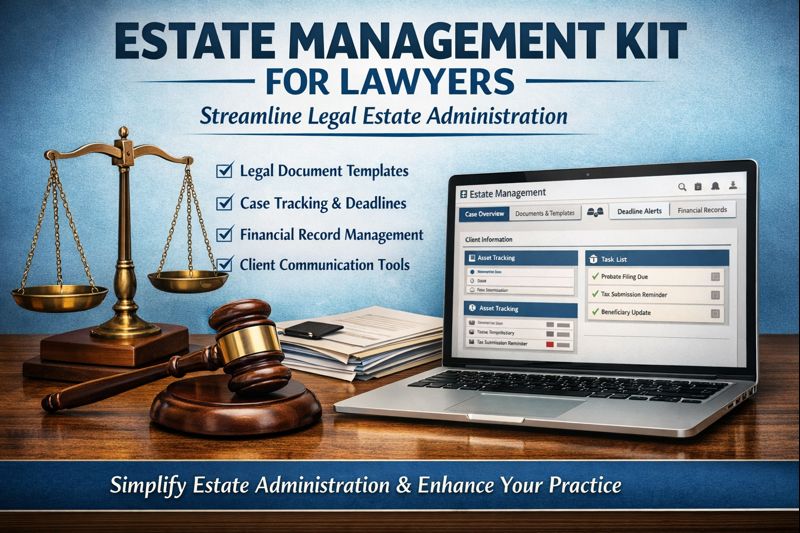
Estate Document Management: A Complete Guide for Trustees & Estate Professionals
Estate document management is the process of organizing, storing, and accessing estate-related documents in a secure and efficient way. It is a vital part of estate administration, especially for trustees, lawyers, and estate managers who handle multiple files, beneficiaries, and legal requirements.
In this guide, we explain why estate document management matters, the types of documents involved, best practices, and how modern software can simplify the process.
Why Estate Document Management Matters
Managing estate documents properly is essential for several reasons:
1. Legal Compliance
Estate administration requires strict compliance with legal standards. Missing or misplacing key documents can cause delays, penalties, or legal disputes.
2. Faster Estate Settlement
With organized documents, trustees can process estates faster. This improves efficiency and reduces the time beneficiaries wait for their inheritance.
3. Enhanced Security
Estate documents contain sensitive information such as wills, property titles, and bank statements. Proper document management ensures these files are secure from unauthorized access.
4. Better Transparency
A well-organized system improves communication between trustees, lawyers, beneficiaries, and other stakeholders. It builds trust and reduces conflict.
Key Documents Included in Estate Document Management
Estate document management covers a wide range of documents, including:
1. Wills & Testaments
The legal document that outlines how assets should be distributed.
2. Letters of Administration
Legal documents issued by the court to allow trustees to administer the estate.
3. Property Titles & Deeds
Documents proving ownership of property.
4. Bank Statements & Financial Records
Important for verifying assets and liabilities.
5. Insurance Policies
Including life insurance, property insurance, and other policies.
6. Beneficiary Information
Contacts, ID copies, and proof of relationship.
7. Tax Records
Important for estate tax filing and compliance.
Estate Document Management Best Practices
To manage estate documents effectively, follow these best practices:
1. Centralize Documents
Keep all estate documents in one secure place, either digitally or physically.
2. Use Clear Naming Conventions
Example:[DocumentType]_[EstateName]_[Date]
3. Categorize by Type
Group documents into categories like:
-
Legal documents
-
Financial records
-
Property records
-
Beneficiary information
4. Maintain Version Control
Always keep the latest version of a document and archive older versions.
5. Secure Access
Use role-based access control so only authorized people can view sensitive documents.
6. Backup Regularly
Ensure all documents are backed up to prevent data loss.
How Estate Document Management Software Helps
Modern estate document management software makes the process easier by offering:
1. Digital Storage & Organization
Store all documents online in a structured system.
2. Automated Document Indexing
Automatically tag and categorize documents for quick search.
3. Secure Access Control
Control who can view, edit, or download documents.
4. Audit Trails
Track who accessed or edited documents for accountability.
5. Integration with Estate Administration
Software often integrates with other estate administration tools for full workflow automation.
Who Needs Estate Document Management?
Estate document management is useful for:
-
Trustees
-
Estate lawyers
-
Estate administrators
-
Probate officers
-
Financial advisors
-
Family members handling estates
Estate Document Management Checklist
Use this checklist to ensure your estate documents are organized:
✅ All documents stored in one location
✅ Documents categorized by type
✅ Digital copies available
✅ Secure access and permissions set
✅ Backup and recovery plan in place
✅ Clear naming and version control
✅ Audit trail enabled
Advanced Estate Document Management Strategies
Effective estate document management goes beyond just storing files. It involves planning, automation, and ensuring accuracy throughout the estate administration process. Here are advanced strategies that can make the process more efficient and secure.
1. Create a Document Management Policy
A document management policy outlines how documents are handled, stored, shared, and archived. This policy should include:
-
Document naming standards
-
Retention periods
-
Access rules
-
Audit and review schedules
-
Backup procedures
-
Disaster recovery plan
A policy ensures consistency across all estate administration tasks and reduces mistakes.
2. Use Digital Signatures
Digital signatures speed up approvals and legal validation. Many estate documents require signatures from beneficiaries, trustees, or legal representatives.
Digital signature tools:
-
Reduce the need for physical presence
-
Ensure authenticity
-
Improve compliance
-
Speed up processing
3. Implement Role-Based Access Control (RBAC)
Role-Based Access Control ensures that only authorized individuals can access specific documents. For example:
| Role | Access Level |
|---|---|
| Trustee | Full access |
| Lawyer | Legal documents only |
| Beneficiary | Limited access |
| Accountant | Financial records only |
RBAC prevents unauthorized access and reduces the risk of data breaches.
4. Use Document Indexing & Search
When documents are properly indexed, searching becomes instant. This is crucial when handling multiple estates at once.
Key indexing fields:
-
Document type
-
Estate name
-
Date
-
Beneficiary name
-
Property location
-
Case number
This enables quick retrieval and reduces time spent searching through folders.
5. Automate Document Workflows
Automation helps streamline document processing. Common automated workflows include:
-
Document approval routing
-
Automatic document tagging
-
Expiration alerts (e.g., insurance policies)
-
Notifications for missing documents
-
Audit trail generation
Automation saves time and improves accuracy, especially for high-volume estates.
Common Estate Document Management Challenges
Estate document management comes with challenges that can disrupt the administration process. Below are the most common challenges and how to solve them.
1. Missing or Incomplete Documents
Missing documents can cause legal delays and increase costs. To prevent this:
-
Use a document checklist
-
Confirm documents at the start of the process
-
Track missing items in a task list
-
Follow up regularly with beneficiaries
2. Duplicate Documents
Duplicate documents create confusion and may lead to using the wrong version. To prevent duplicates:
-
Use a centralized document repository
-
Implement version control
-
Use unique identifiers for documents
3. Security Risks
Estate documents contain sensitive personal data. Security risks include:
-
Data theft
-
Unauthorized access
-
Accidental deletion
-
Loss of physical documents
Solutions:
-
Use encrypted storage
-
Set access permissions
-
Backup data regularly
-
Use secure document-sharing tools
4. Poor Document Organization
Without a structured system, documents can become chaotic. This causes delays and confusion.
Solutions:
-
Standardized folder structure
-
Consistent naming conventions
-
Tagging and indexing
-
Regular audits
Estate Document Management for Trustees: Best Practices
Trustees handle a wide range of responsibilities. Proper document management helps trustees stay organized and compliant.
Trustee Best Practices Include:
-
Maintain a master document list
-
Keep legal and financial documents separate
-
Ensure all documents are dated and signed
-
Track document approvals and signatures
-
Store copies in both digital and physical formats
-
Keep a secure backup
Benefits of Estate Document Management Software
Estate document management software provides significant advantages:
1. Centralized Document Storage
All documents in one place, accessible from anywhere.
2. Faster Estate Processing
Quick retrieval saves time and speeds up administration.
3. Better Compliance
Built-in audit trails and permissions support legal requirements.
4. Improved Collaboration
Trustees, lawyers, and beneficiaries can collaborate efficiently.
5. Reduced Risk
Secure storage and controlled access reduce data risks.
How to Choose the Right Estate Document Management System
Selecting the right system depends on your needs. Here are key factors to consider:
1. Security & Compliance
Ensure the system is encrypted and compliant with legal standards.
2. Ease of Use
A simple interface ensures quick adoption by your team.
3. Search & Indexing
Fast search capabilities are essential.
4. Access Control
Role-based access is a must for sensitive documents.
5. Integration
The system should integrate with estate administration workflows and accounting systems.
6. Backup & Recovery
Automatic backup and recovery options are essential to prevent data loss.
Conclusion
Estate document management is a crucial part of estate administration. Whether you are a trustee, lawyer, or estate administrator, organizing and securing documents improves efficiency, compliance, and trust. By adopting modern document management systems and following best practices, estate administration becomes faster, safer, and more transparent.