
Estate Workflow Management: Streamline Every Step of Estate Administration
Estate workflow management is the key to organizing, tracking, and completing estate administration tasks efficiently. From document collection to beneficiary distribution, a structured workflow helps professionals manage estates accurately, compliantly, and on time.
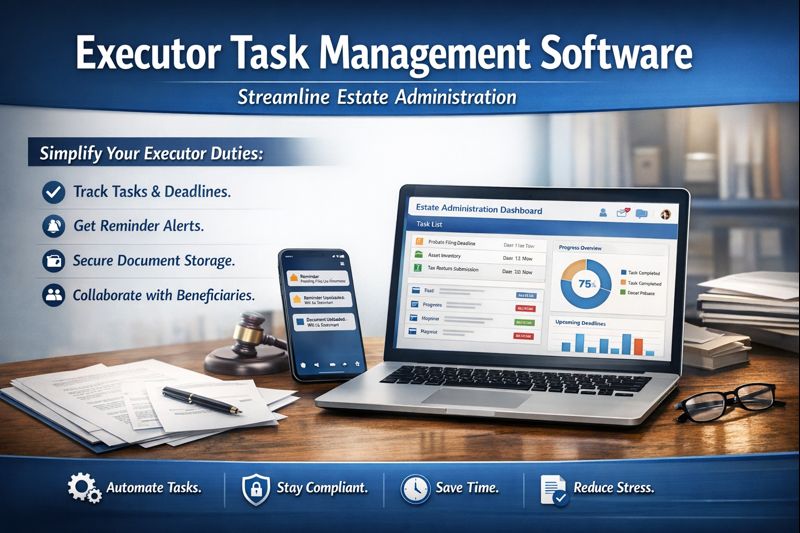
Modern estate workflow management solutions replace manual spreadsheets and paper-based processes with automated task tracking, secure document storage, and real-time collaboration—ensuring nothing is missed during the estate settlement process.
What Is Estate Workflow Management?
Estate workflow management refers to the systematic coordination of all tasks involved in estate administration. This includes:
-
Asset identification and valuation
-
Document collection and verification
-
Task assignment and progress tracking
-
Compliance and deadline management
-
Communication with beneficiaries and stakeholders
By centralizing these activities, estate professionals gain full visibility into each estate’s status while reducing delays and errors.
Why Estate Workflow Management Matters
Managing estates involves multiple stakeholders, strict timelines, and legal obligations. Without a structured workflow, tasks can be overlooked and compliance risks increase.
Key Benefits of Estate Workflow Management
-
Improved efficiency – Automate repetitive tasks and reduce manual effort
-
Clear task visibility – Track every step from initiation to closure
-
Enhanced compliance – Ensure legal and regulatory requirements are met
-
Reduced errors – Eliminate missed deadlines and incomplete documentation
-
Better collaboration – Coordinate seamlessly across teams and advisors
Who Needs Estate Workflow Management?
Estate workflow management is essential for:
-
Estate planners and administrators
-
Law firms managing probate and trusts
-
Financial advisors overseeing estate settlements
-
Executors and trustees handling multiple estates
-
Firms seeking scalable estate administration processes
Whether managing one estate or hundreds, workflow management ensures consistency and control.
Core Features of an Effective Estate Workflow Management System
A robust estate workflow management platform typically includes:
-
Task-based workflows with customizable checklists
-
Centralized document management with secure access
-
Automated reminders and deadline alerts
-
Progress dashboards and reporting
-
Role-based permissions for teams and clients
These features help estate professionals manage complex cases with confidence.
How Estate Workflow Management Improves Client Experience
Clients and beneficiaries expect transparency and timely updates. Estate workflow management tools provide:
-
Faster estate processing
-
Clear communication and task updates
-
Reduced administrative delays
-
Greater trust through organized execution
A smooth workflow leads to higher client satisfaction and professional credibility.
Estate Workflow Management for the Digital Era
As estates grow more complex, digital estate workflow management is no longer optional. Cloud-based platforms allow professionals to manage estates securely from anywhere, collaborate in real time, and scale operations without added administrative burden.
Final Thoughts
Estate workflow management transforms estate administration from a fragmented process into a streamlined, accountable system. By adopting structured workflows, estate professionals can save time, reduce risk, and deliver better outcomes for clients and beneficiaries.
If you’re looking to modernize estate administration, estate workflow management is the foundation for efficiency, compliance, and long-term success.
Common Challenges Without Estate Workflow Management
Many estate professionals struggle with inefficiencies caused by outdated processes. Without estate workflow management, firms often face:
-
Disorganized task tracking across multiple estates
-
Missed legal deadlines and compliance risks
-
Scattered documents stored in emails or local drives
-
Lack of visibility into estate progress
-
Inefficient handovers between team members
These challenges slow down estate administration and increase the likelihood of costly errors.
How Estate Workflow Management Reduces Risk
Estate workflow management introduces accountability and structure at every stage of estate settlement. By standardizing workflows, professionals can:
-
Ensure required steps are completed in the correct order
-
Track approvals and signatures with audit trails
-
Monitor compliance milestones in real time
-
Reduce dependency on individual staff knowledge
This risk-reduction approach is especially critical for high-value estates and regulated environments.
Customizable Workflows for Different Estate Types
No two estates are the same. Advanced estate workflow management systems allow customization for:
-
Probate estates
-
Trust administration
-
Intestate estates
-
Cross-border or multi-asset estates
-
Digital and non-traditional assets
Custom workflows ensure that each estate follows the appropriate legal and operational process.
Estate Workflow Management and Team Productivity
With centralized estate workflow management, teams work smarter—not harder. Productivity improves through:
-
Automatic task assignments
-
Clear role definitions
-
Reduced internal follow-ups
-
Faster onboarding for new staff
Teams can manage more estates without increasing overhead.
Integration with Estate Administration Tools
Estate workflow management platforms often integrate with:
-
Estate documentation and filing systems
-
Accounting and asset tracking tools
-
Client communication portals
-
Cloud storage and compliance tools
These integrations create a single, unified estate management ecosystem.
Scaling Your Firm with Estate Workflow Management
As firms grow, manual processes become bottlenecks. Estate workflow management enables scalability by:
-
Standardizing processes across teams
-
Supporting high estate volumes
-
Maintaining service quality at scale
-
Providing performance insights through analytics
This makes estate workflow management ideal for firms planning long-term growth.
Best Practices for Implementing Estate Workflow Management
To get the most value from estate workflow management:
-
Map your existing estate administration process
-
Identify repetitive and high-risk tasks
-
Build standardized workflows for common estate types
-
Train teams on workflow usage and accountability
-
Continuously refine workflows based on performance data
The Future of Estate Workflow Management
The future of estate workflow management is driven by automation, cloud access, and data-driven decision-making. Emerging trends include:
-
AI-assisted task prioritization
-
Smart compliance alerts
-
Real-time estate performance dashboards
-
Increased use of secure digital collaboration
These innovations will further simplify estate administration and improve outcomes.
Estate workflow management is no longer a luxury—it’s a necessity for modern estate administ
Conclusion: Why Estate Workflow Management Is Essential
ration. By organizing tasks, improving compliance, and enhancing visibility, estate workflow management empowers professionals to deliver faster, more reliable estate settlements.
Adopting the right estate workflow management solution positions your firm for efficiency, accuracy, and long-term success.