
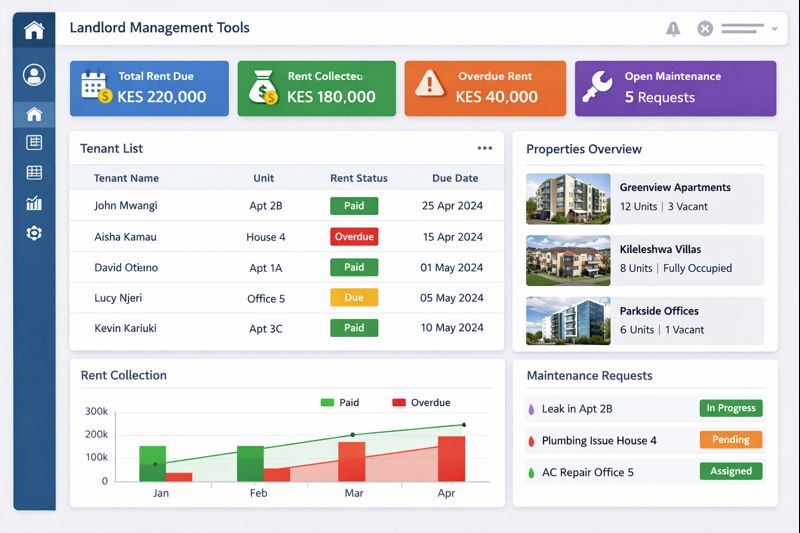
Landlord Management Tools: The Smart Way to Manage Rental Properties Efficiently
Managing rental properties can quickly become overwhelming without the right systems in place. From tracking rent payments and leases to handling maintenance requests and tenant communication, landlords face daily operational challenges. This is where landlord management tools come in—modern digital solutions designed to simplify, automate, and streamline property management.
In this guide, we explore what landlord management tools are, their key features, benefits, and how to choose the best solution for managing rental properties efficiently.
What Are Landlord Management Tools?
Landlord management tools are digital platforms or software systems that help landlords manage residential and commercial rental properties from one centralized dashboard. These tools automate routine tasks such as rent collection, tenant records, lease tracking, and property maintenance, allowing landlords to save time and reduce errors.
Whether you own a single rental unit or manage multiple properties, landlord management tools help you stay organized, compliant, and profitable.
Why Landlords Need Management Tools Today
Traditional property management methods—spreadsheets, notebooks, and manual receipts—are inefficient and prone to mistakes. Modern landlords are switching to digital tools because they offer:
-
Better financial tracking
-
Improved tenant communication
-
Automated reminders and alerts
-
Secure data storage
-
Real-time reporting and insights
With rental markets becoming more competitive, using landlord management tools is no longer optional—it’s essential.
Key Features of Effective Landlord Management Tools
1. Rent Collection and Payment Tracking
Landlord management tools allow you to:
-
Record rent payments automatically
-
Track overdue balances
-
Generate digital receipts
-
Support mobile money, bank transfers, and cash entries
This eliminates disputes and improves cash flow visibility.
2. Tenant Management
Store and manage tenant details such as:
-
Contact information
-
Lease start and end dates
-
Rent amounts
-
Payment history
Having all tenant records in one place makes management easier and more professional.
3. Lease and Agreement Tracking
Landlord management tools help you:
-
Monitor lease expiry dates
-
Receive renewal reminders
-
Store digital lease agreements
-
Avoid legal and compliance issues
This ensures no lease deadlines are missed.
4. Property and Unit Management
Manage multiple properties and units with ease by:
-
Assigning tenants to specific units
-
Tracking vacant and occupied units
-
Monitoring property performance
This is especially useful for landlords with apartments, estates, or commercial buildings.
5. Maintenance and Repair Tracking
Maintenance requests can be logged, assigned, and tracked digitally. Features include:
-
Maintenance request records
-
Repair status updates
-
Cost tracking
-
Vendor or technician assignment
This improves tenant satisfaction and protects property value.
6. Financial Reports and Analytics
Most landlord management tools provide:
-
Income and expense reports
-
Rent collection summaries
-
Monthly and annual financial statements
These reports help landlords make informed investment decisions.
7. Notifications and Reminders
Automated alerts notify landlords about:
-
Rent due dates
-
Overdue payments
-
Lease expiries
-
Maintenance updates
This reduces follow-ups and manual communication.
Benefits of Using Landlord Management Tools
Save Time and Reduce Workload
Automation eliminates repetitive tasks, allowing landlords to focus on growth rather than paperwork.
Improve Accuracy and Transparency
Digital records reduce human error and provide clear financial and tenant histories.
Better Tenant Relationships
Timely communication, organized maintenance handling, and transparent billing improve tenant trust.
Scalable Property Management
Landlord management tools grow with your portfolio, making it easy to manage more properties without additional staff.
Access Anytime, Anywhere
Cloud-based systems allow landlords to manage properties remotely using a phone, tablet, or computer.
Landlord Management Tools for the Kenyan Market
In Kenya, landlords face unique challenges such as:
-
Manual rent collection
-
Poor record keeping
-
Limited visibility across multiple units
-
Communication gaps with tenants
Modern landlord management tools tailored for Kenya support:
-
Mobile money tracking (M-Pesa)
-
Localized reporting
-
Multi-property management
-
Affordable subscription pricing
These tools empower both individual landlords and property managers to operate professionally.
How to Choose the Best Landlord Management Tools
When selecting a landlord management tool, consider the following:
-
Ease of use – Simple interface with minimal training
-
Local payment support – Mobile money and bank integration
-
Scalability – Ability to manage more units over time
-
Security – Secure cloud storage and data protection
-
Customer support – Reliable local or online support
Choosing the right tool ensures long-term efficiency and success.
Who Can Use Landlord Management Tools?
Landlord management tools are ideal for:
-
Individual landlords
-
Real estate investors
-
Property management companies
-
Estate managers
-
Commercial property owners
Whether you manage one unit or hundreds, these tools adapt to your needs.
The Future of Landlord Management
As property management continues to evolve, landlord management tools will increasingly use:
-
Automation and AI insights
-
Smart reporting dashboards
-
Integrated accounting
-
Mobile-first management
Landlords who adopt digital tools early gain a competitive advantage and long-term sustainability.
Final Thoughts
Landlord management tools are transforming how rental properties are managed. They reduce workload, improve financial tracking, enhance tenant relationships, and enable scalable growth. In today’s fast-paced real estate environment, embracing digital property management is the smartest move a landlord can make.
If you want to manage rental properties efficiently, professionally, and profitably, investing in reliable landlord management tools is the way forward.