
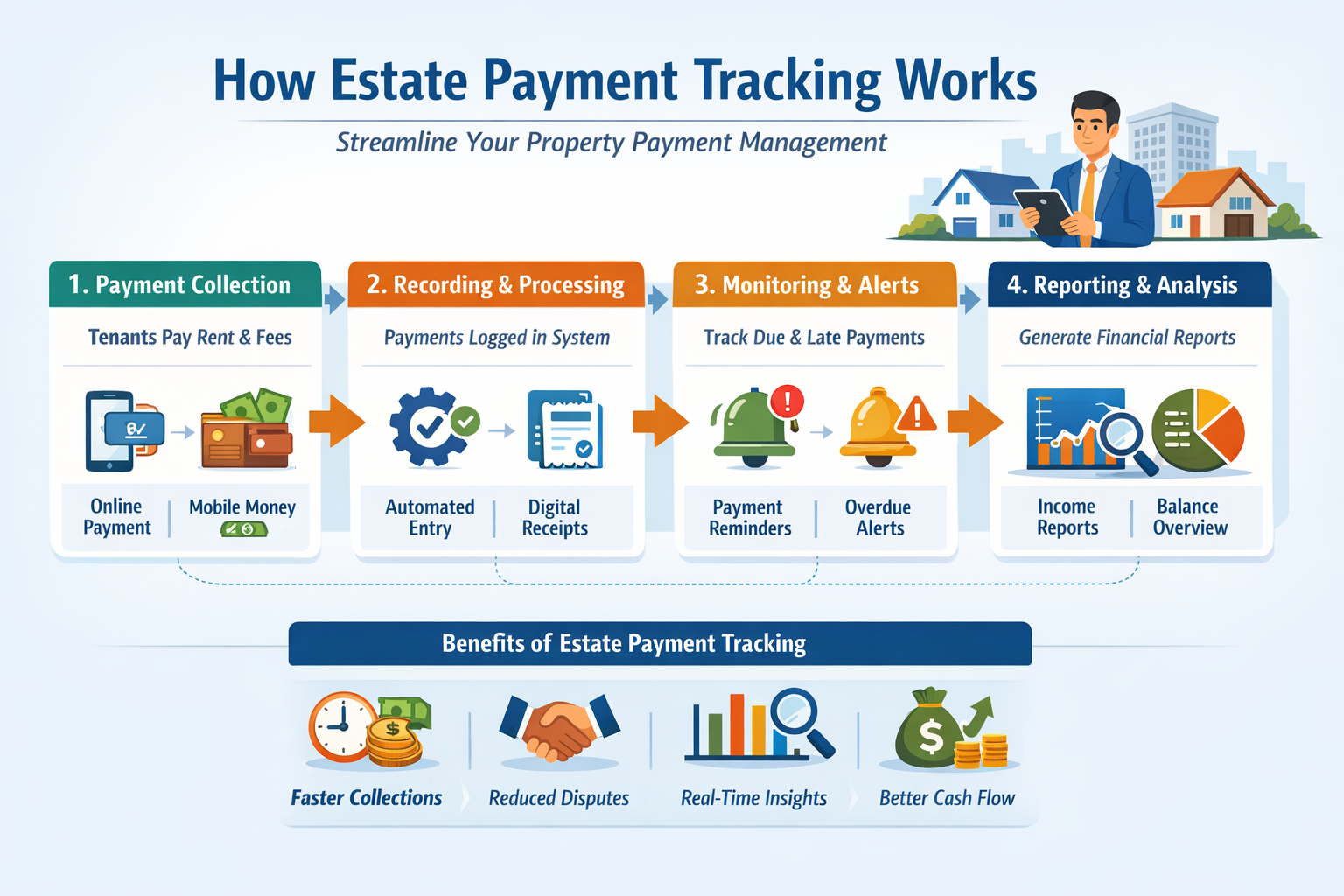
Estate Payment Tracking: Simplify Your Property Management
Managing multiple tenants and property payments can quickly become overwhelming without the right tools. Estate payment tracking is a modern solution that allows property managers and landlords to monitor all payments, ensuring timely collections and minimizing disputes.
With the right system, you can easily track rent, utility fees, and maintenance charges while keeping transparent records for tenants. This not only improves cash flow but aestateadmin.co.kelso enhances tenant satisfaction.
What is Estate Payment Tracking?
Estate payment tracking refers to the process of monitoring and recording all financial transactions within a residential or commercial estate. This includes:
-
Rent collection
-
Service charges
-
Utility bills
-
Maintenance fees
By centralizing these payments, estate managers can generate real-time reports, identify overdue accounts, and streamline financial management across properties.
Benefits of Estate Payment Tracking
Implementing a robust estate payment tracking system comes with several advantages:
-
Timely Payment Collection
Automate reminders and notifications to tenants, reducing late payments. -
Financial Transparency
Maintain clear records for both tenants and property owners, fostering trust and accountability. -
Reduced Administrative Burden
Track all payments in one place, eliminating manual record-keeping and repetitive tasks. -
Data-Driven Insights
Access analytics to identify trends, such as late-paying tenants or recurring maintenance costs. -
Enhanced Tenant Experience
Provide tenants with easy payment options and receipts, improving satisfaction and loyalty.
How to Choose the Right Estate Payment Tracking System
When selecting a payment tracking solution for your estate, consider the following:
-
User-Friendly Interface: Ensure that both tenants and managers can easily navigate the system.
-
Automated Reminders: Reduce late payments with automated alerts.
-
Secure Payment Options: Support multiple payment methods with strong security measures.
-
Reporting and Analytics: Access detailed reports on payment history, pending dues, and financial summaries.
-
Integration Capabilities: Ensure the system integrates with your existing property management software.
Best Practices for Effective Estate Payment Tracking
-
Keep Accurate Records
Ensure that all payment data is logged immediately and accurately. -
Send Regular Reminders
Automate reminders for tenants before due dates to avoid late payments. -
Offer Multiple Payment Methods
Support bank transfers, mobile money, and online payment platforms for convenience. -
Monitor Overdue Payments
Track and follow up on delayed payments to maintain cash flow. -
Generate Regular Reports
Create monthly and yearly financial reports for accountability and planning.
Conclusion
Efficient estate payment tracking is essential for modern property management. By leveraging a reliable tracking system, landlords and property managers can reduce delays, streamline operations, and improve tenant satisfaction.
Investing in a robust estate payment tracking solution not only simplifies your financial management but also ensures transparency and accountability, creating a seamless experience for everyone involved.
Estate Payment Tracking Software Options
Modern technology has transformed estate management. Using specialized software for estate payment tracking makes monitoring payments easier, faster, and more accurate. Here are some features to look for:
-
Automated Payment Logging – All tenant payments are automatically recorded, reducing human error.
-
Multi-Property Support – Track payments across multiple estates from a single dashboard.
-
Customizable Alerts – Notify tenants of upcoming dues, overdue payments, or partial payments.
-
Mobile Access – Managers and tenants can access their accounts anytime via mobile apps.
-
Secure Data Storage – Keep financial information safe with encrypted cloud storage.
Some widely used estate payment tracking platforms in Kenya and globally include:
-
RentalDesk – Offers full rent tracking, reminders, and reports.
-
EstateAdmin – Ideal for large estates with multiple tenants.
-
VegaPOS Property Module – Combines payment tracking with tenant management.
Common Challenges in Estate Payment Tracking and How to Overcome Them
Even with a system in place, estate payment tracking can face hurdles:
-
Late Payments
Solution: Send automated reminders via SMS, email, or in-app notifications. -
Manual Record Errors
Solution: Transition to software that automatically records transactions and generates receipts. -
Tenant Disputes
Solution: Maintain transparent digital records accessible to tenants anytime. -
Multiple Payment Channels
Solution: Consolidate all payment methods into one integrated system for easier reconciliation. -
Lack of Analytics
Solution: Choose software that offers reporting dashboards to track overdue accounts, payment trends, and estate income.
Tips for Effective Estate Payment Tracking
To maximize the efficiency of your tracking system:
-
Standardize Payment Dates: Set a uniform rent due date across the estate to simplify monitoring.
-
Provide Digital Receipts: Every tenant payment should generate an instant receipt for transparency.
-
Track Partial Payments: Ensure your system can handle partial payments and record balances automatically.
-
Review Reports Weekly: Check dashboards regularly to catch issues early.
-
Train Your Staff: Ensure property managers and accountants know how to use the system effectively.
Real-Life Example of Estate Payment Tracking in Action
Imagine a residential estate with 150 tenants. Before implementing a tracking system, the estate manager relied on manual spreadsheets and cash payments. This led to:
-
Late rent collections
-
Confusion over partial payments
-
Frequent tenant disputes
After adopting an estate payment tracking system, the estate experienced:
-
Automated reminders sent to tenants via SMS and email
-
Digital receipts generated instantly for every payment
-
Real-time dashboards showing paid, pending, and overdue rents
-
Reduced disputes due to transparent records
As a result, payment collection efficiency increased by 40%, while tenant satisfaction improved significantly.
How Estate Payment Tracking Improves Property Investment ROI
Properly tracking payments doesn’t just simplify administration—it directly impacts your bottom line. Here’s how:
-
Minimized Payment Delays – Faster collections improve cash flow and reduce the need for emergency borrowing.
-
Reduced Administrative Costs – Less time spent manually reconciling payments saves money.
-
Accurate Financial Planning – Real-time data allows better budgeting for maintenance, renovations, and expansion.
-
Increased Tenant Retention – Transparent and smooth payment processes improve tenant loyalty.
-
Audit-Ready Records – Digital tracking ensures compliance and simplifies accounting during audits.
Estate Payment Tracking Trends in 2026
The property management landscape is evolving. Current trends in estate payment tracking include:
-
Mobile-First Payment Solutions – Tenants prefer mobile money and online transfers.
-
AI-Powered Analytics – Predict late payments, detect anomalies, and forecast cash flow.
-
Integrated Property Management Platforms – Combine payment tracking with lease agreements, maintenance, and tenant communication.
-
Blockchain-Based Payments – Secure, transparent, and tamper-proof payment records.
SEO Tips to Boost Estate Payment Tracking Content
To ensure this article ranks highly for estate payment tracking, focus on:
-
Keyword Placement – Include the phrase naturally in headings, subheadings, and first 100 words.
-
Long-Tail Keywords – Examples: “estate payment tracking software Kenya,” “how to track tenant payments,” “best property payment system.”
-
Internal Linking – Link to related pages such as property management software, rent collection tips, or tenant management guides.
-
External Authority Links – Reference industry-leading tools like RentalDesk or EstateAdmin for credibility.
-
Content-Length – Aim for 1,500–2,000 words with actionable tips, examples, and trends.
Conclusion
Estate payment tracking is no longer optional—it’s a critical component of modern property management. By adopting a reliable tracking system, estate managers can:
-
Collect payments on time
-
Reduce disputes
-
Improve financial planning
-
Enhance tenant satisfaction
Invest in estate payment tracking today and transform your property management into a seamless, transparent, and profitable operation.
-