
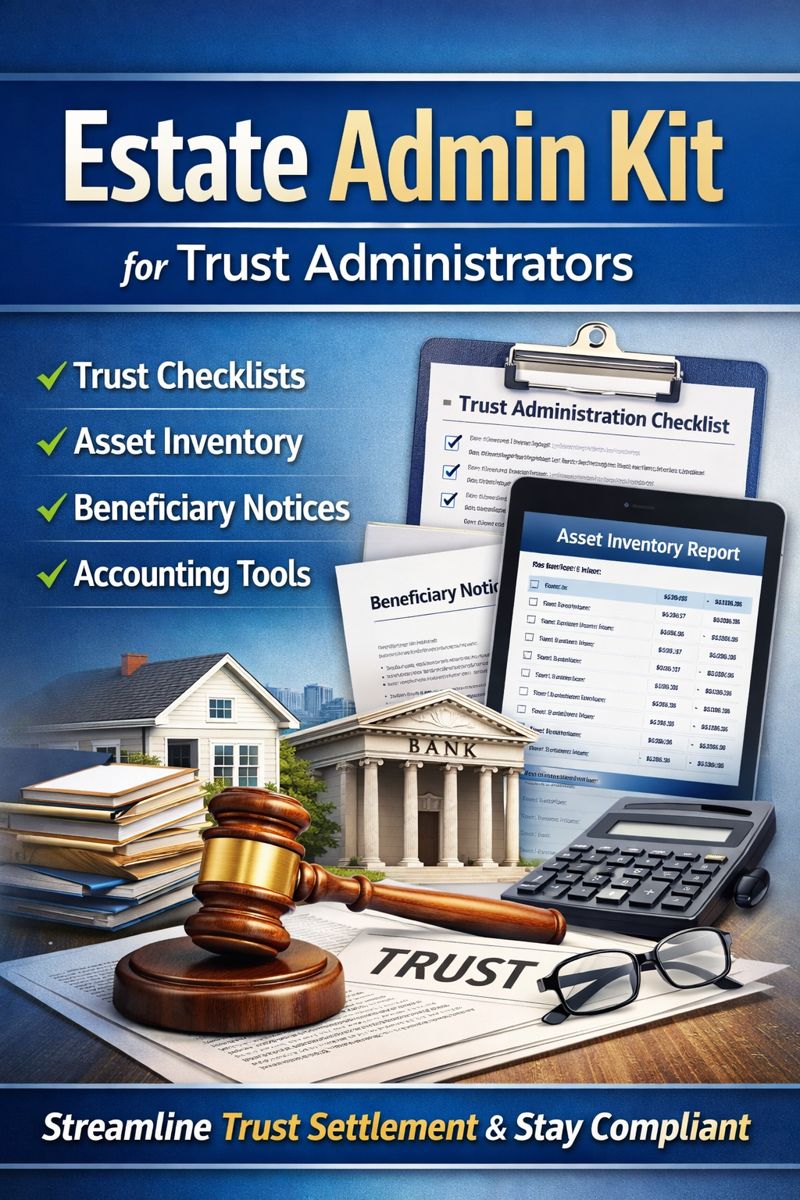
Estate Admin Kit for Trust Administrators: A Complete Guide to Faster, Cleaner Trust Administration
When trust administration is done well, it protects beneficiaries, reduces legal risk, and ensures the grantor’s wishes are honored. But trust administration also comes with heavy documentation, strict deadlines, and complex coordination across banks, attorneys, and beneficiaries.
That’s where an Estate Admin Kit for trust administrators becomes a game-changer.
This guide explains why trust administrators need a dedicated estate admin kit, what it should include, and how it simplifies trust administration from start to finish.
What Is an Estate Admin Kit for Trust Administrators?
An estate admin kit is a complete, structured toolkit designed to help trust administrators manage the trust settlement process smoothly. It includes templates, checklists, documentation systems, and best practices to ensure nothing is missed.
A trust administration kit is specifically tailored to:
-
Trust validation
-
Asset inventory
-
Beneficiary communication
-
Trust accounting
-
Distribution planning
-
Legal compliance
It’s the most efficient way to standardize trust administration and reduce costly errors.
Why Trust Administrators Need an Estate Admin Kit
Trust administration is often more complex than probate. Trusts can include multiple assets, unique distribution rules, and strict legal requirements. A small mistake can cause disputes, legal delays, or even personal liability for the administrator.
Here’s why an estate admin kit is essential:
1. Ensures Legal Compliance
Trusts must be administered according to trust law and the trust document. An estate admin kit ensures all steps are documented correctly and compliant.
2. Reduces Risk of Errors
A trust administrator must track multiple deadlines, financial records, and beneficiary notices. A kit reduces the chance of missing something important.
3. Improves Communication
A clear system helps administrators communicate with beneficiaries, lawyers, and financial institutions efficiently and transparently.
4. Saves Time and Effort
Instead of creating documents from scratch, administrators can use templates and standardized processes.
5. Increases Professionalism
Using a structured toolkit improves credibility and trust, especially for professional trust administrators or firms.
Key Features of an Estate Admin Kit for Trust Administrators
A strong estate admin kit should include these essential components:
1. Trust Administration Checklist
A step-by-step checklist that guides the administrator through the entire process from trust validation to final distribution.
2. Asset Inventory Template
A detailed inventory to record all trust assets including:
-
Bank accounts
-
Investment accounts
-
Real estate
-
Business interests
-
Personal property
3. Beneficiary Notice Templates
Pre-written templates for:
-
Notice of trust administration
-
Beneficiary updates
-
Distribution notifications
4. Trust Accounting Templates
Accounting templates help track:
-
Income received
-
Expenses paid
-
Tax obligations
-
Asset valuations
-
Distributions made
5. Legal Document Templates
Ready-to-use templates for:
-
Trust letters
-
Bank letters
-
Asset transfer forms
-
Final accounting statements
6. Timeline and Deadline Tracker
A timeline tool helps keep track of:
-
Trust administration deadlines
-
Tax filing dates
-
Beneficiary communication deadlines
Who Benefits Most from an Estate Admin Kit?
An estate admin kit is ideal for:
-
Professional trust administrators
-
Family members serving as trustees
-
Law firms handling trust administration
-
Financial advisors supporting trust clients
-
Estate planning professionals
How an Estate Admin Kit Streamlines Trust Administration
Step 1: Trust Validation
The kit guides the administrator through verifying the trust document, identifying trustees, and confirming the trust’s validity.
Step 2: Asset Identification & Inventory
Using the asset inventory template, the administrator documents every trust asset and determines which assets must be retitled or transferred.
Step 3: Beneficiary Notification
The kit includes templates for notifying beneficiaries and updating them at each stage.
Step 4: Accounting & Reporting
Trust accounting templates make financial reporting clear and organized, reducing disputes and ensuring transparency.
Step 5: Distribution & Closure
The final steps involve distributing assets according to the trust document and preparing the final accounting.
Estate Admin Kit vs. Traditional Trust Administration
Traditional trust administration often relies on manual processes, paper files, and scattered documents. An estate admin kit brings structure and clarity by:
-
Creating a central system for all documents
-
Standardizing processes
-
Providing step-by-step guidance
-
Reducing confusion and disputes
Top Benefits of Using an Estate Admin Kit for Trust Administrators
Here are the biggest advantages:
✔ Faster Trust Settlement
A kit reduces time spent searching for documents and creating templates.
✔ Better Compliance
The structured process helps ensure all legal steps are followed.
✔ Improved Trust and Confidence
Clear documentation and communication reduce beneficiary conflict.
✔ Reduced Risk
A standardized system minimizes errors and missed deadlines.
✔ Professional Workflow
A kit creates a consistent, professional administration experience.
Frequently Asked Questions (FAQ)
What is the difference between an estate admin kit and a trust administration checklist?
An estate admin kit includes a checklist plus templates, accounting tools, and documentation systems. A checklist alone only provides a step-by-step list.
Is an estate admin kit suitable for personal trustees?
Yes. The kit helps family members manage trust administration professionally and efficiently.
Can a trust administration kit be used for multiple trusts?
Yes. A good kit is reusable and adaptable for different trust types and asset sizes.
Conclusion: Why Every Trust Administrator Needs an Estate Admin Kit
Trust administration is a complex responsibility that requires precision, organization, and clear documentation. An estate admin kit for trust administrators provides a proven structure that reduces risk, improves compliance, and speeds up the settlement process.
If you want a smoother trust administration experience, fewer mistakes, and better beneficiary communication, an estate admin kit is the tool you need.
Want a Custom Estate Admin Kit for Your Trust?
If you’d like, I can help you create a custom estate admin kit tailored to your country’s trust laws, your firm’s workflow, or your specific trust types. Just tell me what you need.
Advanced Trust Administration with an Estate Admin Kit
Trust administration can become highly complex when trusts contain multiple assets, multiple beneficiaries, and unique distribution requirements. An estate admin kit simplifies this complexity by providing a repeatable, structured system for trust administrators.
Common Trust Administration Challenges (and How a Kit Solves Them)
1. Confusing Trust Language
Trust documents can contain complex legal terms and instructions.
Solution:
An estate admin kit provides clear templates and guides that translate legal language into actionable steps.
2. Multiple Beneficiaries With Different Needs
Different beneficiaries may have different rights, ages, or distribution conditions.
Solution:
A kit includes beneficiary tracking templates, distribution schedules, and communication tools that help administrators manage each beneficiary properly.
3. Asset Valuation and Transfer Issues
Trust assets may require appraisal, retitling, or sale.
Solution:
The asset inventory and transfer templates help administrators keep records of valuations, transfers, and sales, ensuring full compliance.
4. Tax and Accounting Complexity
Trust administration requires accurate accounting and tax reporting.
Solution:
A trust accounting module within the kit provides structured tracking of income, expenses, tax liabilities, and distributions.
5. Disputes and Beneficiary Conflict
Trust disputes can delay administration and increase legal costs.
Solution:
A kit provides consistent communication templates and documentation standards that reduce misunderstandings and improve transparency.
What a Modern Estate Admin Kit Should Include
1. Digital Trust Administration Workflow
A modern kit should not rely on paper. It should offer a digital workflow that includes:
-
A secure document storage system
-
A timeline tracker
-
Automated reminders for deadlines
-
A centralized beneficiary database
2. Customizable Templates
Every trust is unique, so the kit should include templates that are customizable to:
-
Trust type (revocable, irrevocable, special needs)
-
Beneficiary needs
-
Asset types (real estate, investments, business interests)
3. A Centralized Dashboard
A dashboard allows administrators to view:
-
Pending tasks
-
Completed tasks
-
Deadlines
-
Outstanding beneficiary requests
4. Reporting Tools
Reporting tools help administrators provide transparent updates to beneficiaries and legal professionals.
How to Use an Estate Admin Kit: Step-by-Step Guide
Step 1: Upload Trust Documents
Upload the trust document, amendments, and related legal documents into the kit.
Step 2: Identify the Trust Type
Determine whether the trust is revocable or irrevocable, and identify the trustee’s powers and responsibilities.
Step 3: Verify Beneficiaries and Distribution Rules
Use the beneficiary template to list:
-
Names
-
Contact information
-
Distribution rights
-
Special conditions
Step 4: Create an Asset Inventory
Use the asset inventory template to document:
-
Financial accounts
-
Real estate
-
Business interests
-
Personal property
Step 5: Start Accounting and Tax Planning
Use accounting templates to track:
-
Trust income
-
Expenses
-
Tax liabilities
-
Distribution plans
Step 6: Communicate With Beneficiaries
Use pre-written communication templates to:
-
Send trust notices
-
Provide updates
-
Confirm distribution details
Step 7: Make Distributions
Follow the distribution schedule and record all transactions in the kit.
Step 8: Close the Trust
Prepare final accounting and close the trust according to legal requirements.
The Benefits of Using an Estate Admin Kit for Trust Administrators
Faster Completion Time
A structured kit reduces the time spent on document preparation and organization.
Reduced Legal Risk
Standardized documentation reduces mistakes and increases compliance.
Improved Beneficiary Trust
Clear communication and transparent reporting build trust and reduce conflicts.
More Efficient Workflows
The kit improves collaboration between trustees, attorneys, and financial advisors.
Real-Life Example: How a Trust Administrator Uses an Estate Admin Kit
Imagine a trust administrator is managing a trust with:
-
Real estate
-
Investment accounts
-
A business interest
-
Multiple beneficiaries
Without a kit, the administrator would spend weeks:
-
Tracking down documents
-
Creating templates
-
Calculating distributions manually
-
Managing beneficiary requests via email
With an estate admin kit, the administrator can:
-
Use an asset inventory template to list all assets
-
Generate a beneficiary notice template automatically
-
Track deadlines with a built-in timeline
-
Record accounting entries quickly and accurately
Estate Admin Kit for Trust Administrators: Who Should Use It?
Professional Trust Administrators
Professionals who manage multiple trusts can benefit from a structured system that increases efficiency and reduces risk.
Family Trustees
Family members serving as trustees can use the kit to stay organized and protect themselves from legal disputes.
Law Firms
Law firms handling trust administration can standardize their workflow and improve service quality.
Financial Advisors
Financial advisors who support trust clients can use the kit to improve coordination and documentation.
Estate Admin Kit vs. Trust Administration Software
Some trust administrators rely on generic trust administration software. While software is useful, an estate admin kit offers:
-
A complete step-by-step workflow
-
Customizable templates
-
Document management systems
-
Communication tools
The kit can be used alongside software or as a standalone system.
Conclusion
A trust administrator’s job is complex and demanding. An estate admin kit for trust administrators provides the structure, tools, and templates needed to manage trust administration efficiently, accurately, and professionally.
If you want to reduce risk, save time, and deliver better trust administration outcomes, an estate admin kit is a must-have tool.