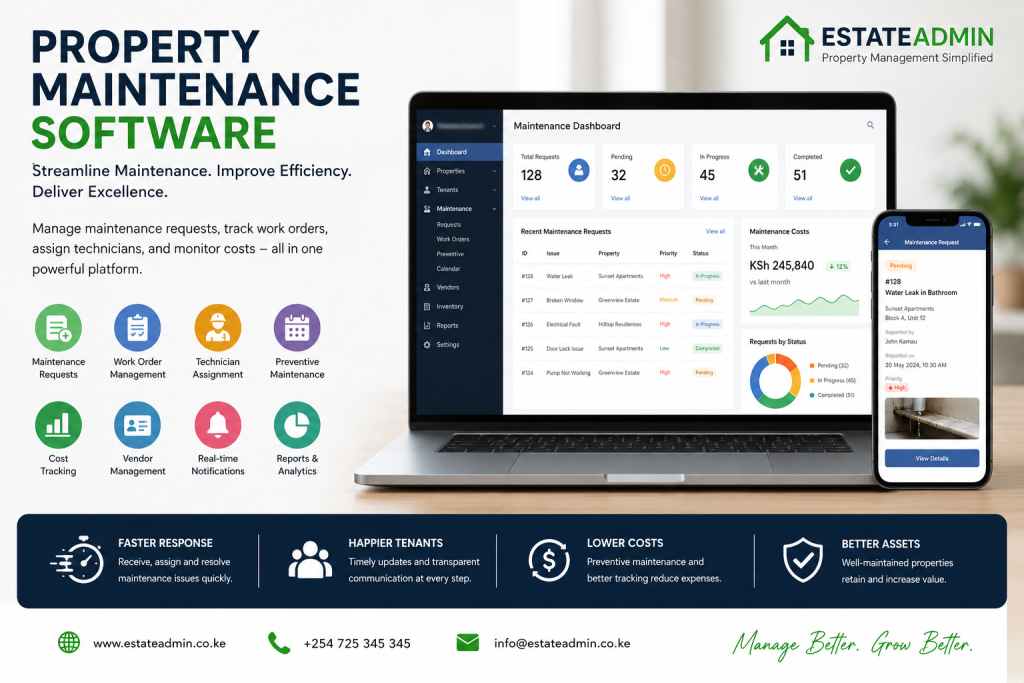
Property Maintenance Software: The Complete Guide to Streamlining Property Maintenance for Landlords, Property Managers, and Real Estate Companies

property maintenance software

Property maintenance software has become an essential tool for modern property owners, landlords, real estate agencies, estate managers, and property management companies. As property portfolios continue to grow, managing maintenance requests manually using spreadsheets, notebooks, WhatsApp messages, or phone calls becomes increasingly difficult. This is why investing in property maintenance software is one of the smartest decisions any property manager can make.

Whether you own residential apartments, commercial buildings, mixed-use developments, gated communities, student hostels, or rental houses, the right property maintenance software can transform how you handle maintenance operations while improving tenant satisfaction and reducing operational costs.

If you’re searching for the best property maintenance software in Kenya, EstateAdmin provides an all-in-one property management platform that simplifies maintenance management alongside rent collection, tenant management, accounting, reporting, lease management, and much more.

Website: https://estateadmin.co.ke

Call/WhatsApp: +254 725 345 345


Table of Contents

What is Property Maintenance Software?

Property maintenance software is a digital platform designed to help landlords, estate managers, facility managers, and property management companies organize, schedule, assign, monitor, and complete maintenance tasks efficiently.

Instead of relying on manual processes, property maintenance software automates maintenance workflows from the moment a tenant reports an issue until the repair is completed and documented.

Typical maintenance requests include:

  • Plumbing repairs
  • Electrical faults
  • Broken doors
  • Roof leaks
  • Water supply issues
  • Sewer blockages
  • Internet connectivity
  • Painting
  • Security lighting
  • Elevator servicing
  • Generator maintenance
  • Landscaping
  • Pest control
  • Air conditioning repairs
  • CCTV maintenance

A modern property maintenance software solution keeps everything organized in one centralized platform.


Why Property Maintenance Software is Important

Property maintenance directly impacts tenant satisfaction and property value.

Poor maintenance results in:

  • High tenant turnover
  • Negative reviews
  • Increased repair costs
  • Emergency maintenance
  • Lost rental income
  • Lower occupancy rates
  • Reduced property value

Good maintenance creates:

  • Happy tenants
  • Higher occupancy
  • Increased rental income
  • Better property value
  • Lower operational costs
  • Faster repairs
  • Improved communication

Property maintenance software ensures these goals are achieved consistently.


Challenges of Manual Property Maintenance

Many landlords still manage maintenance manually.

Common problems include:

Lost Maintenance Requests

Tenants call.

Others send WhatsApp messages.

Some send emails.

Others report issues verbally.

Eventually, some requests are forgotten.

Property maintenance software captures every maintenance request automatically.


Poor Communication

Without property maintenance software, tenants often ask:

  • Has anyone seen my request?
  • When will someone come?
  • Who is fixing it?
  • Is it approved?

Automated notifications eliminate this confusion.


Slow Repairs

Finding technicians manually wastes time.

Property maintenance software allows managers to assign work orders instantly.


No Maintenance History

A landlord may repair the same plumbing issue five times without realizing it.

Property maintenance software stores complete maintenance records.

This helps identify recurring problems.


Difficulty Tracking Costs

Without software, maintenance expenses become difficult to monitor.

Property maintenance software records:

  • Labor costs
  • Material costs
  • Contractor costs
  • Total repair costs
  • Property maintenance budgets

Key Features of Property Maintenance Software

Choosing the right property maintenance software requires understanding its features.

Maintenance Request Portal

Tenants should easily report maintenance issues.

The software should allow tenants to submit:

  • Photos
  • Videos
  • Descriptions
  • Property location
  • Unit number

This creates detailed maintenance requests.


Work Order Management

Property maintenance software automatically converts maintenance requests into work orders.

Each work order includes:

  • Issue description
  • Assigned technician
  • Priority level
  • Due date
  • Status
  • Completion notes

Technician Assignment

Managers can assign work to:

  • Internal maintenance staff
  • Electricians
  • Plumbers
  • Painters
  • Carpenters
  • Security contractors
  • Cleaning companies

The property maintenance software keeps everyone updated.


Real-Time Status Tracking

Property maintenance software allows managers and tenants to monitor progress.

Typical statuses include:

  • Pending
  • Approved
  • Assigned
  • In Progress
  • Waiting for Parts
  • Completed
  • Closed

Preventive Maintenance Scheduling

Instead of waiting for breakdowns, preventive maintenance schedules regular servicing.

Examples include:

  • Generator servicing
  • Water tank cleaning
  • Lift servicing
  • Fire equipment inspections
  • Electrical inspections
  • Roof inspections
  • HVAC servicing

Property maintenance software automates reminders.


Vendor Management

Most properties use external contractors.

Property maintenance software stores:

  • Vendor contacts
  • Licenses
  • Contracts
  • Performance ratings
  • Payment records

Cost Tracking

Every maintenance task should record:

  • Labour cost
  • Materials
  • Transport
  • Equipment
  • VAT
  • Total expenses

This improves budgeting.


Mobile Accessibility

Managers should manage maintenance anywhere.

Modern property maintenance software works on:

  • Smartphones
  • Tablets
  • Laptops
  • Desktop computers

Photo Documentation

Technicians upload photos:

Before repair.

During repair.

After repair.

This improves accountability.


Reports and Analytics

Reports include:

  • Maintenance costs
  • Pending requests
  • Completed repairs
  • Technician performance
  • Vendor performance
  • Average response time
  • Average repair time

These reports support better decision-making.


Types of Property Maintenance Managed by Property Maintenance Software

Corrective Maintenance

Repairs after something breaks.

Examples:

  • Broken locks
  • Burst pipes
  • Power outages
  • Damaged ceilings

Preventive Maintenance

Scheduled maintenance before failures occur.

Examples:

  • Lift servicing
  • Generator maintenance
  • Roof inspection
  • Fire extinguisher servicing

Emergency Maintenance

Immediate repairs.

Examples:

  • Gas leaks
  • Flooding
  • Fire incidents
  • Electrical hazards

Property maintenance software prioritizes emergency work orders.


Predictive Maintenance

Using maintenance history to predict failures.

Property maintenance software analyzes recurring repairs to recommend preventive action.


Benefits of Property Maintenance Software

Faster Response Times

Tenants appreciate quick responses.

Property maintenance software instantly alerts maintenance teams.


Better Tenant Satisfaction

Satisfied tenants renew leases.

Happy tenants also recommend properties.


Lower Maintenance Costs

Preventive maintenance reduces expensive emergency repairs.

Property maintenance software helps identify cost-saving opportunities.


Better Team Coordination

Everyone works from one system.

Managers.

Technicians.

Contractors.

Accountants.

Landlords.


Improved Accountability

Every maintenance action is recorded.

Managers know:

  • Who accepted the job
  • Who completed it
  • Completion time
  • Repair quality

Increased Property Value

Well-maintained properties attract:

  • Better tenants
  • Higher rental prices
  • More investors

Industries Using Property Maintenance Software

Property maintenance software is useful across many sectors.

These include:

  • Residential apartments
  • Commercial buildings
  • Shopping malls
  • Office complexes
  • Hospitals
  • Schools
  • Universities
  • Hotels
  • Airbnb properties
  • Government housing
  • Industrial parks
  • Warehouses
  • Mixed-use developments

Property Maintenance Workflow

A typical maintenance process looks like this:

Step 1

Tenant submits maintenance request.

Step 2

Property maintenance software records request.

Step 3

Manager reviews issue.

Step 4

Work order generated.

Step 5

Technician assigned.

Step 6

Repair completed.

Step 7

Photos uploaded.

Step 8

Manager verifies work.

Step 9

Tenant confirms issue resolved.

Step 10

Maintenance request closed.

Everything is documented automatically.


Essential Modules Every Property Maintenance Software Should Include

When selecting a property maintenance software solution, it is important to look beyond simple repair tracking. A complete platform should support the daily operations of property managers from the moment a tenant reports an issue until the maintenance costs are reflected in financial reports. Below are the core modules every modern system should provide.

Maintenance Ticket Management

A centralized ticketing system ensures every maintenance request receives a unique reference number. This prevents duplicate work, eliminates lost requests, and allows managers to prioritize repairs based on urgency.

Asset Management

Property maintenance software should maintain a digital inventory of assets such as generators, pumps, elevators, CCTV cameras, gates, lighting systems, boreholes, water tanks, and electrical installations. Each asset should have its maintenance history, warranty information, and scheduled service dates stored in one place.

Inventory and Spare Parts

Managing maintenance also means tracking the materials used for repairs. A good system records spare parts issued, remaining stock levels, supplier details, and reorder alerts. This minimizes delays caused by unavailable materials.

Budgeting and Expense Monitoring

Maintenance spending can quickly get out of control without proper oversight. Property maintenance software allows managers to create maintenance budgets, monitor actual expenditure, compare costs across properties, and identify opportunities to reduce unnecessary expenses.

Communication Tools

Integrated notifications keep tenants, technicians, and managers informed throughout the maintenance lifecycle. Automated SMS, email, or in-system alerts reduce misunderstandings and improve transparency.

Document Storage

Important maintenance-related documents such as warranties, inspection certificates, contractor agreements, invoices, and compliance reports should be securely stored within the software for easy retrieval whenever needed.


Why EstateAdmin is the Ideal Property Maintenance Software

Managing maintenance should never require juggling spreadsheets, phone calls, and handwritten notes. EstateAdmin brings maintenance requests, work orders, tenant communication, rent management, accounting, reporting, and property administration together in one easy-to-use platform.

Whether you manage a few rental units or an extensive real estate portfolio, EstateAdmin helps you:

  • Receive and organize maintenance requests instantly
  • Assign technicians without delays
  • Track repair progress in real time
  • Monitor maintenance expenses
  • Maintain complete service histories for every property
  • Improve tenant satisfaction through faster response times
  • Generate detailed maintenance and financial reports
  • Manage multiple properties from a single dashboard

For a demonstration or to learn how EstateAdmin can simplify your property maintenance operations:

Website: https://estateadmin.co.ke

Call/WhatsApp: +254 725 345 345

Part 2: Advanced Property Maintenance Software Features, Best Practices, and Future Trends

Integrating Maintenance with Property Management

One of the biggest advantages of modern property management platforms is integration. Rather than operating maintenance as a separate process, an integrated system connects maintenance with tenant records, leases, financial reports, and property information.

For example, when a tenant reports a faulty water heater, the maintenance request is linked directly to their unit, tenancy record, and communication history. Once the repair is completed, managers can review the work order alongside any related expenses and contractor invoices without switching between different systems.

This level of integration reduces administrative work and provides a complete picture of every property’s operational performance.


Improving Tenant Experience Through Faster Maintenance

Today’s tenants expect prompt communication and timely repairs. A streamlined maintenance process contributes significantly to tenant satisfaction and long-term retention.

With an organized maintenance system, tenants benefit from:

  • Easy issue reporting
  • Instant confirmation that their request has been received
  • Clear updates throughout the repair process
  • Faster response times
  • Better transparency
  • Confidence that reported issues will not be forgotten

When residents feel their concerns are handled professionally, they are more likely to renew leases and recommend the property to others.


Supporting Maintenance Teams

Maintenance personnel also benefit from digital workflows.

Instead of receiving phone calls throughout the day, technicians receive structured work orders containing:

  • Property location
  • Unit number
  • Description of the issue
  • Priority level
  • Photos attached by the tenant
  • Contact information
  • Expected completion date

Having all relevant information before arriving on site improves productivity and minimizes unnecessary return visits.


Using Data to Make Better Decisions

Over time, maintenance records become a valuable source of information.

Managers can identify patterns such as:

  • Frequently failing equipment
  • Buildings with unusually high maintenance costs
  • Seasonal maintenance trends
  • Contractors delivering consistent quality
  • Assets nearing replacement

Instead of relying on assumptions, decisions can be based on historical performance and measurable results.


Managing Multiple Properties from One Platform

Many landlords and property management companies oversee several properties simultaneously. Without centralized software, tracking maintenance across multiple locations becomes increasingly difficult.

A centralized dashboard makes it possible to:

  • Monitor all active maintenance requests
  • Compare repair costs between properties
  • Assign technicians efficiently
  • Generate property-specific reports
  • Track maintenance budgets independently

This approach simplifies portfolio management while maintaining consistent service standards across every property.


Preventive Maintenance Saves Money

Reactive maintenance is often the most expensive approach because problems are addressed only after they become serious.

Preventive maintenance helps avoid:

  • Major plumbing failures
  • Electrical breakdowns
  • Roof damage
  • Equipment replacement
  • Water leaks
  • Structural deterioration

Routine inspections and scheduled servicing reduce emergency repairs and extend the lifespan of valuable property assets.

Examples include:

  • Servicing water pumps every six months
  • Inspecting roofing before rainy seasons
  • Testing emergency lighting monthly
  • Cleaning water storage tanks regularly
  • Maintaining generators according to manufacturer recommendations

Small routine investments often prevent much larger repair bills later.


Monitoring Maintenance Costs

Keeping maintenance expenses under control requires accurate records.

Managers should regularly review:

  • Total monthly maintenance expenditure
  • Cost per property
  • Cost per unit
  • Emergency versus planned maintenance
  • Contractor payments
  • Material usage

These reports help determine whether maintenance budgets are realistic and identify opportunities for cost optimization without compromising service quality.


Choosing Reliable Service Providers

External contractors play an important role in property maintenance.

When evaluating service providers, consider factors such as:

  • Experience
  • Licensing
  • Insurance
  • Response times
  • Work quality
  • Availability
  • Pricing
  • Customer feedback

Maintaining a trusted network of electricians, plumbers, painters, HVAC specialists, cleaners, and security technicians helps ensure repairs are completed professionally and on schedule.


Common Mistakes Property Managers Should Avoid

Even with modern software, poor management practices can reduce efficiency.

Some common mistakes include:

Delaying Repairs

Minor issues often become major problems when ignored.

Ignoring Preventive Maintenance

Waiting until equipment fails usually increases repair costs.

Failing to Document Repairs

Maintenance history provides valuable information for future planning and budgeting.

Choosing Contractors Solely Based on Price

Low-cost providers may produce poor-quality repairs that require additional work later.

Poor Communication

Keeping tenants informed throughout the maintenance process builds trust and reduces complaints.


Maintenance Compliance and Safety

Property maintenance also plays a vital role in meeting legal and safety obligations.

Regular inspections help ensure compliance with:

  • Fire safety requirements
  • Electrical safety standards
  • Water system maintenance
  • Structural safety
  • Emergency exits
  • Security systems
  • Public health regulations

Maintaining accurate records demonstrates that inspections and repairs have been completed as required.


Digital Documentation Benefits

Paper files can easily become disorganized or lost.

Digital records offer significant advantages:

  • Easy searching
  • Secure storage
  • Backup protection
  • Faster audits
  • Historical maintenance tracking
  • Reduced paperwork
  • Better collaboration between teams

Having maintenance documentation available whenever needed improves operational efficiency.


Future Trends in Property Maintenance Technology

Technology continues to reshape property management.

Emerging trends include:

Artificial Intelligence

AI can assist by predicting equipment failures, identifying maintenance priorities, and helping managers allocate resources more efficiently.

Internet of Things (IoT)

Connected sensors can monitor water leaks, electricity usage, temperature, and equipment performance in real time, allowing maintenance teams to respond before failures occur.

Mobile Workforce Management

Technicians increasingly complete work orders, upload photos, record notes, and close jobs directly from their mobile devices while in the field.

Cloud-Based Platforms

Cloud solutions provide secure access from anywhere, making collaboration easier for landlords, managers, contractors, and maintenance staff.

Business Intelligence Reporting

Interactive dashboards help property owners understand maintenance performance using visual reports and measurable indicators.


Tips for Successfully Implementing a Maintenance System

Introducing a new maintenance platform requires careful planning.

Consider these best practices:

  • Train staff thoroughly before launch.
  • Establish clear maintenance procedures.
  • Define response time targets for different issue types.
  • Encourage tenants to report issues promptly.
  • Review maintenance reports regularly.
  • Evaluate contractor performance periodically.
  • Schedule preventive inspections consistently.
  • Keep maintenance records accurate and up to date.

Successful implementation depends not only on technology but also on consistent operational practices.


Frequently Asked Questions

Is maintenance software suitable for small landlords?

Yes. Even landlords with a few rental units benefit from organized maintenance records, faster communication, and improved tracking of repair expenses.


Can tenants submit maintenance requests online?

Yes. Modern platforms allow tenants to report issues digitally, attach photos, and receive updates throughout the repair process.


Does maintenance software help reduce costs?

Yes. Better planning, preventive maintenance, and accurate tracking often reduce unnecessary expenses and emergency repairs.


Can multiple staff members use the same system?

Yes. Different users can access the platform according to their responsibilities, allowing managers, technicians, accountants, and administrators to collaborate effectively.


Is historical maintenance information important?

Absolutely. Historical records help identify recurring issues, evaluate contractor performance, estimate future budgets, and support long-term asset management.


Why Choose EstateAdmin?

Managing maintenance should not involve chasing phone calls, searching through WhatsApp conversations, or maintaining numerous spreadsheets.

EstateAdmin provides an integrated solution that combines maintenance management with tenant management, rent collection, accounting, reporting, lease administration, and property operations in one secure platform.

Whether you manage apartments, commercial buildings, gated communities, hostels, office complexes, or mixed-use developments, EstateAdmin helps simplify daily operations while improving efficiency and tenant satisfaction.

For more information or to request a demonstration:

Website: https://estateadmin.co.ke

Call/WhatsApp: +254 725 345 345


Conclusion

Efficient maintenance is one of the foundations of successful property management. Timely repairs protect investments, improve tenant satisfaction, reduce long-term operating costs, and preserve property value. As portfolios grow, relying on manual processes becomes increasingly difficult, making digital maintenance management an essential investment rather than a luxury.

By adopting a comprehensive solution like EstateAdmin, landlords and property managers can centralize maintenance requests, monitor repair progress, manage contractors, control costs, and maintain complete service histories from a single platform. The result is smoother operations, better communication, and properties that remain attractive to current and future tenants.

Investing in the right technology today creates a more organized, responsive, and profitable property management business for years to come.

Leave a Reply

Your email address will not be published. Required fields are marked *