
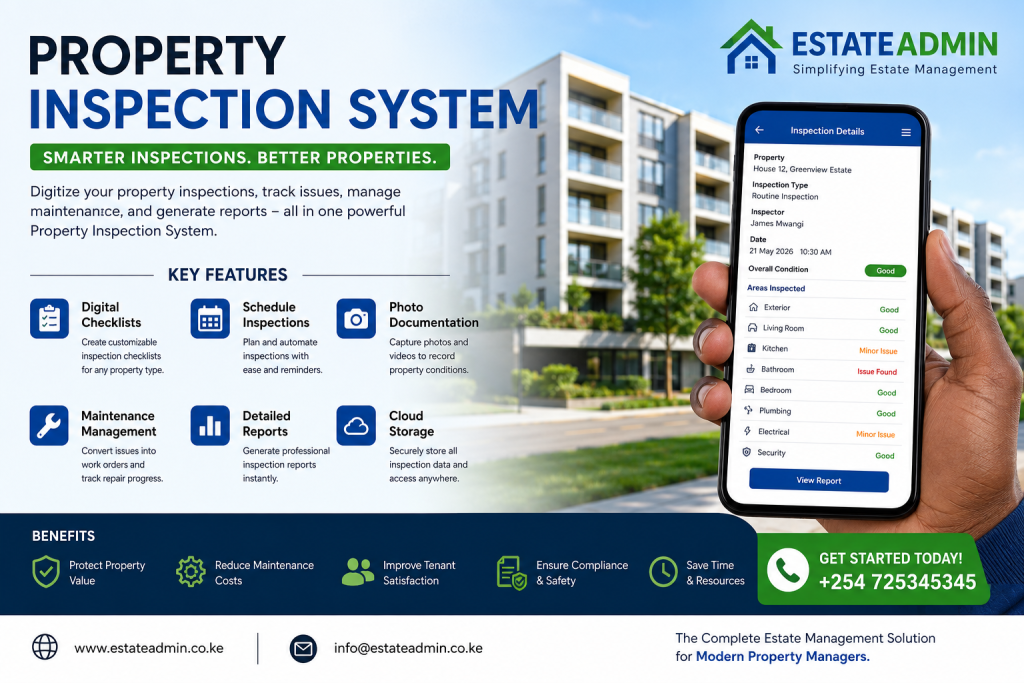
Managing properties without a property inspection system can lead to unnoticed maintenance issues, tenant disputes, property depreciation, and unnecessary repair costs. Whether you manage residential estates, gated communities, apartments, commercial buildings, or rental properties, regular inspections are essential for protecting your investment and keeping tenants satisfied.
A modern property inspection system simplifies every inspection process by allowing property managers to schedule inspections, capture photos, record defects, assign maintenance tasks, generate reports, and maintain a complete inspection history—all from one centralized platform.
If you’re searching for the best property inspection system in Kenya, EstateAdmin provides a complete digital solution for property managers, landlords, estate owners, and management companies.
Website: https://estateadmin.co.ke
Call/WhatsApp: +254 725345345
What is a Property Inspection System?
A property inspection system is software designed to help landlords, estate managers, property management companies, and facility managers conduct organized inspections throughout the lifecycle of a property.
Instead of relying on paper checklists, notebooks, spreadsheets, or scattered photos, a property inspection system stores everything digitally.
The system allows users to:
- Schedule inspections
- Conduct inspections using mobile devices
- Upload inspection photos
- Record damages
- Generate inspection reports
- Track repairs
- Monitor maintenance history
- Compare previous inspections
- Store tenant signatures
- Keep inspection records securely
A professional property inspection system ensures nothing is forgotten during inspections while improving accountability.
Why Every Property Needs a Property Inspection System
Many landlords only inspect properties when tenants move out. Unfortunately, this often results in expensive repairs that could have been prevented.
A modern property inspection system allows inspections during:
- Tenant move-in
- Tenant move-out
- Monthly inspections
- Quarterly inspections
- Annual inspections
- Emergency inspections
- Routine maintenance inspections
- Safety inspections
- Compliance inspections
- Insurance inspections
Frequent inspections reduce maintenance costs while preserving property value.
Common Problems Without a Property Inspection System
Many property managers still rely on manual inspections.
This causes problems such as:
- Lost inspection reports
- Missing photographs
- Forgotten maintenance requests
- Poor communication
- Delayed repairs
- Tenant disagreements
- Inconsistent inspections
- Missing inspection history
- Difficulty tracking damages
- Lack of accountability
A digital property inspection system solves all these challenges by centralizing inspection information.
Features of a Modern Property Inspection System
The best property inspection system includes comprehensive tools that make inspections faster and more accurate.
1. Digital Inspection Checklists
A digital checklist ensures every inspection follows the same standard.
Inspectors can evaluate:
- Walls
- Floors
- Doors
- Windows
- Roof
- Plumbing
- Electrical systems
- Water tanks
- Security systems
- Parking areas
- Staircases
- Lifts
- Common areas
- Landscaping
- Drainage
A standardized checklist improves inspection quality.
2. Property Inspection Scheduling
Scheduling inspections manually often results in missed inspections.
A property inspection system automatically schedules:
- Monthly inspections
- Quarterly inspections
- Annual inspections
- Lease inspections
- Preventive maintenance inspections
Automatic reminders help property managers stay organized.
3. Mobile Property Inspection
Inspectors no longer need paper forms.
Using smartphones or tablets, they can:
- Complete inspection forms
- Take photos
- Record notes
- Upload videos
- Capture tenant signatures
- Submit reports instantly
This significantly speeds up inspections.
4. Photo Documentation
Photos provide strong evidence during inspections.
A property inspection system stores:
- Before photos
- After photos
- Damage photos
- Repair progress
- Completed repairs
Photo history helps resolve disputes quickly.
5. Maintenance Request Integration
Inspection findings automatically generate maintenance requests.
Examples include:
- Broken windows
- Leaking roofs
- Faulty wiring
- Plumbing leaks
- Damaged doors
- Cracked walls
- Water damage
- Security lighting failures
Maintenance teams receive assignments immediately.
6. Property Inspection Reports
Instead of writing lengthy reports manually, the software generates professional reports automatically.
Reports include:
- Inspection date
- Inspector
- Property information
- Findings
- Photos
- Recommendations
- Repair status
- Signatures
These reports can be shared with landlords, tenants, or property owners.
Types of Property Inspections
A complete property inspection system supports multiple inspection categories.
Move-In Inspection
Performed before a tenant occupies the property.
Records:
- Existing damages
- Meter readings
- Appliance condition
- Paint condition
- Floor condition
This prevents disputes during move-out.
Move-Out Inspection
Conducted when tenants vacate.
The inspection compares:
- Original property condition
- Current property condition
- Wear and tear
- Damages
- Missing fixtures
Deposit deductions become easier to justify.
Routine Property Inspection
Routine inspections identify problems before they become expensive.
Typical inspections cover:
- Plumbing
- Electrical systems
- Roofing
- Drainage
- Security
- Fire safety
Routine inspections save thousands in repair costs.
Preventive Maintenance Inspection
Preventive inspections reduce emergency repairs.
Instead of waiting for equipment failure, managers inspect:
- Pumps
- Elevators
- Generators
- CCTV
- Gates
- Boreholes
- Water tanks
Preventive maintenance extends equipment lifespan.
Safety Inspection
Safety inspections focus on protecting residents.
Areas inspected include:
- Fire extinguishers
- Emergency exits
- Smoke detectors
- Electrical installations
- Staircases
- Lighting
- Security gates
A property inspection system ensures compliance with safety standards.
Benefits of Using a Property Inspection System
Better Property Maintenance
Regular inspections identify small issues before they become major repairs.
For example:
- Minor leaks
- Loose tiles
- Roof cracks
- Electrical faults
Early intervention reduces maintenance costs significantly.
Improved Tenant Satisfaction
Tenants appreciate properties that are well maintained.
Quick inspections mean:
- Faster repairs
- Cleaner environments
- Safer buildings
- Better communication
Happy tenants stay longer.
Reduced Property Damage
Routine inspections prevent:
- Water damage
- Mold growth
- Structural deterioration
- Pest infestations
The property inspection system acts as an early warning mechanism.
Better Record Keeping
Every inspection remains stored digitally.
Managers can retrieve inspection history within seconds.
Historical data helps:
- Compare property condition
- Track recurring issues
- Monitor maintenance trends
- Support insurance claims
Easier Compliance
Many commercial properties require regular inspections.
Inspection records demonstrate compliance with:
- Safety regulations
- Insurance requirements
- Internal policies
- Property management standards
Industries That Benefit from Property Inspection Systems
A property inspection system is valuable across many sectors.
These include:
Apartment Buildings
Apartment managers inspect:
- Individual units
- Corridors
- Parking
- Elevators
- Common areas
Gated Communities
Estate managers inspect:
- Roads
- Security gates
- Street lighting
- Perimeter fencing
- Clubhouses
- Swimming pools
Commercial Buildings
Commercial property inspections include:
- Office spaces
- HVAC systems
- Fire systems
- Washrooms
- Parking areas
- Emergency exits
Schools
Schools inspect:
- Classrooms
- Laboratories
- Dormitories
- Kitchens
- Playgrounds
Hospitals
Healthcare facilities inspect:
- Wards
- Equipment rooms
- Power backup systems
- Water supply
- Safety equipment
Hotels
Hotels inspect:
- Guest rooms
- Reception
- Restaurants
- Laundry areas
- Swimming pools
- Conference rooms
Why EstateAdmin Offers the Best Property Inspection System
EstateAdmin has developed a comprehensive Property Inspection System specifically designed for property managers, landlords, estate owners, and management companies in Kenya. The platform integrates property inspections with tenant management, maintenance tracking, rent management, visitor management, and overall estate administration, giving users a single solution instead of multiple disconnected tools.
With the EstateAdmin Property Inspection System, you can:
- Schedule recurring property inspections
- Create customized digital inspection checklists
- Capture photos and inspection evidence
- Assign maintenance tasks instantly
- Track repair progress from start to completion
- Maintain complete inspection histories
- Generate professional inspection reports
- Improve accountability among staff and contractors
- Protect property value through preventive maintenance
Whether you manage 20 units or several thousand, EstateAdmin helps streamline inspections while reducing paperwork and improving operational efficiency.
Visit: https://estateadmin.co.ke
Call or WhatsApp: +254 725345345
Property Inspection System: Advanced Features, Best Practices, and Why EstateAdmin is the Best Choice (Part 2)
A modern Property Inspection System is more than just a digital checklist. It is an intelligent platform that helps property owners, estate managers, landlords, property management companies, and facility managers maintain properties efficiently while reducing operational costs. As the real estate industry becomes increasingly digital, investing in a reliable Property Inspection System is no longer optional—it is essential for protecting property value, improving tenant satisfaction, and streamlining maintenance operations.
In this second part, we explore advanced capabilities of a Property Inspection System, practical inspection workflows, industry best practices, and why EstateAdmin is the preferred solution for property inspection management in Kenya.
How a Property Inspection System Works
A professional Property Inspection System follows a structured workflow that ensures every inspection is documented accurately and every maintenance issue is addressed promptly.
A typical inspection process includes:
- Creating an inspection schedule
- Assigning an inspector
- Conducting the inspection using a mobile device
- Recording observations
- Capturing high-quality photos
- Rating property conditions
- Identifying maintenance issues
- Assigning repair tasks
- Tracking maintenance progress
- Generating inspection reports
- Archiving inspection history
This workflow ensures consistency, accountability, and transparency across every property.
Room-by-Room Property Inspection Using a Property Inspection System
A comprehensive Property Inspection System allows inspectors to assess every part of a property in a systematic manner.
Living Room Inspection
During inspection, check:
- Wall condition
- Ceiling cracks
- Paint quality
- Window functionality
- Electrical sockets
- Lighting fixtures
- Floor condition
- Curtains or blinds
- Doors and locks
- Smoke detectors
The Property Inspection System records all findings together with photos for future comparison.
Bedroom Inspection
Inspectors evaluate:
- Wardrobes
- Door locks
- Windows
- Ceiling
- Floor tiles
- Paintwork
- Electrical outlets
- Lighting
- Ventilation
- General cleanliness
Regular inspections help identify wear and tear before it becomes costly.
Kitchen Inspection
Kitchen inspections should include:
- Cabinets
- Countertops
- Sink condition
- Water pressure
- Plumbing leaks
- Electrical appliances
- Exhaust systems
- Wall tiles
- Flooring
- Ventilation
Using a Property Inspection System, every issue can immediately be converted into a maintenance request.
Bathroom Inspection
Inspect:
- Toilets
- Wash basins
- Showers
- Bathtubs
- Mirrors
- Plumbing
- Water heaters
- Floor drainage
- Tiles
- Ventilation
Moisture-related problems are among the most expensive repairs. A Property Inspection System helps identify them early.
Exterior Property Inspection
External inspections cover:
- Roof condition
- Gutters
- Driveways
- Perimeter wall
- Parking
- Landscaping
- Drainage
- Security lighting
- CCTV systems
- Gate automation
Exterior inspections preserve the overall value of the property.
Commercial Property Inspection
Commercial buildings require more detailed inspections.
A Property Inspection System simplifies inspection of:
- Office spaces
- Conference rooms
- Reception areas
- Emergency exits
- Elevators
- Fire suppression systems
- Air conditioning
- Electrical panels
- Backup generators
- Water systems
Commercial property managers benefit from automated reminders and compliance tracking.
Apartment Inspection Management
Apartment managers often oversee hundreds of units.
A Property Inspection System enables managers to inspect:
- Individual apartments
- Hallways
- Parking bays
- Rooftops
- Staircases
- Common washrooms
- Waste collection areas
- Water tanks
- Electrical rooms
Inspection histories for each apartment remain accessible whenever needed.
Estate Inspection Management
For gated communities, inspections extend beyond buildings.
Estate inspections include:
- Roads
- Streetlights
- Security barriers
- Visitor entrances
- Perimeter fencing
- Clubhouses
- Swimming pools
- Playgrounds
- Boreholes
- Water distribution systems
EstateAdmin’s Property Inspection System allows managers to inspect both individual properties and shared facilities from one dashboard.
Rental Property Inspection
Landlords benefit significantly from a Property Inspection System because it provides evidence throughout the tenancy.
Rental inspections include:
- Move-in inspections
- Mid-term inspections
- Lease renewal inspections
- Move-out inspections
- Maintenance inspections
- Emergency inspections
Digital records reduce disagreements over deposits and property damage.
Property Inspection Reports
Inspection reports should contain detailed information that can be reviewed months or years later.
Professional reports include:
- Property details
- Inspection date
- Inspector name
- Tenant details
- Property condition
- Maintenance observations
- Photos
- Recommendations
- Repair deadlines
- Signatures
A Property Inspection System automatically compiles this information into professional reports that can be shared instantly.
Photo-Based Property Inspection
Images are critical during inspections.
A modern Property Inspection System allows inspectors to:
- Capture unlimited photos
- Label each image
- Attach photos to specific rooms
- Compare historical images
- Highlight damage
- Track repair progress
Visual evidence improves accountability and speeds up maintenance decisions.
Property Maintenance Tracking
One of the greatest advantages of a Property Inspection System is maintenance integration.
Once defects are identified, the system can:
- Create maintenance tickets
- Assign technicians
- Set repair deadlines
- Monitor progress
- Notify managers
- Update repair status
- Close completed jobs
Maintenance becomes proactive instead of reactive.
Benefits of Digital Property Inspection
Organizations that switch from paper inspections to a Property Inspection System enjoy numerous benefits.
Faster Inspections
Digital forms reduce paperwork and eliminate repetitive manual entry.
Better Accuracy
Standardized inspection templates ensure nothing is overlooked.
Improved Accountability
Every inspection records:
- Inspector
- Time
- Date
- Property
- Photos
- Notes
This creates a transparent audit trail.
Reduced Maintenance Costs
Early issue detection prevents expensive repairs.
Examples include:
- Minor plumbing leaks before flooding
- Small roof cracks before water damage
- Loose wiring before electrical faults
- Foundation cracks before structural problems
Better Communication
Maintenance teams, landlords, property managers, and owners receive inspection updates immediately.
Improved Property Value
Well-maintained properties appreciate faster than neglected properties.
Routine inspections protect long-term investment.
Why Manual Property Inspection Is No Longer Enough
Traditional inspection methods rely heavily on paper forms, printed photographs, handwritten notes, and manual filing systems. While this approach may have worked in the past, it introduces unnecessary delays and increases the risk of missing critical information.
With a digital Property Inspection System, inspections become faster, more consistent, and far easier to manage. Property managers no longer waste time searching through filing cabinets or spreadsheets because every inspection record is securely stored in one centralized platform. This leads to better decision-making, quicker maintenance responses, and improved service delivery for tenants and property owners alike.
Best Practices for Using a Property Inspection System
To maximize the value of your Property Inspection System, follow these best practices:
- Create standardized inspection templates for different property types.
- Schedule inspections automatically instead of relying on memory.
- Train all inspectors to follow the same procedures.
- Capture clear, high-resolution photos during every inspection.
- Record detailed notes for every issue identified.
- Assign maintenance tasks immediately after inspections.
- Monitor repair completion and verify the work through follow-up inspections.
- Keep digital records for every property throughout its lifecycle.
- Analyze recurring maintenance trends to plan preventive maintenance.
- Review inspection reports regularly with property owners and management teams.
Following these practices ensures a more efficient inspection process and extends the lifespan of your properties.
Why Choose EstateAdmin Property Inspection System?
When selecting a Property Inspection System, you need more than a simple checklist application. You need a complete estate management platform that supports every aspect of property administration.
EstateAdmin provides an all-in-one solution that combines property inspections with:
- Tenant management
- Landlord management
- Rent collection
- Maintenance management
- Visitor management
- Security management
- Staff management
- Utility billing
- Financial reporting
- Property records management
Instead of using multiple software platforms, EstateAdmin gives you everything you need in one secure system.
Whether you manage apartments, gated communities, commercial buildings, office complexes, mixed-use developments, rental houses, schools, hospitals, or hotels, EstateAdmin scales to meet your operational needs.
Why Property Managers Across Kenya Need a Property Inspection System
Kenya’s real estate market continues to grow, with increasing demand for professional property management services. Property owners expect timely maintenance, transparent reporting, and efficient communication. Tenants also expect safe, clean, and well-maintained environments.
A modern Property Inspection System helps property managers meet these expectations by providing:
- Faster inspections
- Digital documentation
- Improved maintenance planning
- Better communication with stakeholders
- Reduced operational costs
- Enhanced property value
- Stronger legal documentation
- Improved tenant satisfaction
By adopting a digital inspection process, property managers position themselves as professional, efficient, and trustworthy service providers.
Frequently Asked Questions (FAQs)
What is a Property Inspection System?
A Property Inspection System is software that helps landlords and property managers schedule, conduct, document, and manage property inspections while maintaining a complete digital history of every property.
Who should use a Property Inspection System?
It is ideal for:
- Property management companies
- Landlords
- Estate managers
- Apartment managers
- Commercial property owners
- Facility managers
- Housing associations
- Gated community administrators
Can the system generate inspection reports?
Yes. A professional Property Inspection System automatically generates detailed inspection reports complete with photos, observations, maintenance recommendations, and digital signatures.
Can inspections be conducted using mobile phones?
Yes. Inspectors can carry out inspections using smartphones or tablets, capture photos, record notes, and submit reports in real time.
Does a Property Inspection System reduce maintenance costs?
Absolutely. By identifying issues early and supporting preventive maintenance, the system helps avoid costly emergency repairs and extends the lifespan of property assets.
Conclusion
A Property Inspection System is one of the most valuable investments for landlords, estate managers, and property management companies. It transforms inspections from a manual, paper-based process into a streamlined digital workflow that improves efficiency, accountability, and property maintenance.
From scheduling inspections and documenting property conditions to generating reports and tracking maintenance, a Property Inspection System ensures that every inspection contributes to protecting your investment and delivering a better experience for tenants and property owners.
If you are looking for the best Property Inspection System in Kenya, EstateAdmin offers a powerful, user-friendly platform built to simplify every aspect of property inspection and estate management.
Whether you manage a few rental units or thousands of residential and commercial properties, EstateAdmin provides the tools you need to improve inspection quality, reduce maintenance costs, increase operational efficiency, and preserve the long-term value of your properties.
Get Started with EstateAdmin Today
Transform your property inspections with a modern, reliable, and feature-rich Property Inspection System.
Website: https://estateadmin.co.ke
Call or WhatsApp: +254 725345345
Take the next step toward smarter property management with EstateAdmin—the trusted Property Inspection System for landlords, estate managers, property management companies, and gated communities across Kenya.