
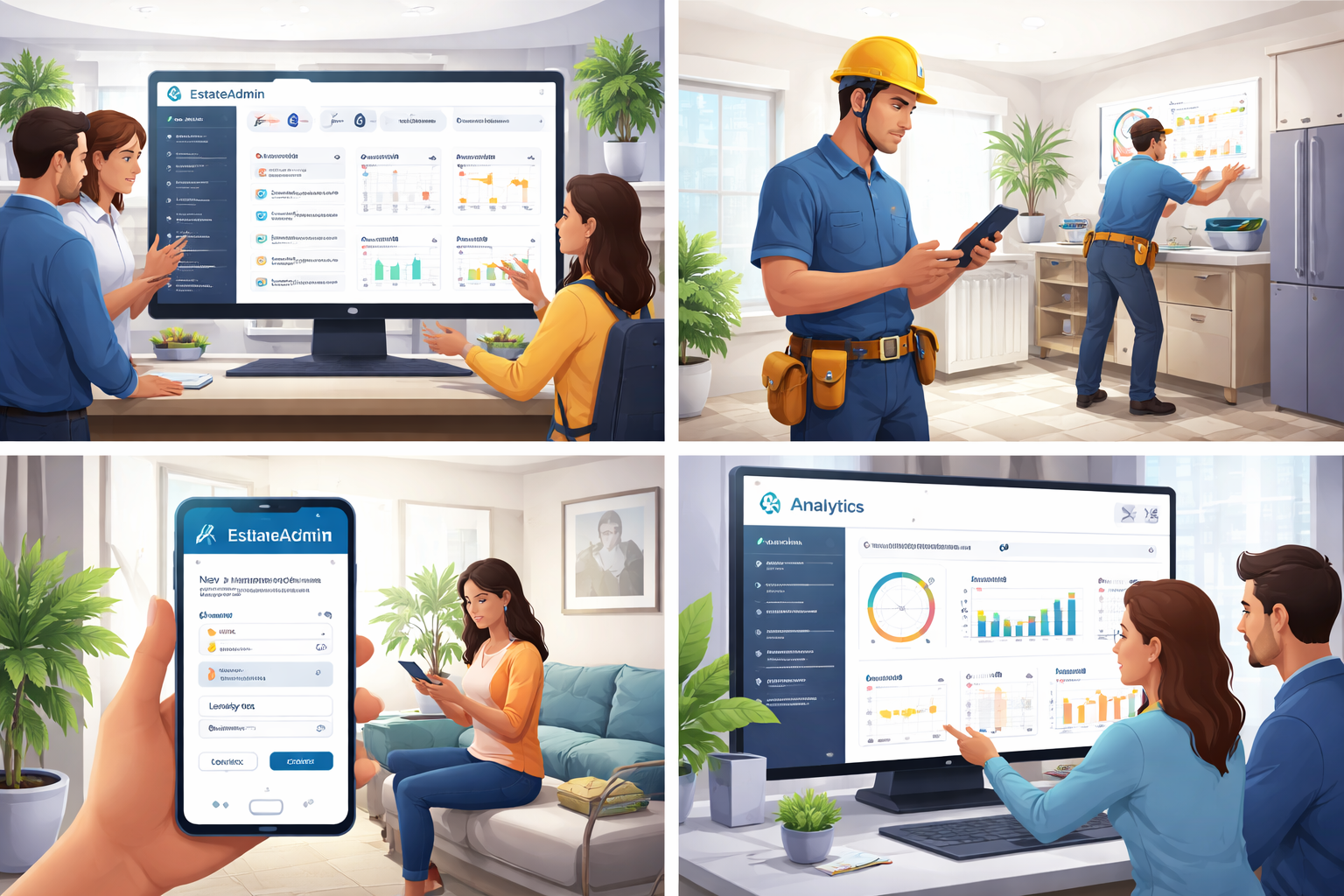
Estate Management Software: Revolutionizing Property Management
Managing multiple properties can be overwhelming without the right tools. Whether you are overseeing residential complexes, commercial buildings, or mixed-use estates, estate management software simplifies operations, enhances efficiency, and ensures transparency. Modern software solutions integrate accounting, tenant management, maintenance tracking, and reporting in one unified platform.
What is Estate Management Software?
Estate management software is a digital solution designed to streamline the administration of real estate properties. It helps estate managers, property owners, and real estate firms manage their assets efficiently. The software typically includes features for:
-
Tenant Management: Track tenant details, lease agreements, and communication history.
-
Financial Management: Automate invoicing, rent collection, and expense tracking.
-
Maintenance Scheduling: Manage repairs, service requests, and vendor coordination.
-
Reporting & Analytics: Generate insights on occupancy rates, revenue, and property performance.
By automating repetitive tasks, estate managers can focus on strategic decision-making rather than administrative work.
Key Features of Estate Management Software
1. Tenant and Lease Management
Keeping track of tenants, lease agreements, and payment schedules can be challenging. Estate management software allows you to:
-
Store tenant information securely
-
Automate reminders for rent collection
-
Monitor lease expirations and renewals
-
Handle tenant complaints and service requests efficiently
This reduces missed payments, late fees, and miscommunication, ensuring a smooth tenant experience.
2. Financial Management
Effective financial tracking is critical for profitable estate management. Software solutions offer:
-
Automated rent invoicing and collection
-
Expense tracking for maintenance, utilities, and staff salaries
-
Budgeting and forecasting tools
-
Integration with accounting software for seamless reporting
This feature helps property owners gain real-time insights into revenue and expenses, allowing for data-driven decisions.
3. Maintenance and Facility Management
Managing maintenance requests manually can be time-consuming and prone to delays. Estate management software simplifies this by:
-
Logging repair requests from tenants
-
Assigning tasks to maintenance staff or vendors
-
Scheduling preventive maintenance
-
Tracking completion status and costs
Efficient maintenance management reduces downtime, prolongs asset life, and increases tenant satisfaction.
4. Reporting and Analytics
Data-driven decision-making is essential in modern estate management. The software provides:
-
Detailed occupancy and vacancy reports
-
Financial statements and profit analysis
-
Maintenance performance tracking
-
Predictive analytics for future investments
With accurate reporting, estate managers can identify areas for improvement, optimize operations, and maximize ROI.
5. Mobile Accessibility
Modern estate management software often comes with mobile apps, allowing managers to:
-
Access tenant and property information on-the-go
-
Respond to maintenance requests in real-time
-
Approve invoices and payments from anywhere
Mobile access increases flexibility, enabling quick decision-making and reducing delays.
Benefits of Using Estate Management Software
Implementing estate management software offers numerous advantages for property owners and managers:
-
Time Efficiency: Automates repetitive tasks, freeing up time for strategic activities.
-
Cost Reduction: Reduces errors, late payments, and administrative overheads.
-
Improved Tenant Experience: Timely maintenance, transparent billing, and effective communication enhance tenant satisfaction.
-
Enhanced Financial Control: Real-time tracking of income, expenses, and profits improves decision-making.
-
Regulatory Compliance: Maintains proper documentation and compliance with property laws.
-
Scalability: Easily manage multiple properties as your portfolio grows.
By leveraging these benefits, estate managers can improve operational efficiency and boost profitability.
Choosing the Right Estate Management Software
Selecting the right software depends on your property portfolio, business model, and specific needs. Here are some key factors to consider:
1. User-Friendly Interface
A simple, intuitive interface ensures that managers, staff, and tenants can easily navigate the software without extensive training.
2. Customization Options
The software should be flexible enough to cater to your specific workflows, lease structures, and reporting needs.
3. Integration Capabilities
Integration with accounting software, payment gateways, and CRM systems improves operational efficiency and avoids data silos.
4. Security and Compliance
Property data is sensitive, so the software must include robust security features such as encryption, access controls, and backup systems.
5. Customer Support
Reliable customer support ensures smooth implementation and quick resolution of technical issues.
Popular Estate Management Software Solutions
Several estate management software solutions are available in the market, each offering unique features. Some widely used options include:
-
Buildium: Ideal for residential property management with accounting and maintenance modules.
-
Yardi Voyager: Comprehensive platform for large-scale commercial and residential estates.
-
Propertyware: Focused on single-family property management with strong tenant communication tools.
-
AppFolio: Cloud-based solution with mobile accessibility, accounting, and leasing automation.
Choosing the right solution depends on your business size, property types, and budget.
How Estate Management Software Transforms Property Operations
By integrating all aspects of property management, estate management software transforms how managers operate:
-
Automation: Reduces manual paperwork and repetitive tasks.
-
Centralization: Consolidates tenant, financial, and maintenance data in one platform.
-
Transparency: Provides clear visibility into operations for owners and stakeholders.
-
Efficiency: Speeds up processes such as rent collection, maintenance scheduling, and reporting.
-
Scalability: Supports growth without adding proportional administrative effort.
In essence, estate management software is not just a tool; it’s a strategic solution for modern property management.
Future Trends in Estate Management Software
The real estate industry is evolving, and estate management software is adapting to emerging trends:
-
AI and Predictive Analytics: Helps forecast occupancy rates, maintenance needs, and financial performance.
-
IoT Integration: Smart devices in properties enable real-time monitoring of utilities and security systems.
-
Cloud-Based Platforms: Provide access from anywhere, reduce IT costs, and ensure scalability.
-
Tenant Portals: Enhance communication, enabling online rent payments, maintenance requests, and document access.
Adopting these innovations ensures that your property management stays competitive and efficient.
Conclusion
For property owners and managers, managing multiple estates manually is no longer sustainable. Estate management software provides a centralized, automated, and scalable solution for tenant management, financial tracking, and maintenance coordination. By adopting the right software, you can reduce costs, improve tenant satisfaction, and make data-driven decisions that drive profitability.