
Managing tenant payments is one of the most important responsibilities for landlords and property managers. When rent payments are tracked manually using notebooks, spreadsheets, receipts, or multiple messaging platforms, it can become difficult to maintain accurate records and identify outstanding balances.
A Tenant Payment Management System provides a more organized way to manage rental payments, tenant balances, payment records, and property finances.
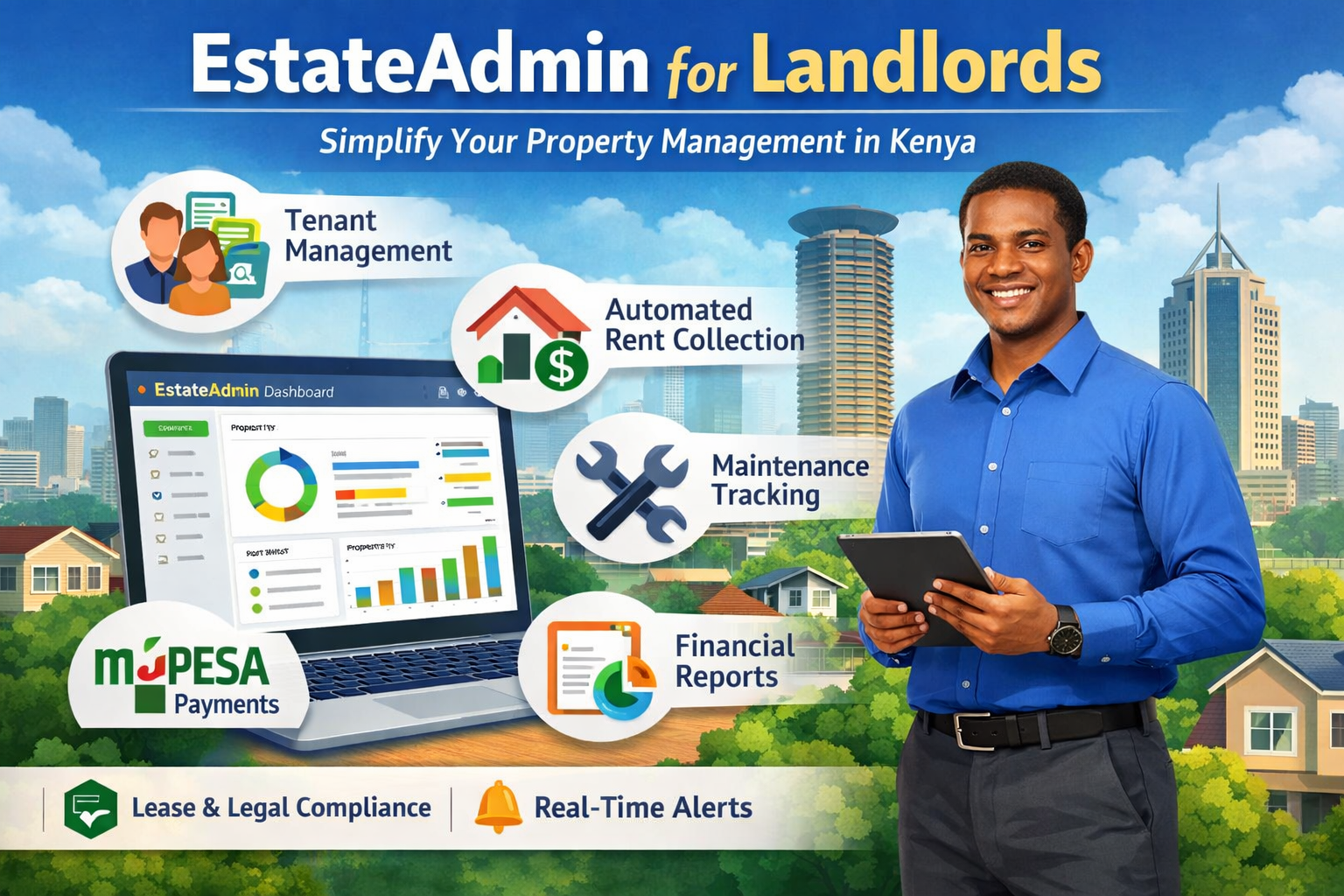
For landlords and property managers in Kenya, EstateAdmin provides a digital solution that can help simplify tenant payment management and improve visibility into rental income.
What Is a Tenant Payment Management System?
A Tenant Payment Management System is software designed to help landlords and property managers organize and monitor payments made by tenants.
Instead of manually checking different records to determine whether tenants have paid, a centralized system can help managers keep payment information organized.
A tenant payment management system can help with:
- Recording tenant payments
- Tracking outstanding rent
- Monitoring payment history
- Managing tenant balances
- Organizing rental records
- Monitoring rental income
- Generating payment reports
- Managing multiple properties and units
This can be especially useful for property managers responsible for many rental units.
Why Tenant Payment Management Matters in Kenya
Rent collection is a critical part of running a successful rental property business.
When payment records are poorly organized, landlords may experience problems such as:
- Difficulty identifying unpaid rent
- Lost or incomplete payment records
- Delayed follow-ups with tenants
- Incorrect tenant balances
- Time-consuming reconciliation
- Difficulty preparing financial reports
A digital tenant payment management system can help reduce these challenges by keeping payment information organized and accessible.
1. Track Tenant Payments Easily
One of the main benefits of a tenant payment management system is the ability to keep track of tenant payments.
Property managers can maintain records showing the amount paid, payment date, tenant, and rental unit.
This makes it easier to understand the payment status of individual tenants and properties.
2. Identify Outstanding Rent
Late or unpaid rent can affect a landlord’s cash flow.
Manually checking every tenant’s payment history can take considerable time, particularly when managing hundreds of units.
A centralized payment management system can make it easier to identify tenants with outstanding balances and prioritize follow-ups.
3. Maintain Accurate Payment History
Keeping a complete payment history is important for both landlords and tenants.
Payment records can help property managers answer questions such as:
- When did the tenant make the payment?
- How much was paid?
- What balance remains?
- Which rental unit does the payment relate to?
- What is the tenant’s payment history?
Digital records can make this information easier to retrieve when required.
4. Reduce Manual Record Keeping
Traditional rent management often involves notebooks, spreadsheets, receipts, and handwritten records.
While these methods may work for a small number of tenants, they become increasingly difficult to maintain as a rental portfolio grows.
A tenant payment management system helps move payment records into a centralized digital environment.
5. Manage Multiple Rental Units
Property managers may oversee several buildings containing dozens or hundreds of rental units.
Keeping payment information organized across multiple properties can be challenging without dedicated software.
EstateAdmin can help property managers organize their rental operations so that tenant and payment information is easier to manage.
6. Improve Financial Visibility
Landlords need to know how their rental properties are performing financially.
Payment management data can provide useful information about:
- Total rent collected
- Outstanding rent
- Tenant balances
- Property income
- Payment trends
Having organized financial information can support better property management decisions.
Key Features of a Tenant Payment Management System
When selecting a tenant payment management system in Kenya, landlords should consider the features that will make rent administration easier.
Tenant Payment Tracking
The system should provide a clear way to record and monitor tenant payments.
Outstanding Balance Management
Property managers should be able to identify outstanding balances without manually checking every tenant’s records.
Payment History
Maintaining historical payment information makes it easier to review previous transactions.
Tenant Records
Payment information should be connected to the appropriate tenant and rental unit.
Property-Based Reporting
Managers should be able to understand rental income across individual properties and units.
Financial Reports
Reports can help property owners understand their income, outstanding balances, and overall rental performance.
Benefits of Using EstateAdmin
EstateAdmin helps landlords and property managers move away from fragmented payment records toward a more organized digital management process.
Save Time
Instead of manually compiling payment information from different sources, property managers can work with centralized records.
Improve Accuracy
Organized digital records can reduce mistakes associated with manual calculations and data entry.
Monitor Rent More Effectively
Property managers can have better visibility into tenant payment status and outstanding balances.
Improve Tenant Service
Accurate payment records can make it easier to respond to tenant questions regarding their balances and payment history.
Manage Growing Portfolios
A dedicated system becomes increasingly useful as the number of properties and tenants grows.
Tenant Payment Management System vs Manual Rent Tracking
| Manual Rent Tracking | Tenant Payment Management System |
|---|---|
| Paper records | Digital records |
| Manual calculations | Organized payment tracking |
| Difficult to search | Easier access to records |
| Higher risk of misplaced records | Centralized information |
| Time-consuming reconciliation | More efficient workflows |
| Difficult to scale | Suitable for growing portfolios |
| Limited reporting | Structured financial reports |
How to Choose a Tenant Payment Management System in Kenya
Before choosing software, landlords and property managers should consider several factors.
1. Ease of Use
The platform should be straightforward for property managers and staff to use.
2. Property and Tenant Management
Payment records should be connected to specific tenants and rental units.
3. Reporting
Good reporting features can help property owners understand their rental income and outstanding balances.
4. Scalability
The system should be capable of supporting additional properties and tenants as the business grows.
5. Security
Tenant and financial information should be handled securely.
6. Accessibility
Property managers should be able to access important records conveniently when managing their properties.
Who Can Benefit from Tenant Payment Management Software?
A tenant payment management system can be useful for:
Individual Landlords
Landlords with several rental units can use digital payment records to simplify rent tracking.
Property Management Companies
Property managers handling multiple clients and properties can benefit from centralized tenant payment information.
Apartment Managers
Apartment managers can monitor payments across multiple units without relying entirely on spreadsheets.
Real Estate Investors
Property investors can use organized payment information to understand rental income and property performance.
Commercial Property Managers
Commercial buildings with multiple tenants can benefit from structured payment records and reporting.
The Future of Rent Collection in Kenya
Digital transformation is changing many areas of the Kenyan real estate industry.
As landlords manage larger property portfolios and tenants expect more convenient services, traditional rent management methods are becoming less practical.
Digital tenant payment management systems can help property managers improve organization, reduce administrative work, and gain better visibility into rental income.
The goal is not simply to digitize payment records. It is to create a more efficient rental management process that connects tenants, properties, payments, and financial information.
Conclusion
Managing tenant payments manually can be challenging, especially for landlords and property managers handling multiple rental units.
A Tenant Payment Management System provides a centralized approach to recording payments, monitoring outstanding rent, maintaining payment histories, and understanding rental income.
EstateAdmin helps property managers organize their rental operations digitally, making it easier to manage tenants, properties, payments, and other important rental activities.
If you manage rental properties in Kenya and want a more organized approach to rent tracking, adopting a Tenant Payment Management System can help you reduce manual administration and improve your overall property management process.