
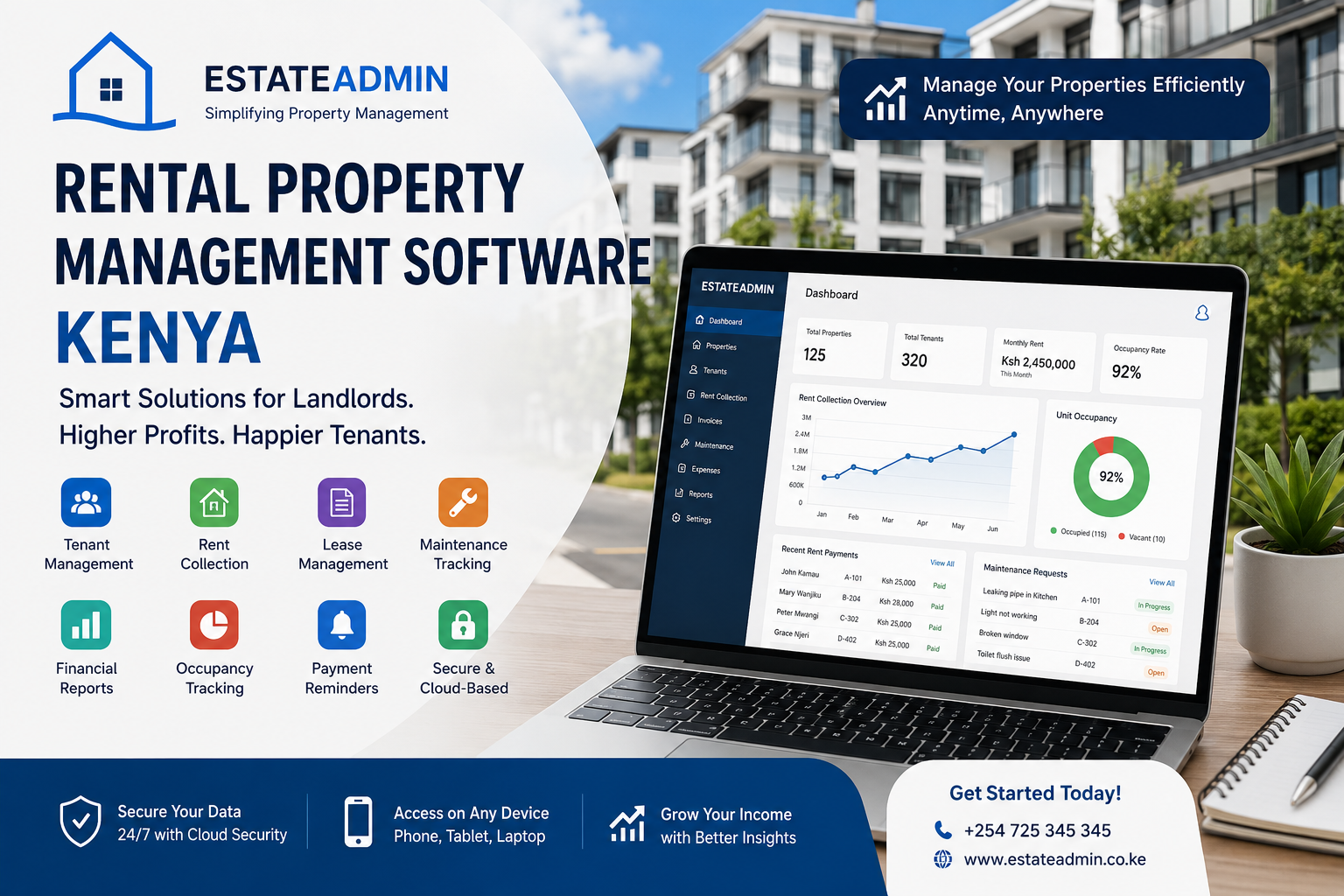
Managing rental property in Kenya can be profitable, but it also comes with many responsibilities. Landlords and property managers have to deal with rent collection, tenant communication, maintenance, vacancies, expenses, leases, inspections, and financial records.
As a property portfolio grows, managing these activities manually becomes increasingly difficult. This is why more landlords are turning to rental property management software in Kenya to organize their operations and save time.
In this guide, we explain how rental property management works, the common challenges landlords face, the benefits of using property management software, and the features to look for when choosing a rental management system.
What Is Rental Property Management?
Rental property management is the process of overseeing and maintaining residential or commercial properties on behalf of the owner.
It involves much more than collecting rent. Effective property management includes managing tenants, maintaining buildings, monitoring finances, handling repairs, managing leases, and ensuring that properties remain profitable.
Typical rental property management activities include:
- Tenant screening and onboarding
- Rent collection
- Rent arrears tracking
- Lease management
- Tenant communication
- Property inspections
- Maintenance management
- Expense tracking
- Utility management
- Vacancy management
- Financial reporting
- Property performance monitoring
For landlords with multiple properties, keeping track of all these activities can become a full-time administrative task.
Why Rental Property Management Is Important in Kenya
The rental property market provides opportunities for property owners and real-estate investors. However, owning property does not automatically guarantee good returns.
Poor property management can lead to:
- High tenant turnover
- Uncollected rent
- Increasing arrears
- Uncontrolled maintenance expenses
- Poor tenant relationships
- Vacant units
- Missing financial records
- Delayed maintenance
- Reduced property value
Effective management helps landlords protect their investment while improving the experience of tenants.
Common Challenges Faced by Kenyan Landlords
1. Rent Collection
Rent collection is one of the biggest responsibilities of a landlord.
When payments are handled manually, it can be difficult to determine who has paid, who has partially paid, and who has outstanding rent.
A centralized rental management system makes it easier to monitor rent collection and identify outstanding balances.
2. Tracking Rent Arrears
Rent arrears can affect a property’s cash flow.
If a landlord manages dozens or hundreds of tenants, manually calculating outstanding balances can result in errors.
Software can help maintain payment histories and provide a clearer picture of arrears.
3. Managing Many Tenants
As the number of tenants increases, managing tenant information becomes more complicated.
Landlords may need to keep track of:
- Names
- Phone numbers
- Units
- Rent amounts
- Deposits
- Lease agreements
- Payment history
- Outstanding balances
- Maintenance requests
Keeping all this information in notebooks or spreadsheets is inefficient.
4. Maintenance Requests
Maintenance problems are inevitable in rental properties.
Tenants may report issues involving:
- Plumbing
- Electricity
- Doors and windows
- Roofing
- Water systems
- Appliances
- Security
- General repairs
Without a proper tracking system, some requests can be forgotten or delayed.
A digital maintenance management system allows property managers to record requests, assign tasks, monitor progress, and close completed jobs.
5. Managing Property Expenses
Property owners need to understand where their money is going.
Common expenses include:
- Repairs
- Maintenance
- Security
- Cleaning
- Utilities
- Property management fees
- Insurance
- Staff costs
- Landscaping
Recording these expenses properly makes it easier to determine the actual profitability of a property.
What Is Rental Property Management Software?
Rental property management software is a digital platform that helps landlords and property managers manage rental properties from a centralized system.
Instead of using separate spreadsheets, notebooks, messaging applications, accounting tools, and paper documents, property managers can manage many operations from one platform.
Depending on the system, features may include:
- Property management
- Unit management
- Tenant management
- Rent tracking
- Payment recording
- Arrears management
- Expense tracking
- Maintenance management
- Lease management
- Reporting
- Tenant communication
- User management
The goal is to reduce manual administrative work and improve visibility across the property portfolio.
Benefits of Rental Property Management Software
1. Centralized Property Information
A good rental management system provides one place where property information can be stored.
Property managers can quickly access details about buildings, units, tenants, rent, payments, and expenses.
This reduces the need to search through multiple files.
2. Easier Rent Management
Rental management software makes it easier to track expected rent and payments.
Managers can quickly determine:
- Total expected rent
- Total collected rent
- Outstanding rent
- Individual tenant balances
- Payment history
This provides better control over rental income.
3. Faster Tenant Communication
Good communication can improve tenant satisfaction.
Property managers may need to send:
- Rent reminders
- Payment confirmations
- Maintenance updates
- Notices
- Lease reminders
- General announcements
A centralized platform can make tenant communication more organized.
4. Better Maintenance Management
Property maintenance should not rely entirely on phone calls and WhatsApp messages.
A digital maintenance system creates a record of each request.
Managers can track:
Reported → Assigned → In Progress → Completed
This makes it easier to ensure that important repairs are handled.
5. Improved Financial Visibility
Property owners need accurate financial information to make investment decisions.
Rental management software can provide information about:
- Rental income
- Expenses
- Arrears
- Payments
- Maintenance costs
- Property performance
This helps owners understand whether their properties are generating the expected returns.
6. Automated Reports
Preparing reports manually can take a considerable amount of time.
Property management software can generate reports from information already stored in the system.
Reports may include:
- Rent collection reports
- Arrears reports
- Expense reports
- Income reports
- Tenant reports
- Occupancy reports
- Maintenance reports
These reports can help landlords make better decisions.
Rental Property Management Software vs Excel
Excel spreadsheets are useful for many business activities, and some landlords use them to track rental properties.
However, spreadsheets have limitations when managing larger portfolios.
| Activity | Excel | Rental Management Software |
|---|---|---|
| Tenant records | Yes | Yes |
| Rent tracking | Manual | Centralized |
| Arrears monitoring | Manual | Easier |
| Maintenance requests | Limited | Dedicated tracking |
| Reports | Manual | Automated |
| User access | Basic | Role-based options |
| Scalability | Limited | Designed for growth |
| Automation | Limited | Greater automation |
For a landlord with only a few tenants, Excel may be sufficient.
For a growing property portfolio, dedicated rental management software can provide much greater efficiency.
How to Choose the Best Property Management Software in Kenya
Choosing the right system is important because different landlords have different requirements.
Consider these factors before making a decision.
Ease of Use
The platform should be easy to understand and navigate.
A complicated system can make adoption difficult for property managers and staff.
Mobile Accessibility
Property managers are not always sitting in an office.
A mobile-friendly platform allows them to access important property information while visiting buildings or communicating with tenants.
Rent Management
Look for software that provides clear rent tracking and payment records.
Tenant Management
The system should make it easy to create and maintain accurate tenant profiles.
Maintenance Management
Maintenance tracking is particularly important for landlords managing multiple properties.
Financial Reporting
Look for reporting tools that provide useful information about income, expenses, arrears, and property performance.
Security
Rental management platforms contain sensitive property and tenant information.
Landlords should consider security features such as:
- User access controls
- Authentication
- Secure data storage
- Regular backups
- Activity monitoring
- Appropriate permissions
Scalability
Choose software that can grow with your portfolio.
You may start with 20 units but eventually manage hundreds of units.
The software should be able to support that growth.
How Technology Is Changing Property Management in Kenya
Technology is changing how landlords manage their properties.
Traditional property management often depends on:
- Paper files
- Physical receipts
- Spreadsheets
- Phone calls
- Manual calculations
- Separate communication channels
Digital property management brings many of these activities into one system.
This allows landlords to access information faster and manage properties more efficiently.
Automation can also reduce repetitive administrative work.
Instead of spending hours calculating balances or preparing reports, managers can use software to organize and process information more efficiently.
Who Should Use Rental Property Management Software?
Rental management software can be useful for:
Individual Landlords
Landlords with several rental units can use software to organize tenant and payment records.
Property Managers
Professional property managers can use centralized systems to manage properties belonging to different owners.
Real Estate Companies
Real-estate companies managing large portfolios can benefit from centralized reporting and operational management.
Apartment Owners
Apartment owners can monitor units, tenants, payments, maintenance, and expenses.
Commercial Property Owners
Commercial landlords can use property management technology to organize leases, tenants, payments, and property expenses.
How EstateAdmin.co.ke Can Help
EstateAdmin.co.ke provides a digital approach to property administration, helping landlords and property managers organize important rental operations.
Instead of relying on multiple disconnected systems, property managers can use a centralized platform to improve how they handle property and tenant information.
Whether you manage a small rental property or a larger portfolio, having organized property management processes can save time and improve operational efficiency.
Tips for Better Rental Property Management
Technology is important, but good management practices are equally important.
Here are several tips landlords can implement:
Keep Accurate Tenant Records
Always maintain updated tenant information and payment records.
Monitor Rent Regularly
Do not wait until the end of the month to discover that several tenants have outstanding balances.
Respond to Maintenance Requests Quickly
Prompt maintenance can improve tenant satisfaction and protect the property.
Track Every Expense
Record repairs, maintenance, utilities, and other property-related costs.
Maintain Clear Communication
Keep tenants informed about important property issues and notices.
Review Property Performance
Regularly analyze income, expenses, occupancy, and arrears.
Use Technology
As your portfolio grows, consider using rental property management software to reduce administrative work.
Frequently Asked Questions
What is the best property management software in Kenya?
The best property management software depends on the size of your portfolio and the features you need. Landlords should consider rent management, tenant management, maintenance, reporting, payments, security, and ease of use.
Can rental property management software track rent arrears?
Yes. Many rental management platforms allow landlords and property managers to record payments and monitor outstanding tenant balances.
Can landlords manage multiple properties using one system?
Yes. A centralized property management system can allow landlords and property managers to manage multiple properties and units from one platform.
Is property management software suitable for small landlords?
Yes. Even small landlords can benefit from organized tenant records, rent tracking, expense management, and reporting.
Can property management software improve tenant communication?
Yes. Depending on the platform, landlords can use centralized communication and notification features to make tenant interactions more organized.