
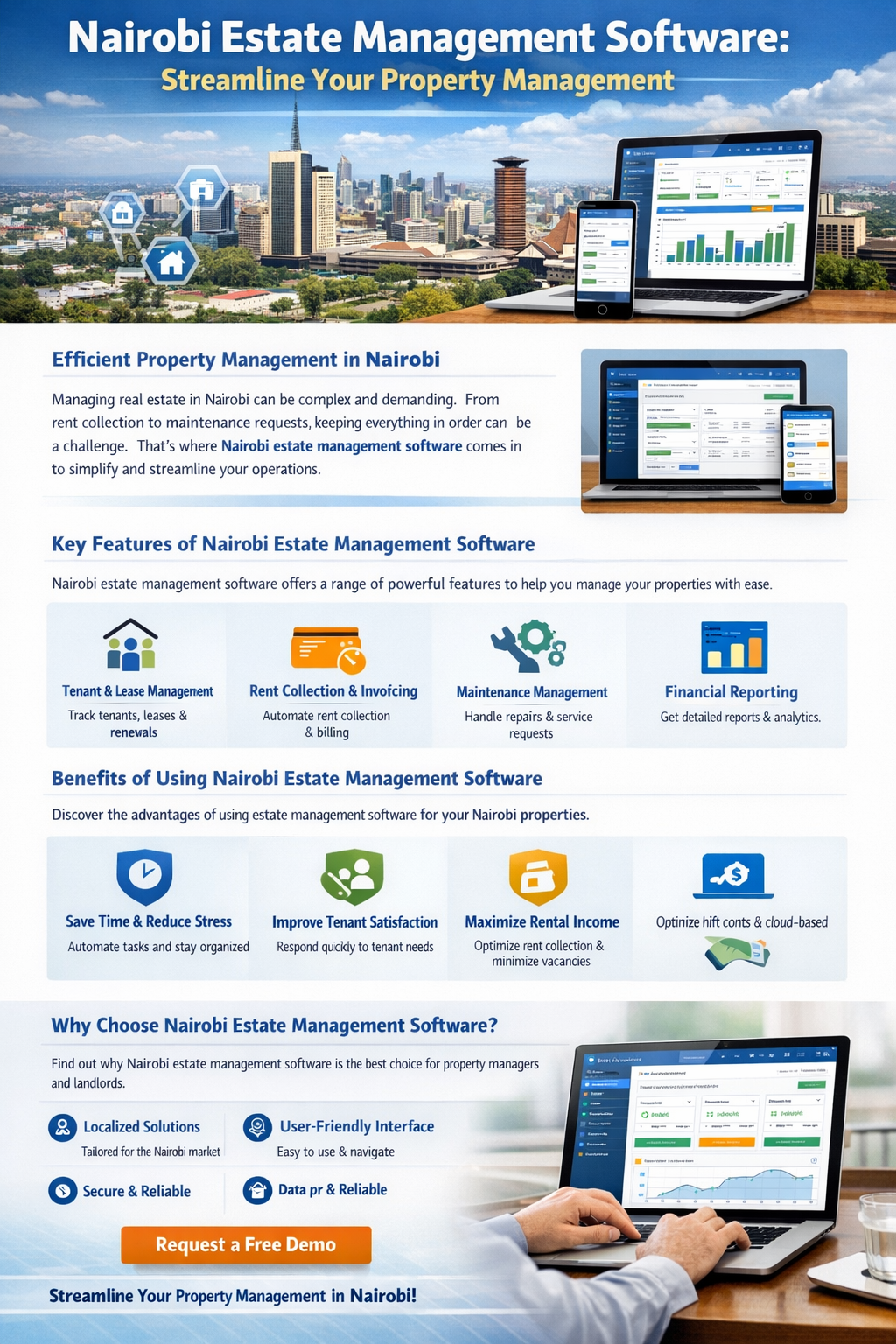
Tenant Rent Collection Software Kenya: How Technology Is Simplifying Rental Payments
Rent collection is one of the most important activities in property management. For landlords and property managers, receiving rent on time helps maintain healthy cash flow and ensures that expenses such as maintenance, security, utilities, staff salaries, and property improvements can be paid on schedule.
However, collecting rent from many tenants can become challenging when the process depends entirely on manual records, spreadsheets, notebooks, phone calls, and individual messages.
A landlord managing a few tenants may be able to monitor payments manually. But when a property portfolio grows to hundreds of tenants and multiple buildings, tracking every payment becomes significantly more difficult.
This is where Tenant Rent Collection Software Kenya becomes valuable.
Modern rent collection software helps landlords organize tenant accounts, monitor payments, identify outstanding balances, maintain payment histories, and improve financial visibility.
EstateAdmin provides an integrated property management platform that helps Kenyan landlords and property managers manage rental operations more efficiently.
What Is Tenant Rent Collection Software?
Tenant rent collection software is a digital system that helps landlords and property managers organize and monitor rental payments.
Instead of maintaining separate spreadsheets or handwritten payment records, property owners can manage tenant payment information through a centralized platform.
A rent collection system can help landlords track:
- Expected rent
- Payments received
- Outstanding balances
- Tenant accounts
- Payment history
- Rental units
- Property income
- Arrears
- Financial reports
This makes it easier to understand the financial position of a rental property business.
Why Rent Collection Is Important for Landlords
Rental income is the primary source of revenue for most residential property investors.
Consistent rent collection allows landlords to meet expenses and maintain their properties.
Rental income may be used to cover:
- Property maintenance
- Security
- Cleaning
- Utilities
- Staff salaries
- Insurance
- Loan repayments
- Property improvements
- Administrative expenses
When rent collection is delayed or poorly monitored, landlords may experience cash-flow challenges.
A structured rent management system helps improve visibility and organization.
Challenges of Manual Rent Collection in Kenya
Many landlords still rely on traditional methods to monitor rent.
Although manual processes may work for a small number of tenants, they can create several challenges as the portfolio grows.
1. Difficulty Tracking Multiple Payments
Tenants may pay at different times and through different channels.
Without centralized records, determining who has paid can become time-consuming.
2. Forgotten Follow-Ups
Property managers may forget to follow up with tenants who have outstanding balances.
3. Spreadsheet Errors
Manual data entry can result in incorrect balances or duplicated records.
4. Poor Payment Visibility
Landlords may not have an immediate overview of total rent collected across their properties.
5. Time-Consuming Reconciliation
Comparing payment records with tenant accounts manually can require significant administrative work.
Key Features of Tenant Rent Collection Software Kenya
Tenant Account Management
Each tenant can have an organized digital account containing relevant rental information.
Records can include:
- Tenant name
- Contact information
- Property
- Unit number
- Monthly rent
- Lease information
- Payment history
- Outstanding balance
Centralized tenant accounts make financial management easier.
Rent Payment Tracking
One of the most important functions of rent collection software is payment tracking.
Property managers can monitor:
- Expected payments
- Payments received
- Pending payments
- Overdue amounts
- Payment history
This gives landlords better control over rental income.
Rent Arrears Management
Rent arrears can negatively affect property cash flow.
A digital system helps landlords identify tenants with outstanding balances more easily.
Property managers can use this information to prioritize follow-ups and maintain accurate tenant accounts.
Regular monitoring can help prevent small outstanding balances from becoming larger financial problems.
Automated Rent Reminders
Rent reminders can help tenants remember upcoming payment deadlines.
Depending on the system, reminders may be used for:
- Upcoming rent
- Overdue rent
- Outstanding balances
- Payment confirmations
- Lease renewals
Automation reduces the need for property managers to manually contact every tenant.
Digital Payment Records
Digital records provide a clear history of rental transactions.
A tenant account can show information such as:
- Payment date
- Amount
- Rental unit
- Tenant
- Balance
- Transaction history
This can make it easier to answer questions and resolve payment disputes.
Rental Income Reporting
Landlords need to know how much income their properties generate.
Rent collection software can help provide information about:
- Monthly rental income
- Collection rates
- Outstanding balances
- Property income
- Tenant payment performance
These insights help property owners evaluate financial performance.
Managing Multiple Properties
A major advantage of digital rent management is the ability to manage multiple properties from one centralized platform.
A landlord may own:
- Apartment buildings
- Student hostels
- Commercial properties
- Residential houses
- Mixed-use developments
Instead of maintaining separate spreadsheets for every property, centralized software makes it easier to organize all rental information.
Unit-Level Rent Tracking
Apartment buildings may contain dozens or hundreds of rental units.
A rent collection system allows property managers to associate payments with specific units.
Managers can quickly identify:
- Occupied units
- Vacant units
- Paid units
- Units with arrears
- Upcoming vacancies
This improves rental administration.
Improving Cash Flow Management
Cash flow is essential for every rental business.
Landlords need to understand how much money is expected and how much has actually been collected.
Rent collection software helps provide a clearer picture of incoming rental income.
This can help property owners plan for:
- Repairs
- Maintenance
- Utilities
- Loan payments
- Property upgrades
- Operating expenses
Reducing Administrative Work
Manual rent management requires landlords to perform many repetitive tasks.
These may include:
- Checking payment records
- Updating spreadsheets
- Calculating balances
- Sending reminders
- Preparing reports
- Searching for tenant records
Automated software can reduce much of this administrative workload.
This allows property managers to focus on higher-value activities.
Improving Tenant Communication
Clear communication is important when managing rental payments.
Property managers may need to communicate with tenants about:
- Rent due dates
- Payment confirmations
- Outstanding balances
- Account statements
- Lease renewals
- Changes in rental terms
A structured system helps make these interactions more organized.
Rent Collection and Tenant Satisfaction
Rent collection should not only focus on receiving payments. It should also provide tenants with a clear and professional experience.
Tenants benefit when:
- Payment records are accurate.
- Balances are clear.
- Receipts are easy to verify.
- Communication is timely.
- Payment issues are resolved quickly.
A professional rent management process can contribute to stronger landlord-tenant relationships.
Property Management and Rent Collection in One Platform
Using separate systems for rent, tenants, maintenance, and properties can create unnecessary complexity.
An integrated platform can combine:
- Tenant management
- Property management
- Rent collection
- Maintenance
- Lease management
- Expense tracking
- Occupancy management
- Financial reporting
This provides landlords with a more complete view of their rental businesses.
How EstateAdmin Helps With Rent Management
EstateAdmin provides property management tools that help landlords organize their rental operations.
Property owners can manage important information relating to:
- Properties
- Rental units
- Tenants
- Rent
- Leases
- Maintenance
- Expenses
- Occupancy
- Reports
By bringing these processes together, EstateAdmin helps property owners reduce administrative complexity.
Benefits of Tenant Rent Collection Software Kenya
Better Payment Visibility
Landlords can see rental payment information more clearly.
Faster Arrears Identification
Outstanding balances can be identified more efficiently.
Reduced Manual Work
Automation reduces repetitive administrative tasks.
Better Record Keeping
Digital records make payment histories easier to maintain.
Improved Financial Planning
Accurate income information supports better budgeting.
Better Tenant Service
Clear payment records can reduce misunderstandings.
Easier Portfolio Management
Multiple properties can be managed from one centralized system.
Rent Collection for Apartment Buildings
Apartment buildings are among the property types that can benefit significantly from digital rent management.
A property manager may have to track hundreds of tenants across multiple floors and buildings.
Software can help organize:
- Unit numbers
- Tenant accounts
- Rent amounts
- Payment status
- Arrears
- Lease periods
- Occupancy
This reduces the complexity of managing large residential developments.
Rent Collection for Student Hostels
Student accommodation can have unique rental management requirements.
Managers may need to track:
- Rooms
- Students
- Payment periods
- Occupancy
- Vacancies
- Outstanding balances
Digital systems can help hostel managers maintain organized records throughout the academic year.
Rent Collection for Commercial Properties
Commercial properties also require reliable payment management.
Landlords may manage:
- Offices
- Shops
- Retail spaces
- Warehouses
- Business premises
Commercial leases may have different payment terms, making organized digital records especially useful.
Rent Collection and Property Expenses
Rental income should always be considered alongside property expenses.
Landlords may need to compare rent collected against costs such as:
- Maintenance
- Security
- Cleaning
- Utilities
- Insurance
- Repairs
- Management costs
This helps property owners understand actual property profitability rather than looking only at gross rental income.
Data Security in Rent Collection Software
Rent management systems contain financial and tenant information.
Property owners should therefore consider security features such as:
- User authentication
- Access controls
- Role-based permissions
- Secure data storage
- Backups
- Activity monitoring
Only authorized users should have access to sensitive financial information.
Best Practices for Rent Collection
Technology works best when combined with good property management practices.
Set Clear Payment Terms
Tenants should understand when rent is due and the applicable payment requirements.
Monitor Payments Regularly
Review payment information frequently instead of waiting until the end of the month.
Follow Up on Arrears
Address outstanding balances promptly.
Maintain Accurate Records
Ensure tenant accounts remain updated.
Communicate Professionally
Use clear and respectful communication when discussing payments.
Review Financial Reports
Regular reports can help identify collection trends and financial problems.
Automate Where Possible
Automated reminders and digital records can reduce administrative work.
Future of Rent Collection in Kenya
Technology is changing the way landlords manage rental businesses.
Future rental management systems may increasingly use:
- Artificial intelligence
- Automated payment reconciliation
- Predictive cash-flow analysis
- Digital tenant portals
- Automated financial reporting
- Mobile payment integrations
- Advanced analytics
These technologies can help property managers make faster decisions and improve operational efficiency.
Frequently Asked Questions
What is Tenant Rent Collection Software Kenya?
It is software designed to help landlords and property managers track rental payments, tenant balances, arrears, payment histories, and rental income.
Can rent collection software manage multiple tenants?
Yes. Digital systems are designed to organize payment information for many tenants and rental units.
Can landlords track rent arrears?
Yes. Rent management systems can help identify tenants with outstanding balances.
Is rent collection software useful for apartment owners?
Yes. Apartment owners can use it to organize rent information across multiple rental units.
Can rent collection software manage multiple properties?
Yes. Centralized property management systems can help landlords manage rental payments across multiple properties.
Does rent collection software improve financial management?
It can improve financial visibility by organizing rental income, payment histories, outstanding balances, and property-level information.