
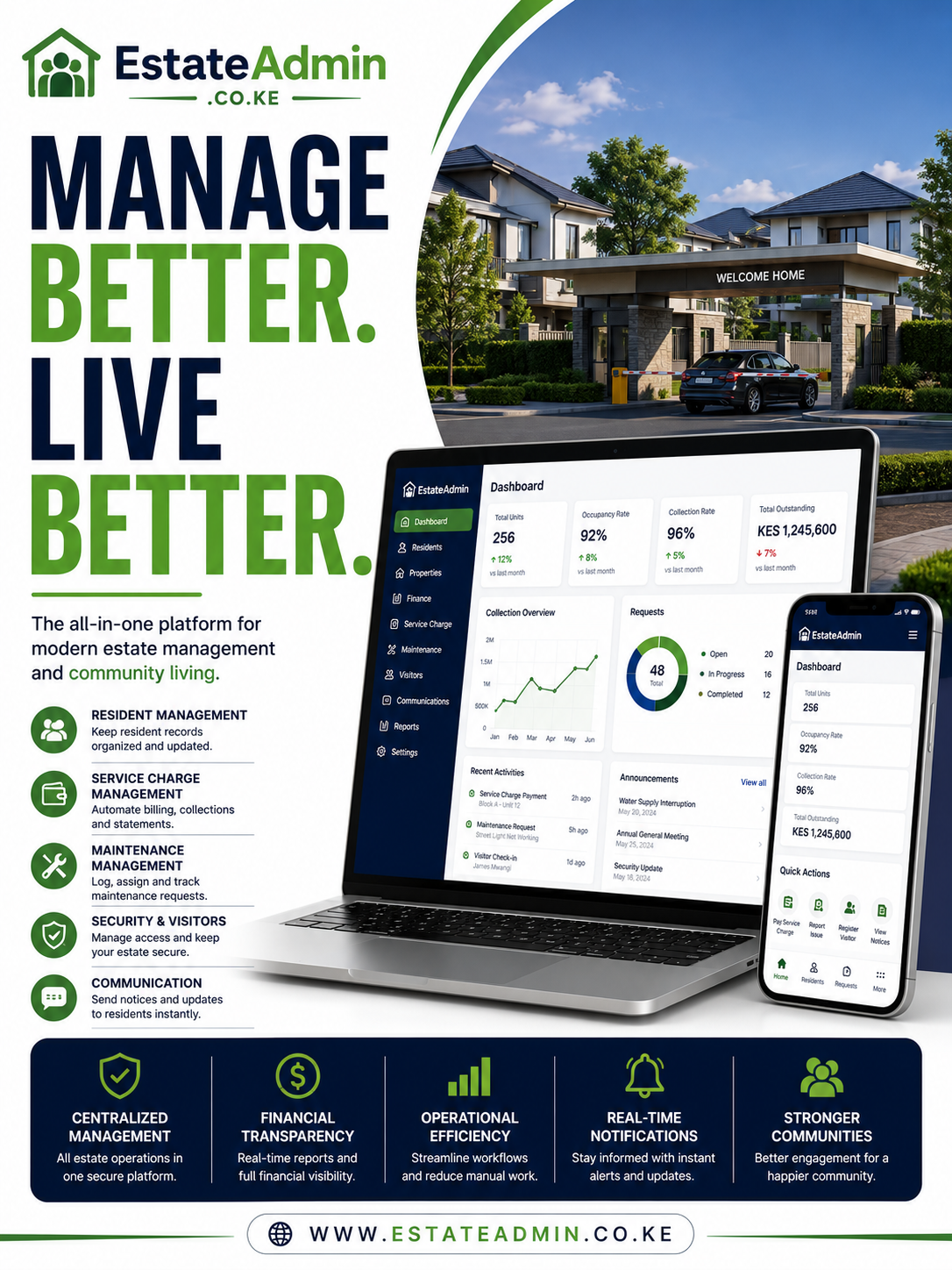
service charge management software has become an essential solution for property managers, landlords, estate owners, apartment managers, commercial property owners, and real estate companies that need to efficiently manage service charges. As residential estates, apartment complexes, gated communities, office buildings, shopping malls, and mixed-use developments continue to grow, manually tracking service charges becomes increasingly time-consuming and prone to errors.
Modern service charge management software automates billing, payment collection, financial reporting, resident communication, and expense tracking while providing complete visibility into every property. Whether managing a small apartment block or a large multi-property portfolio, the right software helps improve cash flow, reduce administrative work, and maintain accurate financial records.
Table of Contents
ToggleWhat Is Service Charge Management Software?
service charge management software is a digital platform designed to calculate, bill, collect, and manage service charges for residential and commercial properties.
The software typically manages:
- Service charge billing
- Resident accounts
- Property management
- Online payments
- Financial reporting
- Expense tracking
- Budget management
- Maintenance contributions
- Utility charges
- Resident communication
A centralized platform simplifies the entire service charge management process.
Why Property Managers Need Service Charge Management Software
Managing service charges manually often leads to:
- Late payments
- Billing errors
- Lost records
- Difficult reconciliations
- Time-consuming reporting
- Poor financial visibility
- Resident disputes
service charge management software automates these tasks, reducing errors while improving efficiency.
Benefits of Service Charge Management Software
Using service charge management software provides several advantages, including:
- Automated billing
- Faster collections
- Improved cash flow
- Accurate financial records
- Better reporting
- Reduced paperwork
- Resident self-service
- Secure online payments
- Expense tracking
- Multi-property management
These benefits improve both operational efficiency and resident satisfaction.
Managing Multiple Properties
Many property management companies oversee multiple developments.
The software should support:
- Apartment complexes
- Residential estates
- Commercial buildings
- Office parks
- Shopping centers
- Mixed-use developments
- Gated communities
Managing every property from one dashboard saves time and improves organization.
Unit Management
Every property contains multiple units that require individual billing.
The software should maintain:
- Unit numbers
- Property names
- Occupancy status
- Resident information
- Service charge balances
- Payment history
Well-organized unit records simplify administration.
Resident Management
The service charge management software should maintain comprehensive resident profiles including:
- Resident names
- Contact information
- Unit assignments
- Payment history
- Outstanding balances
- Communication history
Complete resident records improve service delivery.
Automated Service Charge Billing
The software automatically generates recurring service charge invoices.
Charges may include:
- Estate maintenance
- Security services
- Cleaning services
- Landscaping
- Waste collection
- Common area electricity
- Water services
- Lift maintenance
Automation ensures consistent billing every billing cycle.
Flexible Billing Schedules
Different properties may require different billing periods.
The software should support:
- Monthly billing
- Quarterly billing
- Semi-annual billing
- Annual billing
- Custom billing schedules
Flexible billing accommodates different management structures.
Online Payment Collection
Modern residents expect convenient payment options.
service charge management software should support secure online payments while automatically recording every transaction.
Online payments improve collection efficiency and reduce manual processing.
Automatic Payment Tracking
Every payment should update resident accounts automatically.
Information includes:
- Payment date
- Amount paid
- Outstanding balance
- Transaction reference
- Unit number
- Property
Automatic tracking eliminates manual reconciliation.
Digital Receipts
Electronic receipts improve transparency.
Each receipt may include:
- Receipt number
- Payment amount
- Resident information
- Unit number
- Payment date
- Reference number
Digital receipts reduce disputes.
Payment Reminders
Automated reminders encourage timely payments.
Notifications may be sent:
- Before due dates
- On due dates
- After missed payments
- Before penalties apply
Timely reminders improve collection rates.
Outstanding Balance Management
Property managers should quickly identify overdue accounts.
The software provides:
- Outstanding balance reports
- Resident statements
- Payment ageing
- Collection summaries
These reports help improve revenue collection.
Budget Management
Annual service charge budgets are easier to manage using software.
Budget categories may include:
- Security
- Cleaning
- Landscaping
- Repairs
- Utilities
- Administration
- Insurance
Budget tracking improves financial planning.
Expense Tracking
Every property expense should be recorded accurately.
Examples include:
- Contractor payments
- Maintenance costs
- Utility bills
- Cleaning services
- Security contracts
- Equipment repairs
Expense tracking provides complete financial visibility.
Financial Reporting
The service charge management software should generate reports including:
- Collection reports
- Outstanding balances
- Monthly income
- Expense summaries
- Budget reports
- Cash flow statements
Automated reports save valuable administrative time.
Real-Time Dashboard
Managers should have instant access to key information.
The dashboard may display:
- Total collections
- Outstanding charges
- Active residents
- Monthly income
- Recent payments
- Budget performance
Real-time dashboards improve operational decision-making.
Maintenance Integration
Service charge management often works alongside maintenance management.
Managers can monitor:
- Maintenance requests
- Repair costs
- Contractor assignments
- Work completion
- Maintenance history
Integration improves operational efficiency.
Resident Communication
The software should simplify communication through:
- Billing notifications
- Payment reminders
- Maintenance announcements
- Estate notices
- Community updates
Consistent communication improves resident relationships.
Document Management
Important documents should be stored securely.
Examples include:
- Service charge budgets
- Financial statements
- Contracts
- Payment receipts
- Resident records
- Maintenance invoices
Digital storage improves accessibility.
User Roles and Permissions
Different employees require different system access.
Examples include:
Administrator
- Full system access
Estate Manager
- Property management
- Resident management
Finance Officer
- Billing
- Payments
- Reports
Maintenance Manager
- Maintenance tracking
Role-based permissions improve security.
Audit Logs
Every financial transaction should be traceable.
Audit logs record:
- User logins
- Payment updates
- Invoice changes
- Budget modifications
- Report generation
Audit trails improve accountability.
Data Security
Because financial information is highly sensitive, service charge management software should include:
- Secure authentication
- Data encryption
- User permissions
- Activity monitoring
- Automatic backups
Strong security protects financial records.
Cloud-Based Access
Cloud deployment allows managers to:
- Access reports remotely
- Manage multiple properties
- Monitor collections
- Approve transactions
- Receive software updates
Cloud systems improve flexibility.
Mobile Accessibility
Property managers increasingly require mobile access.
Mobile functionality allows users to:
- Monitor collections
- View resident balances
- Review reports
- Approve payments
- Respond to enquiries
Mobile management improves productivity.
Scalability
As property portfolios grow, service charge management software should support:
- More properties
- More residents
- More staff
- Higher transaction volumes
- Multiple offices
Scalable software protects long-term investments.
Choosing the Right Service Charge Management Software
Before selecting service charge management software, property managers should evaluate:
- Number of properties
- Number of units
- Billing flexibility
- Online payment capabilities
- Reporting features
- Security
- Ease of use
- Mobile accessibility
- Customer support
- Future scalability
Choosing software based on long-term business needs provides greater value.
Future Trends
Service charge management continues to evolve with technology.
Future developments are expected to include:
- Artificial intelligence for financial forecasting
- Automated reconciliation
- Smart budgeting
- Enhanced resident portals
- Advanced analytics
- Greater workflow automation
- Improved cloud collaboration
Organizations should invest in software that supports future innovation.
Final Conclusion
service charge management software provides property managers, estate owners, landlords, and real estate companies with a powerful platform for automating service charge billing, payment collection, financial reporting, and resident management. By replacing manual processes with digital workflows, organizations can reduce administrative work, improve financial accuracy, strengthen cash flow, and deliver better service to residents.
Whether managing a residential estate, apartment complex, commercial property, or mixed-use development, investing in service charge management software helps streamline operations, improve transparency, and support long-term property management success. A secure, scalable, and feature-rich solution enables property managers to manage service charges efficiently while adapting to the growing demands of modern real estate management.
service charge management software plays a critical role in helping property managers, estate owners, landlords, homeowners associations, apartment managers, and commercial property companies efficiently manage service charge billing, collections, expenses, and financial reporting. As residential and commercial developments become larger and more complex, manual service charge administration becomes increasingly difficult, leading to billing errors, delayed collections, financial inconsistencies, and dissatisfied residents.
A modern service charge management software solution provides a centralized platform that automates recurring billing, tracks payments, monitors expenses, manages resident accounts, generates financial reports, and improves communication between property managers and residents. Whether managing a gated community, apartment complex, office park, shopping mall, or mixed-use development, the software improves efficiency while supporting long-term financial sustainability.
Centralized Property Management
A professional service charge management software platform allows managers to oversee every property from a single dashboard.
The system should manage:
- Residential estates
- Apartment buildings
- Commercial properties
- Office complexes
- Shopping centers
- Mixed-use developments
- Business parks
- Homeowners associations
Centralized management simplifies daily operations.
Multi-Property Administration
Property management companies often supervise multiple developments.
The software should allow managers to:
- View all properties
- Compare financial performance
- Monitor service charge collections
- Review occupancy
- Track maintenance expenses
- Generate consolidated reports
Managing multiple properties from one system improves productivity.
Unit Management
Each property contains multiple units that require separate billing.
The service charge management software should maintain:
- Unit numbers
- Property names
- Ownership details
- Resident assignments
- Billing status
- Payment history
Accurate unit records improve billing accuracy.
Resident Account Management
Each resident should have a dedicated account containing:
- Personal information
- Unit details
- Billing history
- Payment history
- Outstanding balances
- Communication records
Centralized resident information simplifies administration.
Automated Service Charge Billing
Recurring service charge invoices should be generated automatically.
Charges may include:
- Estate maintenance
- Security services
- Cleaning services
- Landscaping
- Common electricity
- Water services
- Waste collection
- Lift maintenance
- Generator maintenance
- Shared facility maintenance
Automation ensures consistent billing every cycle.
Flexible Billing Structures
Different developments may require different billing methods.
The software should support:
- Monthly billing
- Quarterly billing
- Semi-annual billing
- Annual billing
- Custom billing schedules
Flexible billing accommodates various property management models.
Budget Allocation
Annual service charge budgets should be distributed accurately across all units.
Budget categories may include:
- Security
- Cleaning
- Repairs
- Landscaping
- Utilities
- Administration
- Insurance
- Emergency reserve funds
Accurate allocation improves financial transparency.
Online Payment Management
Modern residents increasingly prefer digital payment options.
A service charge management software solution should support secure online payment processing while automatically updating resident accounts and financial records.
Digital payments reduce manual work and improve collection efficiency.
Automatic Payment Reconciliation
Manual reconciliation consumes significant administrative time.
The software should automatically:
- Match payments
- Update balances
- Generate receipts
- Record transaction references
- Update financial reports
Automation improves accounting accuracy.
Digital Receipts
Every successful payment should generate an electronic receipt.
Receipts may include:
- Receipt number
- Resident details
- Unit information
- Payment amount
- Payment date
- Reference number
Digital receipts improve record keeping.
Outstanding Balance Monitoring
Managers should easily identify unpaid service charges.
The system should generate reports showing:
- Outstanding balances
- Aging accounts
- Collection progress
- Payment trends
These reports support effective collection strategies.
Automated Payment Reminders
Residents should receive automatic notifications:
- Before payment due dates
- On billing dates
- After overdue payments
- Before penalties apply
Automated reminders encourage timely payments.
Financial Reporting
The service charge management software should generate comprehensive reports including:
- Monthly collections
- Outstanding balances
- Property income
- Expense summaries
- Budget performance
- Cash flow
- Revenue analysis
Detailed reports improve financial decision-making.
Income and Expense Analysis
Managers should compare:
- Total collections
- Operational expenses
- Budget allocations
- Surplus funds
- Deficit areas
Financial analysis supports better planning.
Real-Time Dashboard
The dashboard should provide instant access to:
- Total collections
- Outstanding service charges
- Monthly revenue
- Budget utilization
- Active residents
- Recent transactions
Real-time visibility improves operational control.
Maintenance Cost Management
Maintenance expenses directly affect service charge budgets.
The software should monitor:
- Repair costs
- Contractor invoices
- Equipment maintenance
- Facility maintenance
- Emergency repairs
Tracking expenses improves budget management.
Contractor Management
Many estates work with external contractors.
The software may maintain:
- Contractor information
- Service agreements
- Payment records
- Assigned projects
- Work completion history
Organized contractor records improve accountability.
Asset Management
Property managers should monitor shared assets including:
- Generators
- Water pumps
- Lifts
- Security equipment
- Lighting systems
- Landscaping equipment
Asset tracking supports preventive maintenance.
Preventive Maintenance Scheduling
Routine maintenance reduces unexpected repair costs.
The software should schedule:
- Equipment servicing
- Generator maintenance
- Lift inspections
- Water system inspections
- Landscape maintenance
Preventive maintenance protects long-term property value.
Resident Communication
The service charge management software should improve communication through:
- Billing notifications
- Community announcements
- Maintenance updates
- Service interruptions
- Meeting notices
Consistent communication builds trust with residents.
Document Management
Important documents should remain securely stored.
Examples include:
- Service charge budgets
- Financial statements
- Contracts
- Maintenance reports
- Insurance policies
- Resident agreements
Digital storage improves accessibility.
Role-Based User Access
Different employees require different permissions.
Examples include:
Administrator
- Full system access
Estate Manager
- Property administration
Finance Officer
- Billing
- Collections
- Reporting
Maintenance Supervisor
- Maintenance management
Role-based permissions improve security.
Audit Logs
Every financial transaction should be traceable.
Audit logs may record:
- User logins
- Invoice generation
- Payment updates
- Budget modifications
- Report creation
Audit trails strengthen accountability.
Data Security
Financial records require strong protection.
The service charge management software should include:
- Secure authentication
- Data encryption
- User permissions
- Activity monitoring
- Automatic backups
- Secure cloud storage
Strong security protects resident and financial information.
Cloud-Based Management
Cloud deployment allows managers to:
- Access reports remotely
- Manage multiple estates
- Monitor collections
- Approve transactions
- Review financial performance
Cloud technology improves operational flexibility.
Mobile Accessibility
Property managers increasingly require mobile access.
Mobile functionality allows users to:
- View collections
- Monitor budgets
- Review resident balances
- Approve expenses
- Generate reports
Mobile access improves productivity.
Business Intelligence
Advanced analytics help property managers evaluate:
- Collection efficiency
- Budget performance
- Expense trends
- Property profitability
- Resident payment behavior
Business intelligence supports strategic planning.
Scalability
As property portfolios expand, the service charge management software should support:
- Additional properties
- More residential units
- More commercial units
- Additional staff
- Higher transaction volumes
- Multiple management offices
Scalable software supports long-term growth.
Common Mistakes to Avoid
When selecting service charge management software, organizations should avoid:
- Choosing software based only on cost
- Ignoring future scalability
- Overlooking reporting capabilities
- Weak security configuration
- Poor staff training
- Lack of regular data backups
Proper planning leads to successful implementation.
Future Trends
Service charge management technology continues to evolve.
Future innovations are expected to include:
- Artificial intelligence for financial forecasting
- Automated budget optimization
- Predictive maintenance planning
- Advanced analytics dashboards
- Improved resident self-service portals
- Greater workflow automation
- Enhanced cloud collaboration
Property managers should invest in solutions that can adapt to future technology.
Why Property Managers Are Adopting Digital Service Charge Management
Organizations are increasingly replacing manual administration because digital systems provide:
- Faster billing
- Improved collection rates
- Better financial reporting
- Reduced paperwork
- Enhanced transparency
- Improved resident communication
- Stronger financial control
- Better operational efficiency
- Easier compliance
- Greater scalability
These advantages continue to drive adoption across residential and commercial property management.
Final Conclusion
service charge management software provides estate managers, landlords, homeowners associations, and property management companies with a comprehensive solution for managing service charge billing, collections, budgets, maintenance costs, financial reporting, and resident communication. By automating recurring billing, payment tracking, expense management, reporting, and administrative workflows, organizations can reduce manual effort while improving financial accuracy and operational efficiency.
As residential estates, apartment complexes, and commercial developments continue to expand, investing in service charge management software enables property managers to maintain accurate financial records, improve collection rates, strengthen resident relationships, and support sustainable long-term growth. A secure, scalable, and feature-rich platform provides the foundation for efficient property operations while adapting to the evolving needs of modern real estate management.
service charge management software plays a critical role in helping property managers, estate owners, landlords, homeowners associations, apartment managers, and commercial property companies efficiently manage service charge billing, collections, expenses, and financial reporting. As residential and commercial developments become larger and more complex, manual service charge administration becomes increasingly difficult, leading to billing errors, delayed collections, financial inconsistencies, and dissatisfied residents.
A modern service charge management software solution provides a centralized platform that automates recurring billing, tracks payments, monitors expenses, manages resident accounts, generates financial reports, and improves communication between property managers and residents. Whether managing a gated community, apartment complex, office park, shopping mall, or mixed-use development, the software improves efficiency while supporting long-term financial sustainability.
Centralized Property Management
A professional service charge management software platform allows managers to oversee every property from a single dashboard.
The system should manage:
- Residential estates
- Apartment buildings
- Commercial properties
- Office complexes
- Shopping centers
- Mixed-use developments
- Business parks
- Homeowners associations
Centralized management simplifies daily operations.
Multi-Property Administration
Property management companies often supervise multiple developments.
The software should allow managers to:
- View all properties
- Compare financial performance
- Monitor service charge collections
- Review occupancy
- Track maintenance expenses
- Generate consolidated reports
Managing multiple properties from one system improves productivity.
Unit Management
Each property contains multiple units that require separate billing.
The service charge management software should maintain:
- Unit numbers
- Property names
- Ownership details
- Resident assignments
- Billing status
- Payment history
Accurate unit records improve billing accuracy.
Resident Account Management
Each resident should have a dedicated account containing:
- Personal information
- Unit details
- Billing history
- Payment history
- Outstanding balances
- Communication records
Centralized resident information simplifies administration.
Automated Service Charge Billing
Recurring service charge invoices should be generated automatically.
Charges may include:
- Estate maintenance
- Security services
- Cleaning services
- Landscaping
- Common electricity
- Water services
- Waste collection
- Lift maintenance
- Generator maintenance
- Shared facility maintenance
Automation ensures consistent billing every cycle.
Flexible Billing Structures
Different developments may require different billing methods.
The software should support:
- Monthly billing
- Quarterly billing
- Semi-annual billing
- Annual billing
- Custom billing schedules
Flexible billing accommodates various property management models.
Budget Allocation
Annual service charge budgets should be distributed accurately across all units.
Budget categories may include:
- Security
- Cleaning
- Repairs
- Landscaping
- Utilities
- Administration
- Insurance
- Emergency reserve funds
Accurate allocation improves financial transparency.
Online Payment Management
Modern residents increasingly prefer digital payment options.
A service charge management software solution should support secure online payment processing while automatically updating resident accounts and financial records.
Digital payments reduce manual work and improve collection efficiency.
Automatic Payment Reconciliation
Manual reconciliation consumes significant administrative time.
The software should automatically:
- Match payments
- Update balances
- Generate receipts
- Record transaction references
- Update financial reports
Automation improves accounting accuracy.
Digital Receipts
Every successful payment should generate an electronic receipt.
Receipts may include:
- Receipt number
- Resident details
- Unit information
- Payment amount
- Payment date
- Reference number
Digital receipts improve record keeping.
Outstanding Balance Monitoring
Managers should easily identify unpaid service charges.
The system should generate reports showing:
- Outstanding balances
- Aging accounts
- Collection progress
- Payment trends
These reports support effective collection strategies.
Automated Payment Reminders
Residents should receive automatic notifications:
- Before payment due dates
- On billing dates
- After overdue payments
- Before penalties apply
Automated reminders encourage timely payments.
Financial Reporting
The service charge management software should generate comprehensive reports including:
- Monthly collections
- Outstanding balances
- Property income
- Expense summaries
- Budget performance
- Cash flow
- Revenue analysis
Detailed reports improve financial decision-making.
Income and Expense Analysis
Managers should compare:
- Total collections
- Operational expenses
- Budget allocations
- Surplus funds
- Deficit areas
Financial analysis supports better planning.
Real-Time Dashboard
The dashboard should provide instant access to:
- Total collections
- Outstanding service charges
- Monthly revenue
- Budget utilization
- Active residents
- Recent transactions
Real-time visibility improves operational control.
Maintenance Cost Management
Maintenance expenses directly affect service charge budgets.
The software should monitor:
- Repair costs
- Contractor invoices
- Equipment maintenance
- Facility maintenance
- Emergency repairs
Tracking expenses improves budget management.
Contractor Management
Many estates work with external contractors.
The software may maintain:
- Contractor information
- Service agreements
- Payment records
- Assigned projects
- Work completion history
Organized contractor records improve accountability.
Asset Management
Property managers should monitor shared assets including:
- Generators
- Water pumps
- Lifts
- Security equipment
- Lighting systems
- Landscaping equipment
Asset tracking supports preventive maintenance.
Preventive Maintenance Scheduling
Routine maintenance reduces unexpected repair costs.
The software should schedule:
- Equipment servicing
- Generator maintenance
- Lift inspections
- Water system inspections
- Landscape maintenance
Preventive maintenance protects long-term property value.
Resident Communication
The service charge management software should improve communication through:
- Billing notifications
- Community announcements
- Maintenance updates
- Service interruptions
- Meeting notices
Consistent communication builds trust with residents.
Document Management
Important documents should remain securely stored.
Examples include:
- Service charge budgets
- Financial statements
- Contracts
- Maintenance reports
- Insurance policies
- Resident agreements
Digital storage improves accessibility.
Role-Based User Access
Different employees require different permissions.
Examples include:
Administrator
- Full system access
Estate Manager
- Property administration
Finance Officer
- Billing
- Collections
- Reporting
Maintenance Supervisor
- Maintenance management
Role-based permissions improve security.
Audit Logs
Every financial transaction should be traceable.
Audit logs may record:
- User logins
- Invoice generation
- Payment updates
- Budget modifications
- Report creation
Audit trails strengthen accountability.
Data Security
Financial records require strong protection.
The service charge management software should include:
- Secure authentication
- Data encryption
- User permissions
- Activity monitoring
- Automatic backups
- Secure cloud storage
Strong security protects resident and financial information.
Cloud-Based Management
Cloud deployment allows managers to:
- Access reports remotely
- Manage multiple estates
- Monitor collections
- Approve transactions
- Review financial performance
Cloud technology improves operational flexibility.
Mobile Accessibility
Property managers increasingly require mobile access.
Mobile functionality allows users to:
- View collections
- Monitor budgets
- Review resident balances
- Approve expenses
- Generate reports
Mobile access improves productivity.
Business Intelligence
Advanced analytics help property managers evaluate:
- Collection efficiency
- Budget performance
- Expense trends
- Property profitability
- Resident payment behavior
Business intelligence supports strategic planning.
Scalability
As property portfolios expand, the service charge management software should support:
- Additional properties
- More residential units
- More commercial units
- Additional staff
- Higher transaction volumes
- Multiple management offices
Scalable software supports long-term growth.
Common Mistakes to Avoid
When selecting service charge management software, organizations should avoid:
- Choosing software based only on cost
- Ignoring future scalability
- Overlooking reporting capabilities
- Weak security configuration
- Poor staff training
- Lack of regular data backups
Proper planning leads to successful implementation.
Future Trends
Service charge management technology continues to evolve.
Future innovations are expected to include:
- Artificial intelligence for financial forecasting
- Automated budget optimization
- Predictive maintenance planning
- Advanced analytics dashboards
- Improved resident self-service portals
- Greater workflow automation
- Enhanced cloud collaboration
Property managers should invest in solutions that can adapt to future technology.
Why Property Managers Are Adopting Digital Service Charge Management
Organizations are increasingly replacing manual administration because digital systems provide:
- Faster billing
- Improved collection rates
- Better financial reporting
- Reduced paperwork
- Enhanced transparency
- Improved resident communication
- Stronger financial control
- Better operational efficiency
- Easier compliance
- Greater scalability
These advantages continue to drive adoption across residential and commercial property management.
Final Conclusion
service charge management software provides estate managers, landlords, homeowners associations, and property management companies with a comprehensive solution for managing service charge billing, collections, budgets, maintenance costs, financial reporting, and resident communication. By automating recurring billing, payment tracking, expense management, reporting, and administrative workflows, organizations can reduce manual effort while improving financial accuracy and operational efficiency.
As residential estates, apartment complexes, and commercial developments continue to expand, investing in service charge management software enables property managers to maintain accurate financial records, improve collection rates, strengthen resident relationships, and support sustainable long-term growth. A secure, scalable, and feature-rich platform provides the foundation for efficient property operations while adapting to the evolving needs of modern real estate management.